
Table of ContentsShow ChaptersHide Chapters
- Beyond supplements, discover lifestyle choices that support long-term bone density.
Medical Disclaimer
This article is for informational purposes only and does not constitute medical advice. Always consult with a qualified healthcare professional before starting any new supplement regimen.
Read our Medical / Expert Review Policy and Medical Disclaimer for details.
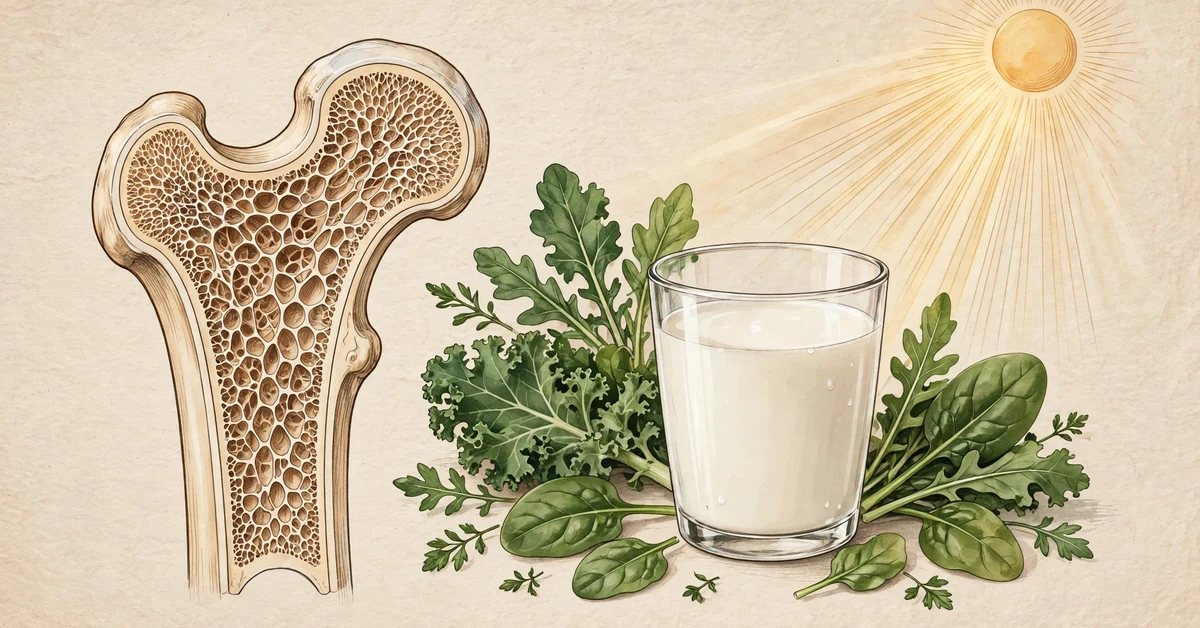
Your bones are alive. Throughout your life, old bone is constantly broken down and new bone is built to replace it. In youth, building outpaces breakdown; around age 30 you reach peak bone mass; after that — and especially after menopause — breakdown gradually wins. When bones lose too much density and strength, the result is osteoporosis: fragile bones that can fracture from a minor bump or even a sneeze.
Here's what the supplement industry doesn't want you to focus on: the most powerful things you can do for your bones are not found in a bottle. Diet, exercise, and lifestyle do the heavy lifting. Supplements have a supporting role at best.
This guide covers what actually works, what the evidence says about popular bone supplements, and where the honest limits are. No "rebuild your bones in 30 days" fantasies. No brand recommendations.
Why Bones Weaken Over Time
Bone remodeling never stops, but the balance shifts with age. Several factors accelerate bone loss:
Menopause: the drop in estrogen leads to rapid bone loss — women can lose up to 10% of bone mass in the first five years after menopause.
Aging: both men and women lose bone gradually from midlife onward.
Low calcium or vitamin D intake, inadequate protein, and lack of weight-bearing exercise.
Smoking and heavy alcohol use, which impair bone formation.
Certain medications (notably long-term corticosteroids) and medical conditions.
Osteoporosis is often called a "silent disease" because there are usually no symptoms until a fracture occurs. That's why prevention — starting decades before old age — matters so much, and why anyone with risk factors should discuss bone-density testing (DXA scan) with their clinician rather than self-treating with supplements.
Calcium: A Food-First Approach

Calcium is the most abundant mineral in the body, and it forms much of the structure of bones and teeth. Getting enough — but not excessive — calcium is foundational.
How much do you need? According to the National Institutes of Health Office of Dietary Supplements:
Adults 19–50: 1,000 mg/day
Men 51–70: 1,000 mg/day
Women 51 and older, and all adults over 70: 1,200 mg/day
Start with food. The body absorbs calcium from food efficiently, and calcium-rich foods bring other bone-supporting nutrients along. Good sources include milk, yogurt, and cheese; leafy greens such as kale, broccoli, and Chinese cabbage; and canned sardines or salmon eaten with their (soft, edible) bones. Many plant milks and juices are fortified — check labels.
Supplements are for filling gaps, not exceeding needs. If your diet consistently falls short, a modest calcium supplement can help you reach — not overshoot — the recommended intake. More is not better: the tolerable upper intake level is 2,000 mg/day for adults over 51, and there's no evidence that mega-dosing calcium builds extra-strong bones.
Practical tip: calcium carbonate is best absorbed with food; calcium citrate can be taken anytime. If you supplement, split doses above 500 mg — absorption efficiency drops with larger single doses. And tell your clinician, since calcium can interfere with the absorption of certain medications, including some antibiotics and thyroid drugs.
Vitamin D: The Honest Story
Vitamin D promotes calcium absorption in the gut and maintains the calcium and phosphate levels needed for normal bone mineralization. Without enough of it, bones soften — causing rickets in children and osteomalacia in adults.
How much do you need? The NIH recommends 600 IU (15 mcg) daily for adults up to age 70 and 800 IU (20 mcg) daily after 70, assuming minimal sun exposure. The safe upper limit is 4,000 IU/day for adults — exceeding it long-term can cause harm, including high blood calcium.
Know your status. Vitamin D deficiency is common, especially in people with limited sun exposure, darker skin, older age, or obesity. A simple blood test for 25-hydroxyvitamin D [25(OH)D] tells you where you stand — ask your clinician whether testing makes sense for you rather than guessing with high-dose supplements.
Sunlight helps, sensibly. Your skin produces vitamin D when exposed to UV rays. Brief, regular sun exposure supports vitamin D status — but the NIH bases its recommendations on minimal sun exposure for good reason: skin cancer risk is real. Don't trade bone health for sunburns; food sources (fatty fish, fortified milk) and supplements can fill the gap.
Now the uncomfortable truth about vitamin D supplements and bones. You might expect that taking extra vitamin D protects against fractures. A landmark 2018 systematic review and meta-analysis in The Lancet Diabetes & Endocrinology — 81 randomized trials, 53,537 participants — found that vitamin D supplementation had no effect on total fractures, hip fractures, or falls, and produced no clinically meaningful differences in bone mineral density at any skeletal site. A trial sequential analysis suggested further trials are unlikely to change this conclusion: vitamin D alone does not meaningfully reduce fractures or falls in the general adult population.
Our take: vitamin D is essential — deficiency genuinely harms bones — but supplementing beyond sufficiency doesn't build fracture-proof bones. Get tested if you're at risk, correct a deficiency, meet the recommended intake, and don't waste money on megadoses.
Exercise: The Strongest Lever You Control

If there's one "natural" intervention with genuinely strong evidence for bones, it's mechanical loading — exercise that stresses your skeleton.
A Cochrane systematic review (43 randomized trials, 4,320 postmenopausal women, updated 2022) found that exercise produces a small but statistically significant — and possibly important — slowing of bone loss compared with no exercise:
Combination programs (e.g., walking or aerobics plus strength training) reduced spinal bone loss by about 3% relative to controls.
Progressive resistance training for the lower limbs reduced bone loss at the hip/femoral neck by about 1%.
The effect on fractures themselves was uncertain (too few fracture events in the trials to be sure).
The authors concluded exercise "has the potential to be a safe and effective way to avert bone loss in postmenopausal women."
What to do:
Weight-bearing aerobic exercise: walking, dancing, hiking, jogging — activities where your bones support your body weight. Aim for most days of the week.
Resistance training: weights, resistance bands, or bodyweight exercises, 2–3 times per week, with progressive overload. This is the best-evidenced modality for hip bone density.
Balance and posture work: tai chi, yoga, or simple balance exercises reduce fall risk — and since most osteoporotic fractures come from falls, not falling matters as much as bone density itself.
Start where you are. If you have osteoporosis or a prior fracture, get guidance from your clinician or a physical therapist first — some spinal flexion exercises, for example, are best avoided with vertebral fragility.
No supplement matches this evidence base. None.
Protein: Don't Skimp on It
Bone is about 50% protein by volume (the collagen matrix that calcium mineralizes onto), and muscle mass — which protein supports — protects bones by preventing falls. Yet protein is often overlooked in bone-health advice, and some outdated claims even suggested high protein harms bones. The evidence says otherwise.
An expert consensus paper endorsed by the European Society for Clinical and Economical Aspects of Osteoporosis and Osteoarthritis and the International Osteoporosis Foundation — summarizing multiple systematic reviews and meta-analyses — concluded:
Adequate protein is required for optimal bone growth and maintenance.
In older adults with osteoporosis, protein intakes at or above the current RDA (≥0.8 g per kg of body weight per day) are associated with higher bone density, slower bone loss, and reduced hip fracture risk — provided calcium intake is adequate.
There is no evidence that protein from food harms bone health; if anything, insufficient protein in older age is the bigger problem.
Practical target: for a 70 kg (154 lb) adult, that's at least ~56 g of protein daily — more if you're active or older. Distribute it across meals with foods like dairy, eggs, fish, poultry, legumes, and soy.
Lifestyle Factors: Smoking and Alcohol
Two lifestyle factors with clear bone consequences:
Smoking impairs bone formation and is a recognized risk factor for osteoporosis and fractures. Quitting is one of the highest-impact bone-health decisions a smoker can make.
Heavy alcohol use interferes with calcium balance and bone remodeling. The National Institute of Arthritis and Musculoskeletal and Skin Diseases advises drinking alcohol in moderation as part of osteoporosis prevention.
Neither requires a supplement — just honest lifestyle change.
The Thin-Evidence Shelf: Vitamin K2, Magnesium, and Collagen
These three are heavily marketed for bone health. Here's what the research actually supports — and doesn't.
Vitamin K2
Vitamin K is a cofactor for the carboxylation of osteocalcin, one of the main proteins in bone — so the biological rationale is real. Some observational studies link higher vitamin K intakes with higher bone mineral density or fewer hip fractures, but not all do. A 2006 systematic review and meta-analysis of 13 randomized trials (mostly in Japanese postmenopausal women, 6–36 months) found that 12 of 13 trials showed improved bone mineral density with vitamin K supplementation (phytonadione or MK-4). However, the NIH Office of Dietary Supplements notes it remains unclear whether vitamin K supplementation reduces the risk of osteoporosis itself.
Our take: interesting, not proven. Eating vitamin K-rich foods (leafy greens) is unambiguously good; paying for K2 pills to "decalcify arteries and rebuild bone" outruns the evidence. Note also that vitamin K interacts with warfarin — anyone on blood thinners should never start vitamin K supplements without their clinician's involvement.
Magnesium
About 50–60% of the body's magnesium is stored in bone, and magnesium is involved in bone formation and in regulating parathyroid hormone and active vitamin D — both major controllers of bone metabolism. Population studies link higher magnesium intakes with higher bone density, and women with osteoporosis tend to have lower magnesium levels.
But the NIH is direct about the key question: "more research is needed to determine whether magnesium supplements can help prevent or manage osteoporosis." A small number of short studies hint at possible benefit, but there's no solid trial evidence that magnesium pills strengthen bones in people who aren't deficient.
Our take: make sure your diet includes magnesium (nuts, seeds, legumes, whole grains, leafy greens); don't expect a magnesium supplement to fix bone density on its own.
Collagen Peptides
Collagen supplements are marketed aggressively for bones and joints, often with impressive-sounding claims. The human evidence for bone density specifically rests largely on a single notable trial: a 2018 randomized, placebo-controlled study in 131 postmenopausal women found that 5 g/day of specific collagen peptides for 12 months increased spinal and femoral-neck bone density compared with placebo, with favorable shifts in bone turnover markers.
That's one modest-sized trial of a proprietary ingredient — promising, but far from the replicated evidence you'd want before spending money long-term. (For joint pain, the collagen picture is even weaker: a 2025 independent trial found combined collagen no better than placebo for knee osteoarthritis symptoms.)
Our take: preliminary and interesting, not established. File under "watch the research," not "buy the powder."
The Honest Limit: What Diet and Lifestyle Can't Do
Here's the part most "natural bone health" content won't tell you: diet, exercise, and supplements can slow bone loss and modestly improve density, but they cannot reliably rebuild bone that is already osteoporotic.
Once osteoporosis is established — particularly after a fragility fracture — the condition usually requires medical treatment. Prescription osteoporosis medications exist, they reduce fracture risk, and taking them is not a failure of "natural" living. The National Institute of Arthritis and Musculoskeletal and Skin Diseases explicitly lists "taking your medications, if prescribed, which can help prevent fractures in people who have osteoporosis" among its core recommendations, alongside exercise, nutrition, not smoking, and moderating alcohol.
If you have osteoporosis or significant risk factors (early menopause, long-term steroid use, a parent who fractured a hip, previous fracture from minor trauma), see your doctor about a DXA bone-density scan and a proper treatment plan. No shame in it — and no supplement replaces it.
Scam Red Flags: Bone-Health Edition
"Rebuild bone density in 30 days!" Bone remodeling is slow. Any product promising rapid density gains is lying.
"Reverse osteoporosis naturally — no drugs needed!" This message keeps people away from effective treatment. Osteoporosis medications prevent fractures; discouraging them costs people their mobility and independence.
Proprietary "bone blends" hiding doses of calcium, magnesium, and trace minerals — you can't assess safety or value without amounts.
Strontium or exotic mineral hype positioned as secret cures. Strontium can even artificially inflate DXA readings, making bones look denser without being stronger.
"Alkaline" products claiming to stop calcium being "leached" from bones. Your blood pH is tightly regulated; alkaline water doesn't remodel your skeleton.
Miracle testimonials and before/after DXA scans presented without context. Bone density fluctuates with measurement error — single anecdotes prove nothing.
When to See a Doctor
A fracture from minor trauma (a fall from standing height or less)
Noticeable height loss or a stooped, hunched posture
New, severe back pain (possible vertebral fracture)
Early menopause (before 45), long-term corticosteroid use, or a family history of hip fracture
Any of the above plus an interest in "treating it yourself with supplements" — get a DXA scan and a real plan first
The Bottom Line
Calcium from food first (1,000–1,200 mg/day depending on age and sex); supplement only to fill gaps, never megadose.
Vitamin D: correct deficiency, don't expect miracles. 600–800 IU/day meets needs; a massive 81-trial meta-analysis found vitamin D alone doesn't prevent fractures or meaningfully raise bone density in the general population.
Exercise is the strongest lever: combined aerobic + resistance programs best preserve spinal bone density; progressive resistance training best protects the hip.
Eat enough protein (at least 0.8 g/kg/day, more when older) — with adequate calcium, it's linked to slower bone loss and fewer hip fractures.
Don't smoke; moderate alcohol.
Vitamin K2, magnesium, and collagen have biological plausibility but thin clinical proof for bone outcomes — food sources yes, expensive pills maybe not.
Diet and lifestyle slow bone loss but can't reliably reverse established osteoporosis. Prescription treatments exist and prevent fractures — see your doctor, get a DXA scan, and treat this serious condition seriously.
Run from anything promising to "rebuild bone density in 30 days."
Sources
Calcium Fact Sheet for Health Professionals — NIH Office of Dietary Supplements
Vitamin D Fact Sheet for Health Professionals — NIH Office of Dietary Supplements
Vitamin K Fact Sheet for Health Professionals — NIH Office of Dietary Supplements
Magnesium Fact Sheet for Health Professionals — NIH Office of Dietary Supplements
Osteoporosis — National Institute of Arthritis and Musculoskeletal and Skin Diseases (NIAMS)