
Table of ContentsShow ChaptersHide Chapters
- Evidence-based overview of ashwagandha benefits, safety, and dosage.
Medical Disclaimer
This article is for informational purposes only and does not constitute medical advice. Always consult with a qualified healthcare professional before starting any new supplement regimen.
Read our Medical / Expert Review Policy and Medical Disclaimer for details.
Ashwagandha is everywhere right now: stress-relief gummies, testosterone boosters, sleep formulas, "ancient adaptogen" powders. Marketers have turned a traditional Ayurvedic herb into a cure-all brand — often in proprietary blends that hide the dose while charging a premium. Some of the underlying research is genuinely interesting. Much of it is small, short, and weaker than the advertising suggests. And the safety story has a dark corner — liver injury reports — that rarely makes it onto the label.
We've reviewed the human trials and safety data to give you the honest picture: what ashwagandha may help with, where the evidence is thin, who should avoid it, and how to spot the hype.
What Is Ashwagandha? (And What "Adaptogen" Really Means)
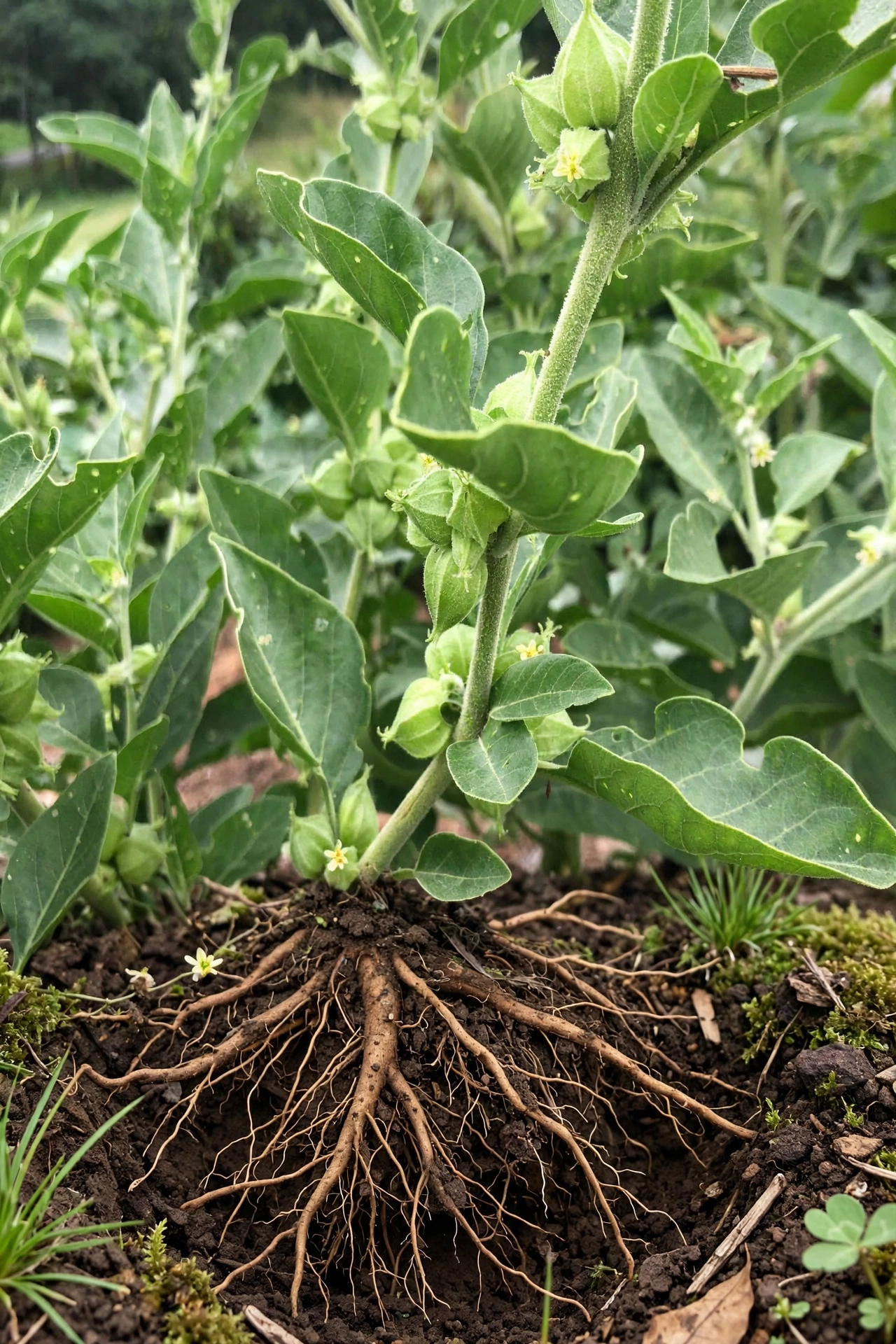
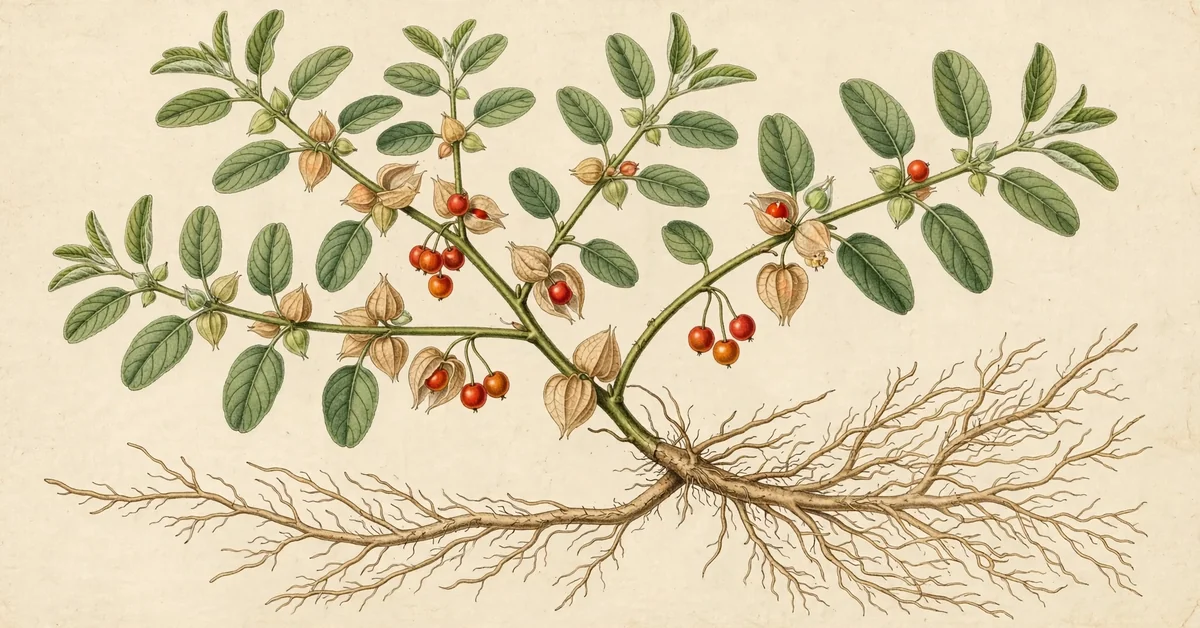
Ashwagandha (Withania somnifera), also called Indian ginseng, is an evergreen shrub found in parts of India, Africa, and the Middle East. It has been used as a medicinal plant for thousands of years, especially in traditional Ayurvedic medicine. Modern supplements typically contain ashwagandha root, leaf, or root/leaf extracts. Its key bioactive compounds are a group of substances called withanolides, which have been associated with anti-inflammatory and antioxidant effects (NCCIH).
You'll almost always see ashwagandha described as an "adaptogen" — supposedly a substance that helps the body resist stress. Be aware that "adaptogen" is a marketing-friendly term with a thin scientific definition, not a recognized pharmacological category with clear criteria. It's a useful flag: when a product leans hard on the word "adaptogen" instead of citing specific trial results, it's selling a vibe, not evidence.
What the Research Actually Shows
Stress and Cortisol: The Best-Studied Evidence (Still Small)

The most-cited human trial is a 2012 prospective, randomized, double-blind, placebo-controlled study of 64 adults with a history of chronic stress. Participants took either placebo or 300 mg capsules of a high-concentration full-spectrum ashwagandha root extract twice daily (600 mg/day) for 60 days. The ashwagandha group showed significant reductions in scores on all stress-assessment scales (P<0.0001) and substantially reduced serum cortisol levels (P=0.0006) relative to placebo. Adverse effects were mild and comparable between groups, with no serious adverse events (Chandrasekhar et al., 2012).
That's a real, positive RCT — but keep it in perspective: 64 people, one center, 60 days, one specific extract. It supports a modest stress-reduction effect; it does not prove ashwagandha works for everyone, at every dose, in every product on the shelf.
Anxiety: Positive Results, Shaky Foundations
A 2014 systematic review pooled the human trial literature on ashwagandha for anxiety. Five randomized controlled trials met the inclusion criteria, and most found greater improvements on anxiety or stress scales with ashwagandha than with placebo. But the reviewers' conclusion came with a large caveat: all studies had unclear or high risk of bias, designs and reporting were too heterogeneous for meta-analysis, and the evidence "should be received with caution because of an assortment of study methods and cases of potential bias" (Pratte et al., 2014).
NCCIH's current assessment is even more reserved: research shows some preparations may be effective for stress, but evidence is unclear about ashwagandha's effects on anxiety (NCCIH). Products marketed as anti-anxiety remedies are running well ahead of the data.
Sleep: Modest Support

NCCIH notes that some ashwagandha preparations may be effective for insomnia (NCCIH). The underlying trials are small and use different extracts and doses, so this is "may help some people" territory — not "proven sleep aid."
Testosterone, Fertility, and Athletic Performance: Hype vs. Data
This is where marketing most aggressively outruns evidence. NCCIH's summary: there is some limited evidence that taking ashwagandha for 2 to 4 months may increase testosterone levels and sperm quality — and not enough evidence to determine whether it helps athletic performance, cognitive function, or any of the other conditions it's sold for (NCCIH).
"Testosterone booster" advertising — with its implication of dramatic hormonal transformation — is built on that thin "limited evidence" foundation. A modest signal in small trials over a few months is not a license for the before-and-after marketing the industry runs on.
Thyroid, Cognition, Immunity, and Other Claims: Weak
For conditions including asthma, cognitive function, diabetes, menopause, and female infertility, NCCIH finds insufficient evidence to determine whether ashwagandha helps (NCCIH). It was also heavily promoted for COVID-19, for which NCCIH states there is not sufficient high-quality evidence (NCCIH). Treat any product claiming benefits in these areas as selling hope, not science.
Liver Injury: A Real Signal
Here's the safety issue that deserves more attention than it gets. Although rare, a number of cases link liver injury to ashwagandha supplements (NCCIH).
A 2025 report in the Revista Española de Enfermedades Digestivas underscores the concern: ashwagandha's association with liver damage has raised significant worries, with the risk being particularly acute for people with pre-existing liver conditions — in whom it can trigger life-threatening acute-on-chronic liver failure. The authors also note the uncomfortable context: the lack of solid clinical evidence supporting many of ashwagandha's health claims makes an already-questionable risk–benefit trade-off worse, and they call for public education about herbal supplement risks (Casiano-Manzano et al., 2025).
The practical message: if you have any liver condition, ashwagandha is not worth the gamble. And as with any supplement, unexplained fatigue, nausea, dark urine, or jaundice while taking it means stop and talk to a clinician.
Who Should Avoid Ashwagandha
Based on NCCIH's safety review, the following groups should avoid it or use it only with direct medical supervision (NCCIH):
Pregnant individuals — ashwagandha should be avoided during pregnancy; it should not be used while breastfeeding.
People with autoimmune disorders — not recommended.
People with thyroid disorders — not recommended, and it may interact with thyroid hormone medications.
Anyone about to have surgery — not recommended.
People with hormone-sensitive prostate cancer — should avoid it, because ashwagandha may increase testosterone levels.
People with liver conditions — given the hepatotoxicity signal described above.
Medication interactions: there is evidence ashwagandha might interact with medications for diabetes and high blood pressure, immunosuppressants, sedatives, and anti-seizure medications (NCCIH). If you take any prescription drugs, discuss ashwagandha with your clinician or pharmacist first — "natural" products can and do interact with pharmaceuticals.
Common side effects reported include drowsiness, stomach upset, diarrhea, and vomiting (NCCIH). The drowsiness is worth noting: combined with sedatives or alcohol, the effect can compound.
Dosage and Forms
Human trials most commonly use 300–600 mg per day of standardized root extract — the well-known stress trial used 600 mg/day for 60 days (Chandrasekhar et al., 2012). NCCIH considers ashwagandha as possibly safe for short-term use (up to 3 months), while noting there is not enough information to judge long-term safety (NCCIH).
Complications for shoppers:
Root vs. leaf vs. root/leaf extracts differ in composition and withanolide content.
Standardization varies — products standardize to different withanolide percentages, so "600 mg" on two labels may deliver very different amounts of active compounds.
Many commercial products are proprietary blends that don't disclose how much ashwagandha (or which extract) is inside.
If the label doesn't tell you the extract type, standardization, and dose, you're buying a mystery powder at a premium price.
Red Flags in Ashwagandha Marketing
Testosterone-booster hype ("boost your T naturally!") built on limited, small-trial evidence — while ignoring that the same hormonal activity is why prostate cancer patients must avoid it.
"Clinically proven" slapped on proprietary blends that hide the dose and extract type. The clinical trials used specific standardized extracts at specific doses; a blend that won't name its contents can't borrow their credibility.
COVID-19, immunity "cures," or disease-treatment claims — explicitly unsupported by high-quality evidence.
"Ancient adaptogen, safe for everyone" framing that ignores the real contraindications: pregnancy, thyroid disorders, autoimmune conditions, surgery, and liver disease.
Stacking it into "stress" or "sleep" blends with sedatives or other active ingredients without disclosing interactions.
Key Takeaways
The best human evidence supports a modest stress-reduction effect (one well-known 60-day RCT: 600 mg/day, reduced stress scores and cortisol).
Anxiety evidence is positive but weakened by bias and inconsistent methods — interpret with caution.
Sleep, testosterone, and fertility claims rest on limited evidence; athletic performance, cognition, and immunity claims are essentially unsupported.
Liver injury linked to ashwagandha is rare but real — people with liver conditions should avoid it entirely.
Avoid during pregnancy and breastfeeding; use caution with thyroid disorders, autoimmune conditions, sedatives, and before surgery.
Products vary widely in extract type, standardization, and dose — hidden doses in proprietary blends are a red flag.
Talk to a clinician or pharmacist before use, especially if you take prescription medications.