
Table of ContentsShow ChaptersHide Chapters
- Evidence-based overview of turmeric and curcumin benefits, safety, and dosage.
Medical Disclaimer
This article is for informational purposes only and does not constitute medical advice. Always consult with a qualified healthcare professional before starting any new supplement regimen.
Read our Medical / Expert Review Policy and Medical Disclaimer for details.
Turmeric is one of the most heavily marketed ingredients in the supplement industry. Golden milk lattes, "anti-inflammatory powerhouse" capsules, and social media testimonials promise everything from pain-free joints to a cured gut. The spice itself has centuries of traditional use, and its main active compound, curcumin, genuinely shows interesting biological activity in the lab. But the gap between marketing claims and human evidence is wide — and the industry's favorite trick for closing it (supercharging absorption) comes with a safety trade-off most labels never mention.
We've reviewed the human research and safety data to give you the honest picture: what turmeric and curcumin may help with, where the evidence falls short, the real (if rare) liver risk, and the red flags to watch for on product labels.
What Is Turmeric? Understanding Turmeric vs. Curcumin
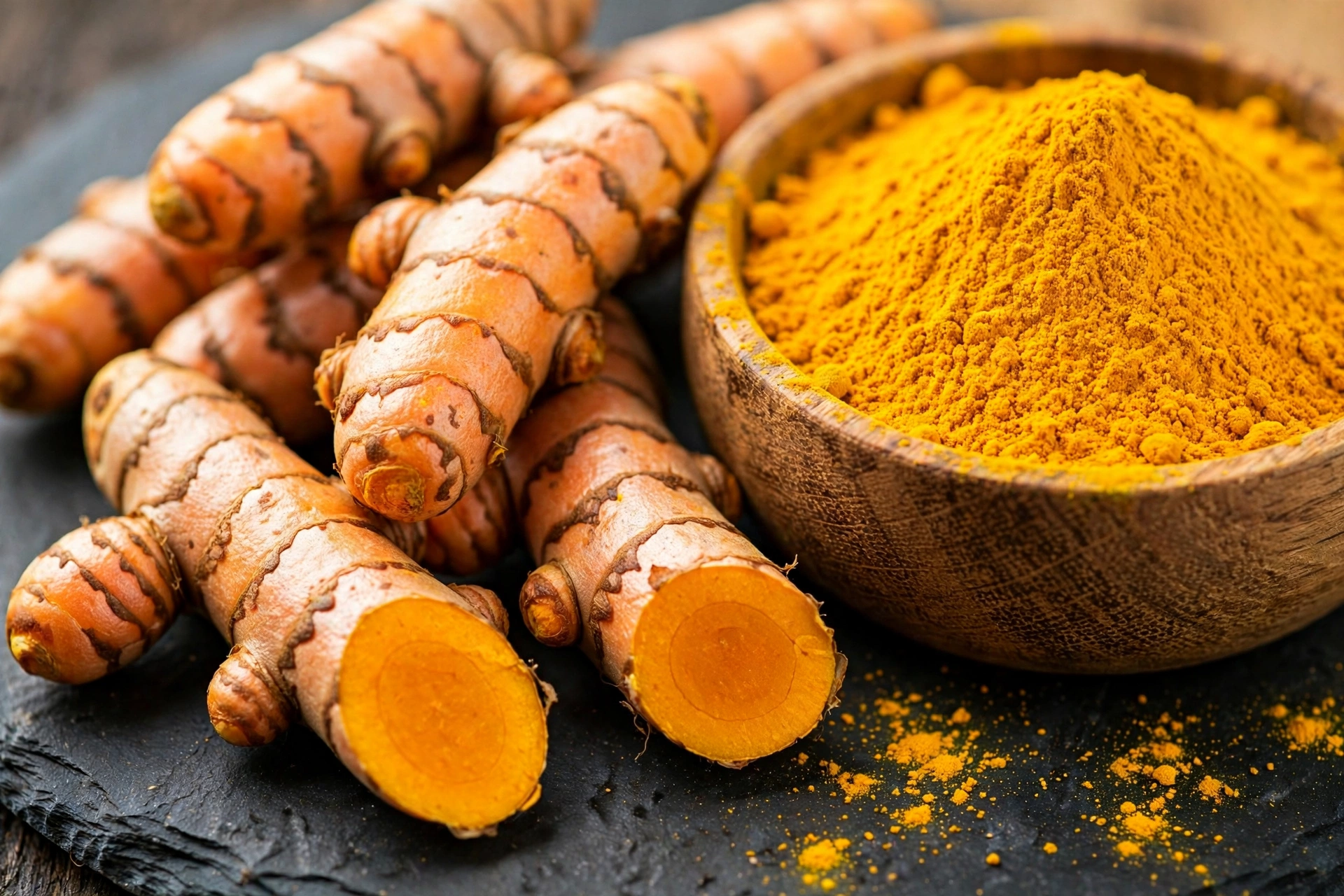
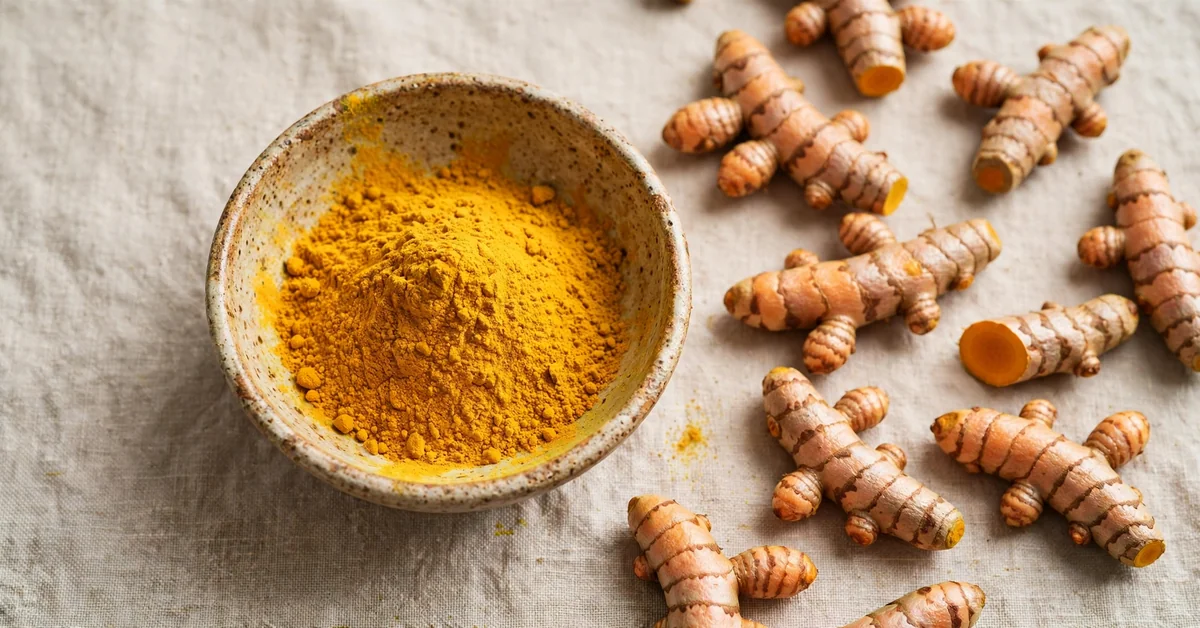
Turmeric (Curcuma longa) is a plant in the ginger family, grown commercially in India and Southeast Asia. Its rhizome (underground stem) is the familiar yellow spice used in cooking — and it has a long history of use in traditional medicine systems, including Ayurvedic, Chinese, Islamic, and Thai medicine, for conditions ranging from indigestion to arthritis (NCCIH).
The distinction that matters for supplements:
Turmeric is the whole spice/root powder. It contains a family of compounds called curcuminoids.
Curcumin is the major curcuminoid — the pigment that gives turmeric its yellow color, and the compound most research focuses on. The health activities of turmeric are commonly attributed to curcuminoids, including curcumin (NCCIH).
This distinction matters because raw turmeric powder contains far less curcumin than the concentrated extracts used in most clinical trials. A capsule of turmeric powder and a capsule of standardized curcumin extract are not the same thing, even though marketing often treats them as interchangeable.
Supplement forms include turmeric powders, capsules, standardized curcumin extracts, and "enhanced bioavailability" formulations designed to improve absorption.
The Bioavailability Problem: Why Curcumin Alone Barely Gets Absorbed
Here is the central scientific problem with curcumin: swallowing it doesn't mean your body gets it. Curcumin has poor bioavailability due to poor absorption, rapid metabolism, and rapid systemic elimination (Hewlings & Kalman, 2017).
A classic pharmacokinetics study illustrated this starkly: when human volunteers took 2 grams of curcumin alone, blood levels were either undetectable or very low. The compound is rapidly metabolized — mainly through glucuronidation in the intestinal wall and liver — before it can reach the bloodstream (Shoba et al., 1998).
The industry's standard workaround is piperine, the major active component of black pepper, which inhibits that glucuronidation. In the same study, adding just 20 mg of piperine to the 2-gram curcumin dose increased bioavailability in humans by 2000%, with no adverse effects observed at those study doses (Shoba et al., 1998). This "2000%" figure is one of the most quoted statistics in turmeric marketing — and it is real, from a real human study.
But here's what the marketing leaves out: the very formulations engineered to solve the absorption problem are the ones most associated with safety reports. The U.S. National Center for Complementary and Integrative Health (NCCIH) specifically warns that liver damage has been reported in some people who consumed highly bioavailable curcumin formulations (NCCIH). The fix for absorption created a new risk — a trade-off no "2000% more absorbable!" label discloses.
What the Research Actually Shows
Osteoarthritis and Joint Pain: Modest, Early Support
This is turmeric's best-studied use in humans. Several meta-analyses have evaluated oral turmeric or curcumin for osteoarthritis outcomes — knee pain and stiffness, joint strength, joint mobility, and function. The initial evidence is positive, but NCCIH's assessment is careful: higher-quality evidence is needed to reach definitive conclusions, and more research is needed to understand how bioavailability affects the results (NCCIH).
Our take: there is modest, early support for curcumin helping osteoarthritis symptoms, but it is not a proven treatment, and it should never replace prescribed medical care for joint disease.
Inflammation, Antioxidant Effects, and Metabolic Health
A widely cited 2017 narrative review concluded that curcumin "aids in the management of oxidative and inflammatory conditions, metabolic syndrome, arthritis, anxiety, and hyperlipidemia," attributing most benefits to its antioxidant and anti-inflammatory effects, and noting potential benefits for exercise-induced inflammation and muscle soreness (Hewlings & Kalman, 2017).
Read the fine print, though. This was a narrative review — a broad overview, not a rigorous systematic review — and much of the underlying evidence for "anti-inflammatory" effects comes from laboratory and animal studies, not human trials. Human results are mixed and depend heavily on dose, formulation, and bioavailability. NCCIH's bottom line remains the sober one: we don't know enough to definitively conclude that turmeric or curcumin is beneficial for any health purpose (NCCIH).
Other Studied Uses: Early and Uncertain
Fatty liver (NAFLD): initial research suggests oral turmeric or curcumin might improve some measures, but it's unclear which measures are consistently improved.
Oral mucositis (mouth irritation from cancer treatment): initial research suggests possible benefit in oral or mouthwash form.
Topical curcumin for knee osteoarthritis pain: it's unclear whether it has any effect (NCCIH).
For everything else turmeric is sold for — gut health "cures," detox claims, mood, immunity — the human evidence is insufficient to support the marketing.
Liver Injury: A Rare but Real Risk
This is the safety issue the turmeric industry least wants to talk about. While conventionally formulated turmeric is likely safe in recommended amounts, case reports of drug-induced liver injury (DILI) linked to turmeric/curcumin supplements — particularly enhanced-bioavailability and piperine-combined products — are real and growing.
A 2025 case report describes a 35-year-old man who developed jaundice, fatigue, itching, and loss of appetite after taking a turmeric (curcumin) supplement containing piperine. After a comprehensive evaluation ruled out viral, autoimmune, ischemic, obstructive, and metabolic causes, he was diagnosed with liver injury secondary to the supplement. His liver tests normalized after he stopped taking it, and he made a full clinical recovery. The authors emphasize that clinicians should recognize the potential hepatotoxicity of turmeric–piperine supplements and ask about supplement use in cases of unexplained liver injury (Koo et al., 2025).
NCCIH advises: if you notice symptoms such as fatigue, nausea, poor appetite, dark urine, or jaundice while taking turmeric or curcumin products, stop taking them immediately and talk with your health care provider (NCCIH).
Be especially cautious if you have a pre-existing liver condition, or if you're combining turmeric supplements with other products or medications that stress the liver. "Natural" does not mean "safe for the liver" — the liver processes everything, including plant compounds.
Dosage and Forms
Clinical trials most commonly use 500 mg to 2,000 mg per day of curcumin extract (not raw turmeric powder). Key considerations:
Extract vs. powder: raw turmeric powder delivers far less curcumin per gram than a standardized extract. Know which one your product contains and at what concentration.
Piperine combinations: the human pharmacokinetic study used 20 mg of piperine alongside curcumin (Shoba et al., 1998). More absorption is not automatically better, given the liver-injury signal with enhanced formulations.
Duration: NCCIH notes that conventionally formulated oral turmeric or curcumin is likely safe in recommended amounts for up to 2 or 3 months. Longer-term safety data for high-dose extracts is limited (NCCIH).
Because products vary so much, there is no single "correct" dose — only ranges studied in trials. Discuss dosing with a clinician or pharmacist, especially if you take medications.
Interactions and Precautions
NCCIH's general guidance applies strongly here: if you take any type of medicine, talk with your health care provider before using any herbal product, because some herbs and medicines interact in harmful ways (NCCIH).
Exercise particular caution and get professional advice if you:
Take blood-thinning or antiplatelet medications (turmeric may affect clotting pathways)
Take medications that affect blood sugar levels
Take drugs metabolized by the liver
Have gallbladder conditions
Are preparing for surgery
Pregnancy and breastfeeding: NCCIH notes that turmeric supplements during pregnancy may be unsafe, and little is known about whether amounts greater than those commonly found in food are safe while breastfeeding (NCCIH).
Common side effects of oral turmeric include nausea, vomiting, acid reflux, stomach upset, diarrhea, and constipation. Topical curcumin can cause hives or itching (NCCIH).
Supplement Quality: A Real Concern
Turmeric products are a case study in why supplement quality matters:
Actual content varies. NCCIH notes that oral curcumin products vary in how much curcumin they actually contain — and often include substances from other plants, such as piperine, that may not be obvious from the front of the label (NCCIH).
No pre-market approval. Dietary supplements are not approved by the FDA before they are sold. Manufacturers and distributors are responsible for evaluating the safety and labeling of their own products (NCCIH).
Practical steps: choose products that transparently state curcuminoid content (not just "turmeric powder" weight), look for independent third-party testing seals, and be skeptical of proprietary blends that hide individual ingredient doses behind a single number — a classic tactic for selling underdosed products at premium prices.
Red Flags in Turmeric Marketing
Watch for these warning signs:
"Cures chronic inflammation" or disease-cure claims. No health authority concludes turmeric is definitively beneficial for any condition. Inflammation is a complex biological process, not a single switch a spice flips off.
"Clinically proven" on proprietary blends that don't disclose how much curcumin is actually inside. If the dose is hidden, the "proof" doesn't apply to the product.
"2000% more absorbable!" used purely as a selling point — without mentioning that enhanced-bioavailability formulations are exactly the ones linked to liver-injury reports.
Ancient use presented as proof of efficacy. Traditional use is a reason to study something, not evidence that it works.
Testimonials and influencer endorsements standing in for clinical trials.
Key Takeaways
Curcumin is turmeric's main studied compound, but it is poorly absorbed on its own; piperine dramatically increases absorption (2000% in one human study).
The best human evidence is modest, early support for osteoarthritis symptoms — higher-quality trials are still needed.
Broad "anti-inflammatory" claims rest largely on lab and animal data; human evidence is mixed.
Liver injury linked to turmeric/curcumin supplements — especially enhanced-bioavailability and piperine-combined products — is rare but real. Know the warning symptoms.
Products vary widely in actual curcumin content; proprietary blends and hidden doses are red flags.
Talk to a clinician or pharmacist before use, especially if you take medications, have liver or gallbladder issues, or are pregnant.