
Table of ContentsShow ChaptersHide Chapters
- Learn how supplements can interact with medications, other supplements, and foods.
- This guide explains common risks, interaction types, and how to use supplements more safely.
Medical Disclaimer
This article is for informational purposes only and does not constitute medical advice. Always consult with a qualified healthcare professional before starting any new supplement regimen.
Read our Medical / Expert Review Policy and Medical Disclaimer for details.
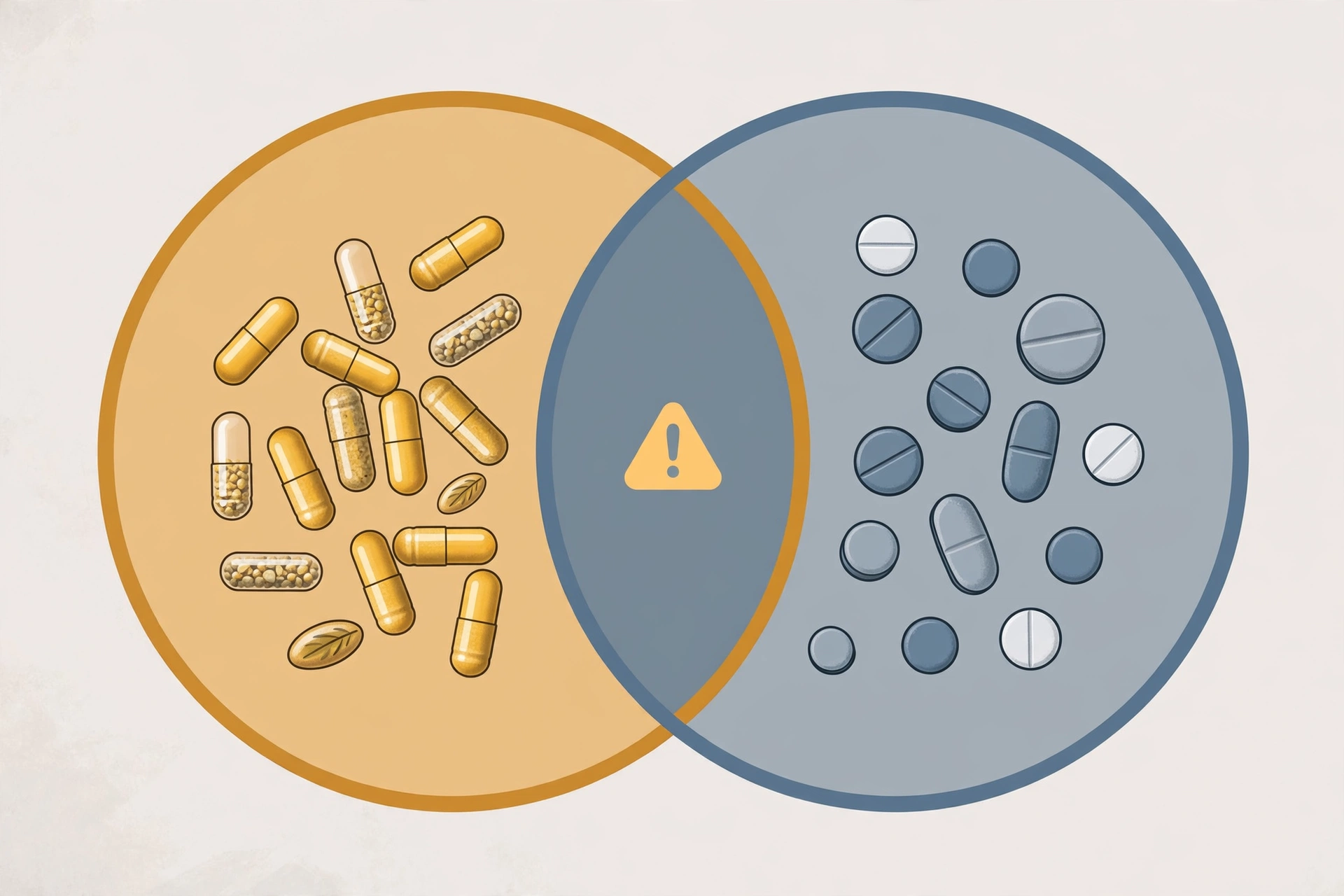
Dietary supplements are often used alongside medications and other supplements. However, combining substances can lead to interactions that alter how they work in the body, potentially reducing effectiveness or increasing the risk of side effects.
This guide explains how supplement interactions occur, common types of interactions, and how to minimize risk through informed and cautious use.
Even commonly used supplements can interact with medications or other compounds under certain conditions.
What Are Supplement Interactions?
A supplement interaction occurs when a supplement affects the way another substance behaves in the body.
This can involve:
Prescription medications
Over the counter drugs
Other dietary supplements
Food components
Interactions may be mild, moderate, or serious, depending on the substances involved.
Types of Supplement Interactions
Dietary supplements can interact with medications and other substances in different ways, sometimes enhancing or interfering with their intended effects. Understanding these interactions is important to ensure both safety and effectiveness.
1. Drug–Supplement Interactions
These are the most significant and well documented.
Possible effects include:
Reduced effectiveness of medication
Increased risk of side effects
Altered absorption or metabolism
Examples:
Supplements that affect blood clotting combined with blood thinners
Supplements that influence brain chemistry combined with antidepressants
2. Supplement Interactions
Taking multiple supplements together may:
Increase the total dosage of certain nutrients
Amplify effects (e.g., sedative or stimulant effects)
Create unexpected reactions
Overlapping ingredients are a common issue
3. Food–Supplement Interactions
Some supplements interact with food intake.
Examples:
Certain nutrients require food for proper absorption
Others may compete with food components for absorption
How Interactions Happen ?
Interactions typically occur through:
Absorption Changes
A supplement may reduce or increase how well another substance is absorbed.
Metabolism Effects
Some supplements affect enzymes in the liver that process drugs.
This can make drugs:
Stronger than intended
Less effective
Physiological Effects
Some supplements produce similar effects to medications.
Example:
Two substances affecting blood pressure or mood
This can lead to additive or opposing effects
Common Interaction Risks

When supplements are combined with medications or other supplements, certain risks can arise depending on how they affect the body. Being aware of these common interaction risks can help prevent unwanted health complications.
Increased Bleeding Risk
Certain combinations may affect blood clotting.
Sedation or Stimulation Effects
Combining substances with similar effects may amplify outcomes.
Reduced Drug Effectiveness
Some supplements may interfere with how medications work.
Toxicity Risk
Stacking similar nutrients can lead to excessive intake.
Who Should Be Especially Careful
Higher risk groups include:
Individuals taking prescription medications
Older adults
People with chronic conditions
Individuals using multiple supplements simultaneously
In these cases, interaction risk is significantly higher.
How to Reduce Interaction Risk
Taking a thoughtful and informed approach to combining supplements and medications can help minimize potential risks. Simple precautions can make a significant difference in maintaining safety and effectiveness.
1. Review All Substances Together

Consider everything being taken:
Supplements
Medications
Herbal products
2. Avoid Unnecessary Combinations
Only use supplements that are clearly needed.
3. Check Ingredient Overlap
Be cautious of multiple products containing similar compounds.
4. Consult a Qualified Professional
Especially important when:
Taking medications
Managing health conditions
5. Start with Lower Doses
When introducing new supplements, gradual use can help identify reactions.
A Balanced Perspective
Not all supplement combinations are harmful.
Some combinations may be:
Neutral
Beneficial in specific contexts
However, without proper understanding, risks can increase.
How This Guide Fits Into the Bigger Picture
This page connects to:
Supplement Safety → overall risk awareness
Dosage Guide → understanding safe intake levels
Ingredient Pages → detailed compound level analysis
Key Takeaways
Supplement interactions can alter effectiveness and safety
Drug–supplement interactions are the most critical
Combining multiple supplements increases risk
Careful evaluation and professional guidance improve safety
Disclaimer
This content is for educational purposes only and does not constitute medical advice. Always consult a qualified healthcare professional before combining supplements with medications or other substances.
Sources
- St. John's Wort — NCCIH — https://www.nccih.nih.gov/health/st-johns-wort - Drug Interactions: What You Should Know — FDA — https://www.fda.gov/drugs/resources-drugs/drug-interactions-what-you-should-know - Vitamin K and anticoagulation review — PubMed — https://pubmed.ncbi.nlm.nih.gov/26962786/ - St. John's wort and indinavir interaction — PubMed — https://pubmed.ncbi.nlm.nih.gov/10683007/