
Table of ContentsShow ChaptersHide Chapters
Medical Disclaimer
This article is for informational purposes only and does not constitute medical advice. Always consult with a qualified healthcare professional before starting any new supplement regimen.
Read our Medical / Expert Review Policy and Medical Disclaimer for details.
Key takeaways
Astaxanthin is a red antioxidant from algae, marketed for skin aging, eyes, and longevity.
Human trials are small but real: a 2021 meta-analysis of 9 oral trials found improved skin moisture and elasticity, but no significant reduction in wrinkle depth.
Safety data are reassuring: a 2019 review of 87 human studies found no safety concerns at studied doses of natural astaxanthin.
It is not a sunscreen, not proven for longevity, and skin results are modest, not miraculous. Talk to your doctor before starting any supplement.
Contents
Our verdict
Astaxanthin is one of the rare trending supplements that has real human trials behind it. The trials are small and short, but they are honest, controlled studies, not just lab dishes or animal work.
The best evidence says astaxanthin modestly improves skin moisture and elasticity. It has not been shown to erase wrinkles, protect you from sunburn like sunscreen, or slow aging in any broad sense.
Safety data look reassuring at the doses sold in stores. Our rating: promising but modest, and priced like a miracle it is not. If you buy it, buy it for what it can do, not what the marketing says it might.
What astaxanthin actually is
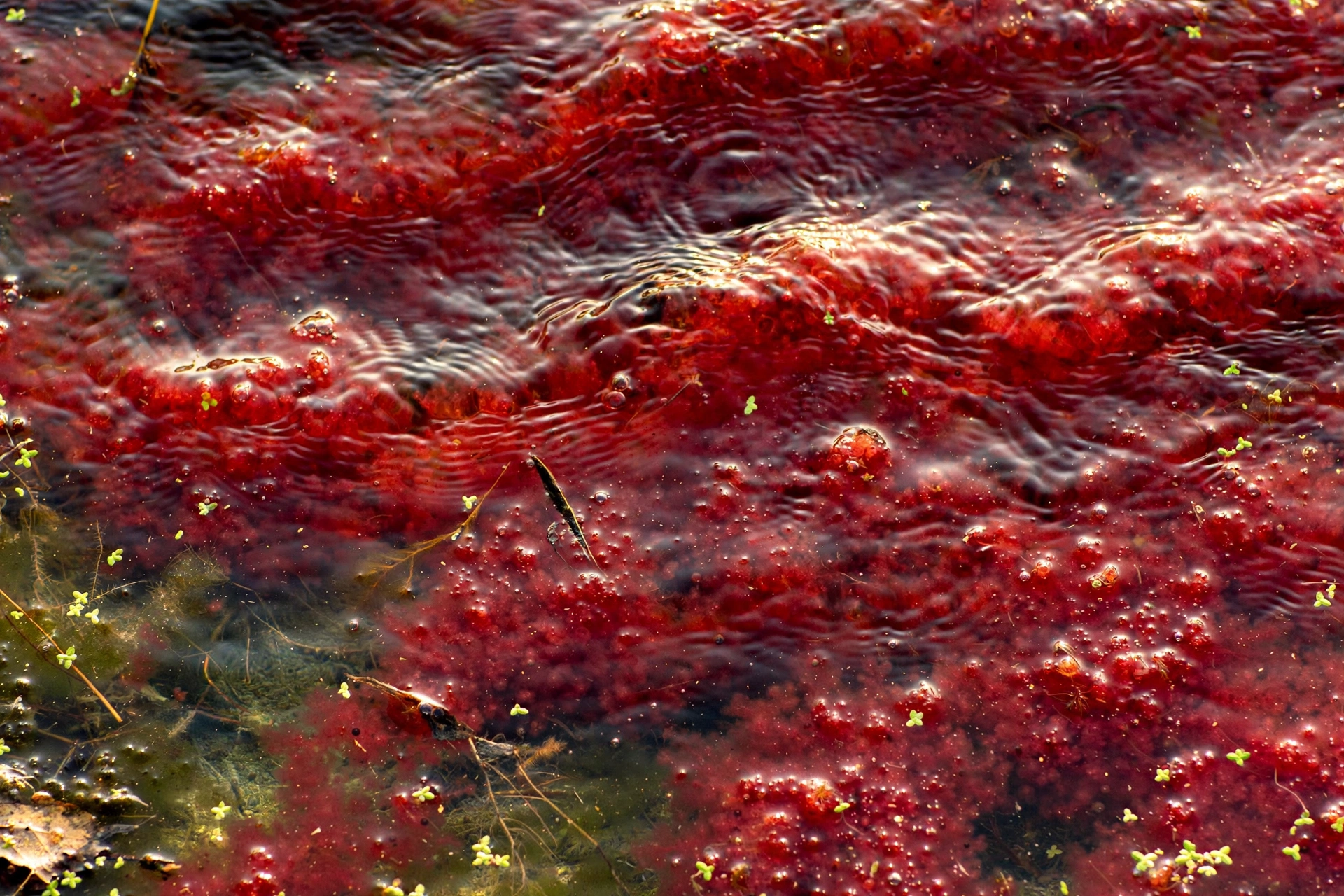
Astaxanthin is a red carotenoid antioxidant. Carotenoids are the pigments that make salmon pink, shrimp red, and flamingos pink. The supplement form comes from the microalga Haematococcus pluvialis.
This is the same algae that salmon and krill eat to get their color. The algae produces astaxanthin as a defense when its pond dries up and conditions turn harsh. That stress-response origin is part of the marketing romance.
Like other carotenoids, astaxanthin is fat-soluble. Your body absorbs it much better when you take it with a meal that contains some fat. That detail matters for anyone expecting results from a capsule taken on an empty stomach.
Why it is suddenly everywhere
Astaxanthin is having a moment. Beauty-from-within marketing has pushed it to the top of longevity search trends this year, sold as a skin supplement and a healthy-aging supplement at the same time.
The pitches lean heavily on lab numbers. You will see claims that astaxanthin is thousands of times more powerful than vitamin C or CoQ10. Those comparisons come from test-tube antioxidant measurements, not from human outcomes.
A stronger antioxidant in a test tube does not mean a better result in your body. Human biology is more complicated than a petri dish. Judge this supplement only by the human trials, and they tell a quieter story.
What the human trials show
This is where astaxanthin separates itself from most viral supplements. Several small human trials have actually been run, and a 2021 team pooled the results. Here is what they found.
Study | Size, dose, length | What changed |
|---|---|---|
Tominaga et al., 2012 | Two studies: 30 women (open-label, oral plus topical, 8 weeks) and 36 men (randomized, double-blind, placebo-controlled, 6 mg/day, 6 weeks) | Improved crow's feet wrinkles, skin elasticity, and water loss through skin in the controlled trial. Moisture and oil levels only showed trends, not significance. |
Tominaga et al., 2017 | 65 women, 6 or 12 mg/day vs placebo, 16 weeks | Skin moisture and deep wrinkles stayed stable in the astaxanthin groups while they worsened in the placebo group. Elasticity improved in the higher-dose group. No adverse events. |
Ito et al., 2018 | Randomized, double-blind, placebo-controlled trial of UV-related skin changes | Small trial focused on UV-related skin deterioration. Supportive but not strong evidence on its own. |
Zhou et al., 2021 (meta-analysis) | Pooled 9 oral randomized trials | Skin moisture and elasticity improved significantly versus placebo. Wrinkle depth did not improve significantly on its own. Authors concluded astaxanthin has promising cosmetic potential but the evidence base is small. |
Notice what this table does and does not say. The honest trials support smoother, better-hydrated, more elastic skin. They do not support erasing wrinkles or turning back the clock.
One more honest note about the 2012 study, since it gets quoted everywhere. The 30-woman study was open-label and combined oral plus topical use, which is weak evidence on its own. The stronger result came from the separate 36-man randomized trial. We mention both because sellers usually blur the difference.
What it does not do
It is not a sunscreen. No human trial shows astaxanthin replaces sunscreen, and one trial's UV findings were small and indirect. If a label suggests you can skip sunscreen, treat that as a red flag about the brand, not a feature.
It does not erase wrinkles. The pooled analysis found no significant reduction in wrinkle depth from astaxanthin alone. Some individual trials showed wrinkle improvements, but the combined evidence is not there.
It is not a proven longevity supplement. There are no human trials showing astaxanthin extends lifespan or slows aging overall. The longevity marketing borrows credibility from the skin research and stretches it far beyond what was studied.
Eye and brain claims are ahead of the evidence. Astaxanthin is marketed for eye fatigue and cognitive health, but the human trials for these uses are tiny, short, or mixed. Interesting does not mean proven.
Safety and side effects for older adults
Safety is astaxanthin's strongest suit. The side effect list in human trials is short and boring, which is exactly what you want to see.
Studied doses are well tolerated. A 2019 safety review covered 87 human studies with over 2,000 participants. Short-term doses went as high as 100 mg/day and long-term use up to 12 mg/day, with no safety concerns identified for natural astaxanthin.
The most common side effect is cosmetic. At higher doses, astaxanthin can give stool a reddish color. This is harmless, but it is worth knowing so you do not mistake it for bleeding. If you see red in your stool and are unsure, talk to your doctor rather than guessing.
No liver toxicity has been reported. Across the 87 studies, no indicators of liver toxicity appeared. That said, these trials were short, mostly weeks to months. Decades of daily use have not been studied.
Talk to your doctor about medication interactions. Astaxanthin is a mild antioxidant with theoretical effects on blood flow and blood pressure. If you take blood thinners, blood pressure drugs, or diabetes medications, bring it up with your doctor or pharmacist before adding it. Our guide to common supplement and medication interactions explains why timing and combinations matter for older adults.
The safety data apply to the natural form. The reassuring safety review covered astaxanthin from the algae Haematococcus pluvialis. Synthetic astaxanthin has different chemistry and does not carry the same safety evidence. Check the label for the source.
How to choose an astaxanthin supplement
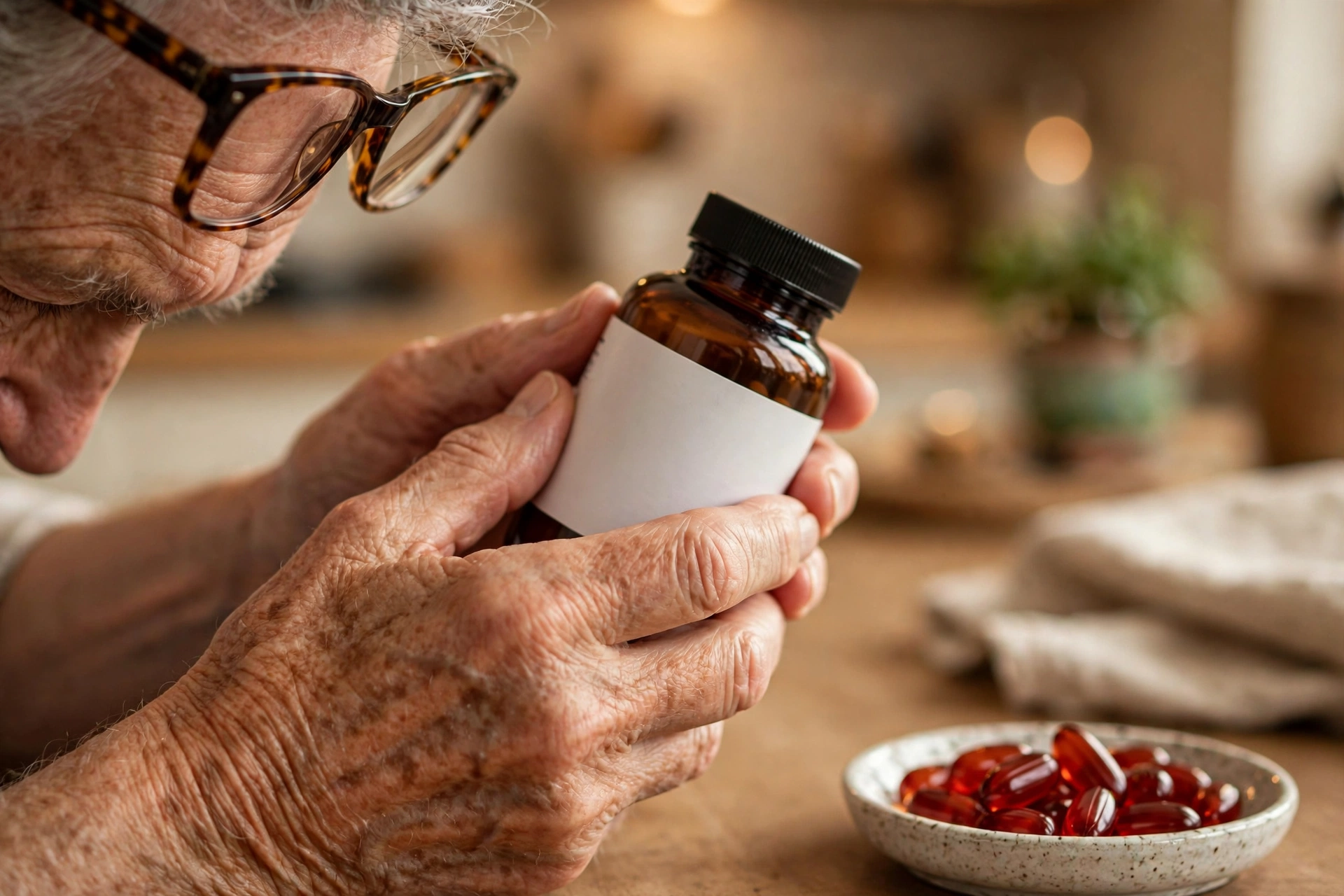
If you decide to try it, a careful label check matters more than the brand name. Here is what the evidence points to.
Look for Haematococcus pluvialis on the label. This is the natural source used in the safety-reviewed studies. Products that do not name a source give you nothing to verify.
Match the studied dose range. Skin trials typically used 2 to 12 mg per day, with 6 mg/day the most common. Mega-dose products have no human evidence showing extra benefit.
Take it with food. As a fat-soluble carotenoid, astaxanthin is absorbed far better with a meal containing some fat. Morning oatmeal alone is a poor pairing; breakfast eggs or dinner are better.
Ignore miracle language. Labels claiming thousands-fold superiority, reversing aging, or "pharmaceutical grade" are marketing, not evidence. The honest evidence supports modest skin improvements. Buy accordingly.
Consider the skin alternatives with more evidence. Astaxanthin is often sold alongside fish oil or krill oil, and those omega-3s have their own broad evidence base (see our omega-3 review). For skin specifically, collagen has more human trials behind it than astaxanthin does (see our collagen after 60 review).
Bottom line
Astaxanthin earned its trend honestly: small, real human trials show modest skin moisture and elasticity benefits, and the safety record at store doses is reassuring. That makes it better than most viral supplements.
But better than the hype factory is not the same as proven. Wrinkles were not significantly reduced in the pooled evidence, longevity claims have no human trials, and it replaces nothing in a real skincare or health routine.
If the price feels steep, skip it without guilt. The evidence is real but small, and small evidence should not carry a premium price. As always, talk to your doctor before starting any new supplement, especially if you take prescription medications.
Sources
Tominaga K, Hongo N, Karato M, Yamashita E. Cosmetic benefits of astaxanthin on humans subjects. Acta Biochim Pol. 2012;59(1):43-47. https://pubmed.ncbi.nlm.nih.gov/22428137/
Tominaga K, Hongo N, Fujishita M, Takahashi Y, Adachi Y. Protective effects of astaxanthin on skin deterioration. J Clin Biochem Nutr. 2017;61(1):33-39. https://www.ncbi.nlm.nih.gov/pmc/articles/PMC5525019/
Ito N, Seki S, Ueda F. The protective role of astaxanthin for UV-induced skin deterioration in healthy people: a randomized, double-blind, placebo-controlled trial. Nutrients. 2018;10(7):817.
https://pubmed.ncbi.nlm.nih.gov/29941810/Zhou X, Cao Q, Orfila C, Zhao J, Zhang L. Systematic review and meta-analysis on the effects of astaxanthin on human skin ageing. Nutrients. 2021;13(9):2917. https://mdpi.com/2072-6643/13/9/2917
Brendler T, Williamson EM. Astaxanthin: how much is too much? A safety review. Phytother Res. 2019;33(12):3090-3111.
https://pubmed.ncbi.nlm.nih.gov/31788888/Spiller GA, Dewell A. Safety of an astaxanthin-rich Haematococcus pluvialis algal extract: a randomized clinical trial. J Med Food. 2003;6(1):51-56.
https://pubmed.ncbi.nlm.nih.gov/12804020/
Fact-checked by the SupplementDecoded Research Editorial Team