
Table of ContentsShow ChaptersHide Chapters
Medical Disclaimer
This article is for informational purposes only and does not constitute medical advice. Always consult with a qualified healthcare professional before starting any new supplement regimen.
Read our Medical / Expert Review Policy and Medical Disclaimer for details.
Key takeaways
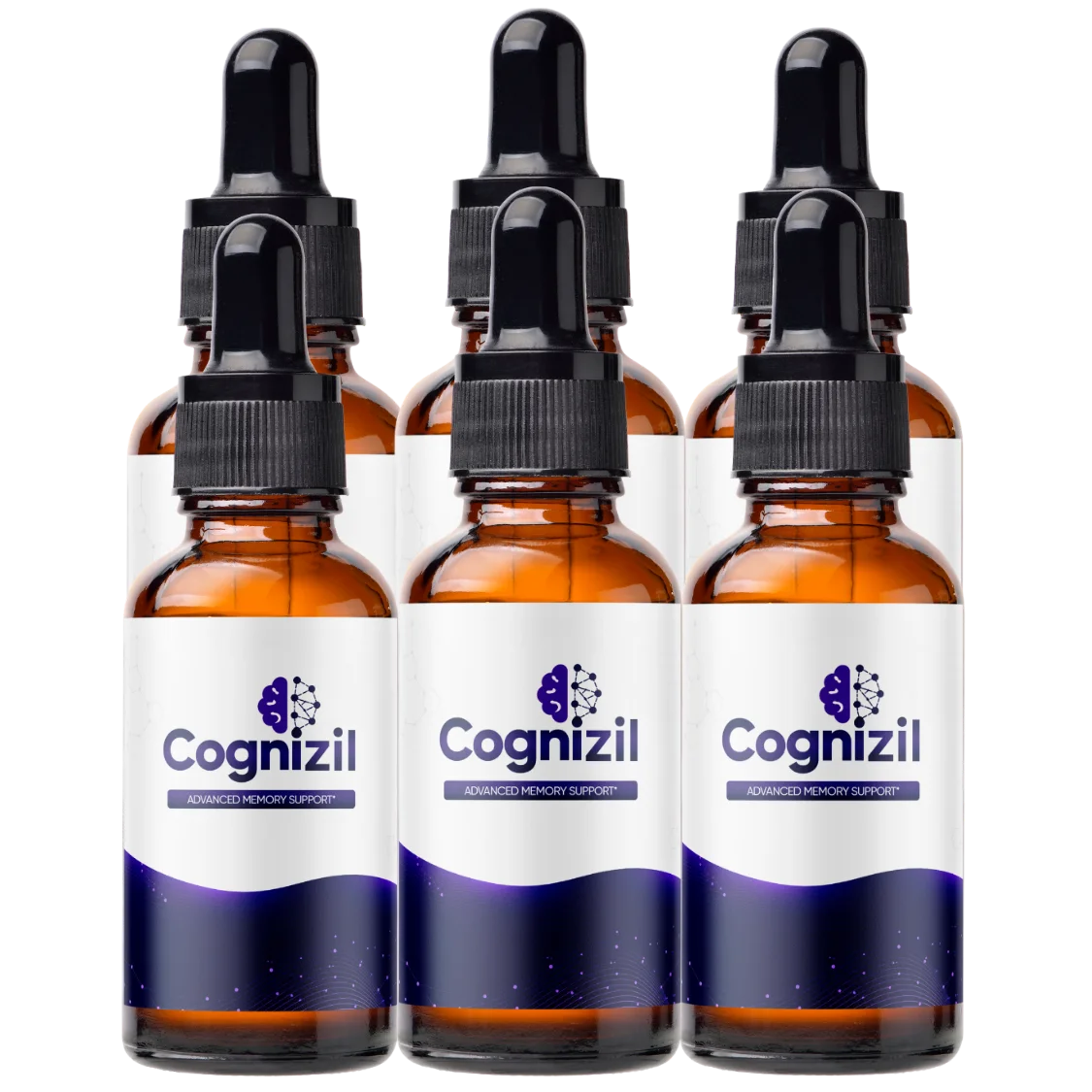
- Cognizil is a liquid memory supplement sold as one dropperful (1 ml) a day. The label discloses chromium at 7 mcg and packs the other 21 ingredients into a single 15.47 mg proprietary blend, with no per-ingredient amounts.
- The math is the whole story. Even the largest ingredient in the blend cannot exceed 15.47 mg per serving, while human trials of ingredients like African mango used 3,150 mg a day, roughly 200 times more.
- The sales page is unusually quiet for this category: no testimonials, no countdown timers, no disease claims, and a cautious disclaimer that results vary and are not immediate.
- The label lists a PO Box in Ogden, Utah and two mismatched support emails, the same pattern we found in our recent teardowns of the same seller family. No FDA or FTC action was found against Cognizil as of October 15, 2026.
Contents
- The verdict
- What the page actually claims
- The label, ingredient by ingredient
- The dose math: why 15.47 mg ends the argument
- Senior-safety notes
- Price and value
- The company behind the label
- Sources
The verdict
Cognizil's sales page is one of the tamest we have reviewed in the memory-supplement category. There are no miracle claims, no fake doctor endorsements, no countdown timers, and the page's own disclaimer says results vary, are not immediate, and may not happen for everyone.
But the formula tells a different story. The label hides 21 ingredients inside one 15.47 mg proprietary blend. No ingredient in that blend can reach the doses used in human research, and the page offers no product-specific trial to compensate.
Our verdict: the marketing restraint is real and welcome, but the doses are not serious. There is no plausible way this amount of these ingredients supports memory in a meaningful way, and the label keeps you from verifying even that. Seniors should talk to their doctor before trying it, especially anyone on blood pressure or heart medication.
What the page actually claims
We read the full page as it appeared in October 2026. It is a short checkout-style page, not a long sales letter. Here is what it says, and what it does not.
| What the page says | What we found |
|---|---|
| The bottle label reads "Advanced Memory Support" | Yes, with an asterisk pointing to the FDA disclaimer. No disease claims (no mention of dementia, Alzheimer's, or memory loss) appear anywhere. |
| "Designed to support cognitive function and mental clarity" | This is the only efficacy language, and it is immediately qualified: results vary, are not guaranteed, and are not immediate. The page suggests evaluating over 180 to 210 days. |
| "Clinically proven" or "doctor recommended" | Neither phrase appears. No clinical trial of Cognizil is cited, and we found no published finished-product trial. |
| Statistics or success rates | None. No percentages, no "9 out of 10" claims, no before-and-after stories. |
| "FDA registered facility" and "Made in the USA" | Both appear on the label. FDA registration of a facility is not FDA approval of the product, a distinction worth keeping in mind. |
This restraint is genuinely unusual for affiliate memory products. Compare it with our NeuroPulse Pro teardown, which also ran a quiet checkout funnel, versus the louder funnels we have covered in the past.
The label, ingredient by ingredient
The label image is shown below. It is worth reading closely, because the numbers matter more than the ingredient names.
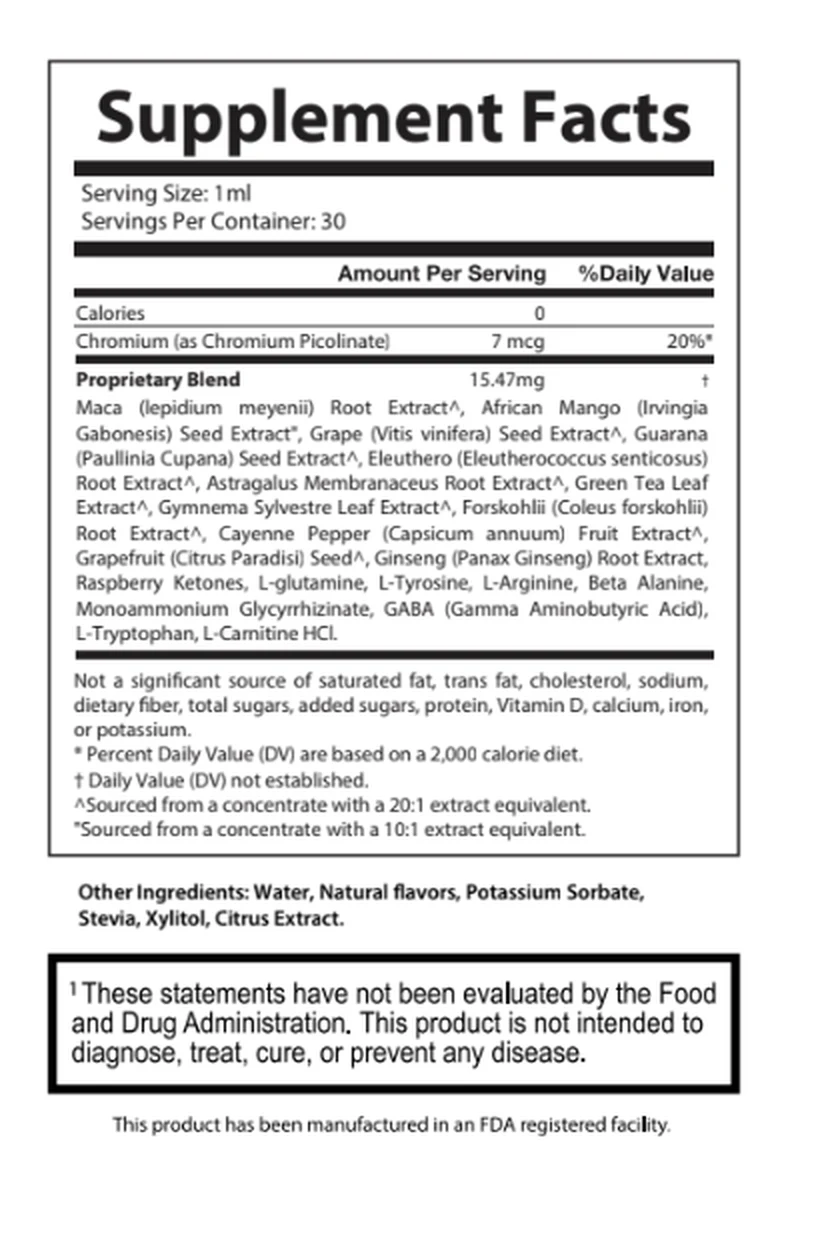
- Serving size: 1 ml (one dropperful), one serving per day. Each 1 oz (30 ml) bottle holds 30 servings, or one month.
- Chromium (as chromium picolinate), 7 mcg: the only individually disclosed dose on the panel, listed as 20% of the Daily Value. The NIH Office of Dietary Supplements sets the Daily Value for chromium at 35 mcg for adults, so 7 mcg is a trace amount.
- Proprietary blend, 15.47 mg: this single line contains all 21 remaining ingredients. The label names each one, but discloses no individual amounts. By definition, no ingredient in the blend can exceed 15.47 mg per serving, and with 21 ingredients listed, the average is well under 1 mg each.
- Other ingredients: water, natural flavors, potassium sorbate, stevia, xylitol, and citrus extract. Standard for a flavored liquid.
- Label warnings: do not exceed the recommended dose, not for use under age 18 or by pregnant or nursing women, consult a physician if you have a medical condition, and keep out of reach of children.
The 21 blend ingredients, in label order: maca root extract, African mango seed extract, grape seed extract, guarana seed extract, eleuthero root extract, astragalus root extract, green tea leaf extract, gymnema sylvestre leaf extract, coleus forskohlii root extract, cayenne pepper fruit extract, grapefruit seed, ginseng root extract, raspberry ketones, L-glutamine, L-tyrosine, L-arginine, beta alanine, monoammonium glycyrrhizinate, GABA, L-tryptophan, and L-carnitine HCl.
That is a kitchen-sink formula: adaptogens, amino acids, stimulants, and metabolic herbs, many of them borrowed from weight-loss products (African mango, raspberry ketones, green tea, cayenne, coleus forskohlii) rather than memory research.
The dose math: why 15.47 mg ends the argument
A proprietary blend is not automatically a red flag. It becomes one when the total is this small. The table below compares what human research actually used against what Cognizil can possibly contain.
| Ingredient | What human trials actually used | What Cognizil discloses |
|---|---|---|
| African mango seed extract | 3,150 mg per day (1.05 g, three times daily) in a one-month randomized trial | Unknown, and capped below 15.47 mg (the trial dose is roughly 200 times the entire blend) |
| GABA | 20 to 100 mg in human stress and sleep studies | Unknown, and capped below 15.47 mg (even the smallest study dose exceeds the whole blend) |
| Ginseng root extract | Human trials exist, but NCCIH notes most were small (under 200 people) and shorter than 3 months | Unknown, and capped below 15.47 mg |
| Chromium picolinate | The NIH Daily Value is 35 mcg for adults | Disclosed: 7 mcg, or 20% of the Daily Value |
- The ceiling is the evidence. Even if one ingredient made up the entire 15.47 mg blend (impossible, since 21 are listed), it would still fall short of every human trial dose we could verify. An even split would give each ingredient about 0.7 mg, a homeopathic quantity by supplement standards.
- Chromium is the honest exception. It is the only ingredient with a disclosed dose, and it is labeled accurately. But 7 mcg of chromium has no plausible connection to memory support, and the NIH notes that chromium supplements have only shown, at most, very small metabolic effects at much larger doses.
- Several ingredients have no human memory data at all. We found no published human trial of raspberry ketones for any cognitive outcome, and no published trial of this finished product. The page does not claim otherwise, to its credit.
The bottom line on the formula: the label names real ingredients studied at real doses, then supplies them at a fraction of those doses. Naming studied ingredients is not the same as matching studied doses.
Senior-safety notes
Because the doses are tiny, the safety profile is mostly about what the ingredients are, not how much is present. Still, older adults should know what is in the bottle.
- Monoammonium glycyrrhizinate is a licorice compound. It is a salt form of glycyrrhizin, the compound in licorice root. NCCIH warns that glycyrrhizin can cause serious adverse effects, including irregular heartbeat, especially with large amounts or long-term use, and urges caution for people with hypertension or heart or kidney conditions. To be clear: the amount in Cognizil is an undisclosed fraction of 15.47 mg, far below amounts linked to problems in case reports. But anyone with blood pressure or heart issues should mention this ingredient to their doctor before use.
- Guarana seed extract contains caffeine. The amount is unknown and almost certainly tiny, but caffeine-sensitive seniors and anyone whose medication interacts with stimulants should know it is in the blend.
- Twenty-one ingredients means twenty-one interaction questions. Green tea, ginseng, coleus forskohlii, and several amino acids can each interact with common senior medications, including blood thinners and blood pressure drugs. No single ingredient here is present at a concerning dose, but the label is exactly the kind of long list a pharmacist should review. Our supplement interactions guide explains how to have that conversation.
- Chromium is not a concern at this dose. The NIH notes that chromium from foods and supplements does not appear to cause harm at ordinary amounts, while advising caution with high amounts for people with kidney or liver disease. Seven micrograms is far below any concern level.
As always, this is not medical advice. Talk to your doctor or pharmacist before starting any new supplement, especially if you take prescription medications.
Price and value
The pricing section is fully visible on the page, with no hidden tiers. All packages are presented as one-time purchases. We saw no subscription, auto-billing, or free-trial terms.
| Package | Price per bottle | Total | Shipping | Cost per day |
|---|---|---|---|---|
| Basic offer: 2 bottles (60-day supply) | $79 | $158 | $9.99 | $2.63 |
| Most popular: 3 bottles (90-day supply) | $69 | $207 | Free | $2.30 |
| Best offer: 6 bottles (180-day supply) | $49 | $294 | Free | $1.63 |
- The guarantee is consistent. The pricing cards show a 180-day guarantee, and the refund policy (a footer modal) also states 180 days. The policy says to contact support within 180 days for a full refund, and names a return address in Ogden, Utah. We found no restocking fees mentioned.
- The value math is rough. At $1.63 to $2.63 per day, you are paying for 15.47 mg of botanicals and amino acids, plus 7 mcg of chromium. That is supplement pricing for drugstore-dose ingredients at a fraction of drugstore doses.
- No urgency tactics were observed. No countdown timer, no "only a few left" stock claims, no pop-up discounts appeared during our visit. Payment logos shown are Visa, Mastercard, Discover, and American Express.
The company behind the label
The label and the page give just enough detail to sketch the operation, and readers of our recent teardowns will recognize the pattern.
- Address: the label reads "Distributed by: Cognizil, PO Box 12730, Ogden, UT 84404," with phone +1 (877) 257-0710. The refund policy names "REDROCK" at the same PO box as the return recipient. The same Ogden PO box appeared in our MindHoney Pro and NeuroPulse Pro reviews, with the same $79/$69/$49 pricing tiers.
- Two mismatched support emails: the page and footer list [email protected], while the label lists [email protected]. The same email mismatch showed up in the earlier reviews from this seller family. It does not prove anything about product quality, but it is sloppy customer-service infrastructure.
- Legal terms: the footer links open in-page modals, not standalone pages. The terms require binding arbitration with no jury trial or class actions, and are governed by New York law. The privacy policy says data is shared with payment processors, shipping companies, and analytics and marketing partners.
- What is missing: no company incorporation name, no About page, no named people, no testimonials to audit, and no third-party testing or certification mentioned anywhere.
Regulatory check: we searched FDA warning letters and FTC actions and found no enforcement action against Cognizil as of October 15, 2026. That is a statement of what the public record shows, not an endorsement.
Sources
- National Institutes of Health, Office of Dietary Supplements. Chromium: Fact Sheet for Health Professionals. Daily Value for chromium is 35 mcg for adults; discusses studied uses and cautions.
- National Center for Complementary and Integrative Health. Licorice Root: Usefulness and Safety. Glycyrrhizin can cause serious adverse effects including irregular heartbeat, especially with hypertension or heart or kidney conditions.
- National Center for Complementary and Integrative Health. Asian Ginseng: Usefulness and Safety. Most clinical trials have been small, with fewer than 200 participants, and shorter than 3 months.
- Ngondi JL, Oben JE, Minka SR. The effect of Irvingia gabonensis seeds on body weight and blood lipids of obese subjects in Cameroon. Lipids in Health and Disease. 2005;4:12. Randomized trial using 1.05 g of Irvingia gabonensis three times daily (3.15 g/day).
- Frontiers in Neuroscience. Effects of Oral Gamma-Aminobutyric Acid (GABA) Administration on Stress and Sleep in Humans: A Systematic Review. 2020. Human studies used doses ranging from 20 to 100 mg.
Review note: This review covers the Cognizil sold through the short checkout-style page as it appeared in October 2026, the version with the package-selection headline, 180-day guarantee badges, and the amber dropper bottle labeled "Advanced Memory Support." Separate websites using the Cognizil name exist with different labels and prices; they are not the product reviewed here, and lookalike pages may change over time.
Fact-checked by the SupplementDecoded Research Editorial Team