
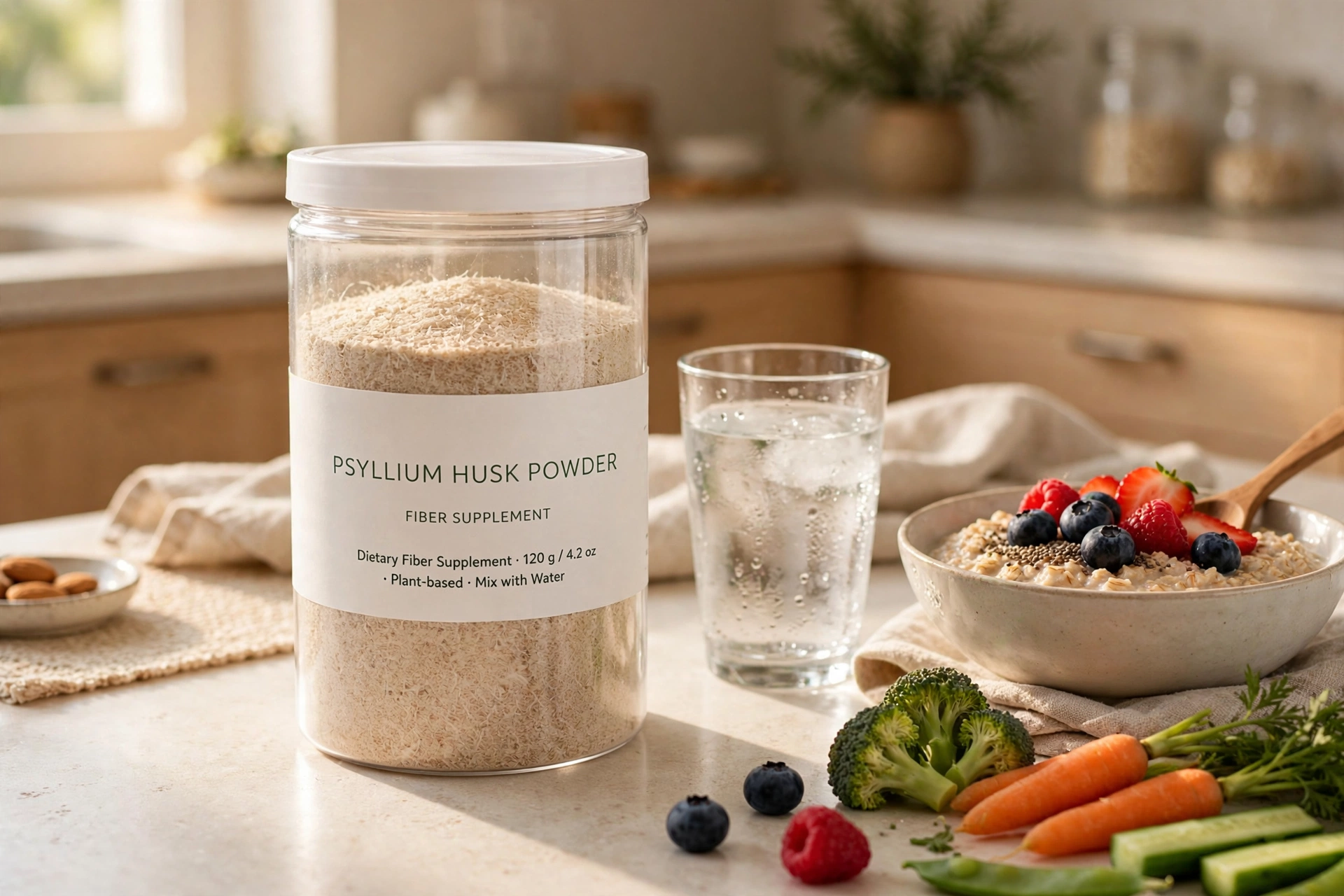
Table of ContentsShow ChaptersHide Chapters
- Fibermaxxing is 2026's biggest fiber trend.
- We review the real evidence behind psyllium, fiber gummies, medication timing, and senior safety.
Medical Disclaimer
This article is for informational purposes only and does not constitute medical advice. Always consult with a qualified healthcare professional before starting any new supplement regimen.
Read our Medical / Expert Review Policy and Medical Disclaimer for details.
The bottom line:
- Fibermaxxing is the rare viral trend with real science behind it. Most adults get far too little fiber, and closing that gap genuinely helps the heart, the gut, and blood sugar.
- Psyllium husk is the supplement form with the strongest evidence. Pooled trial data show it lowers LDL cholesterol modestly: about 13 mg/dL at roughly 10 grams a day.
- The trend overreaches. Daily targets of 40 to 60 grams go well beyond what is studied, fiber gummies are closer to candy than nutrition, and fiber can reduce how well some medications are absorbed.
- After 60, the safe approach is food first, start low and go slow, drink plenty of water, and take fiber at least one hour before or two hours after medications.
Contents
- The verdict: mostly honest, with real limits
- What fibermaxxing actually means
- What the trend gets right
- Where fiber supplements genuinely help
- Where the trend goes too far
- How to do it safely after 60
- What to check on the label
The verdict: mostly honest, with real limits
Fibermaxxing is the 2026 social media trend of squeezing as much fiber as possible into each day, through food, powders, capsules, and gummies. This is the rare viral trend where the core idea is sound.
Fiber is one of the most under-consumed nutrients in the American diet, and the evidence that more of it helps is genuinely strong. The honest caveat: the trend overshoots on dose, some products are mostly marketing, and fiber can interfere with medications if timed badly. This review from the Supplement Decoded Team separates what holds up from what does not.
What fibermaxxing actually means
Fibermaxxing means deliberately maximizing daily fiber intake, often with gram-counting borrowed from diet culture. Trend followers set daily targets as high as 40 to 60 grams, sometimes stacking several fiber products on top of high-fiber meals.
Compare that with the actual recommendations. The National Academies of Sciences, Engineering, and Medicine, cited by Mayo Clinic, set these daily targets:
| Age group | Women | Men |
|---|---|---|
| 50 or younger | 25 grams | 38 grams |
| 51 and older | 21 grams | 30 grams |
The gap between reality and those targets is enormous. Mayo Clinic reports that not even 1 in 10 Americans gets the recommended amount of fiber. About 90 percent of the U.S. population consumes far less, averaging only around 15 grams a day.
So the trend is chasing a real shortfall. Most older adults would gain more from reaching 21 or 30 grams a day than from pushing toward 60.
What the trend gets right
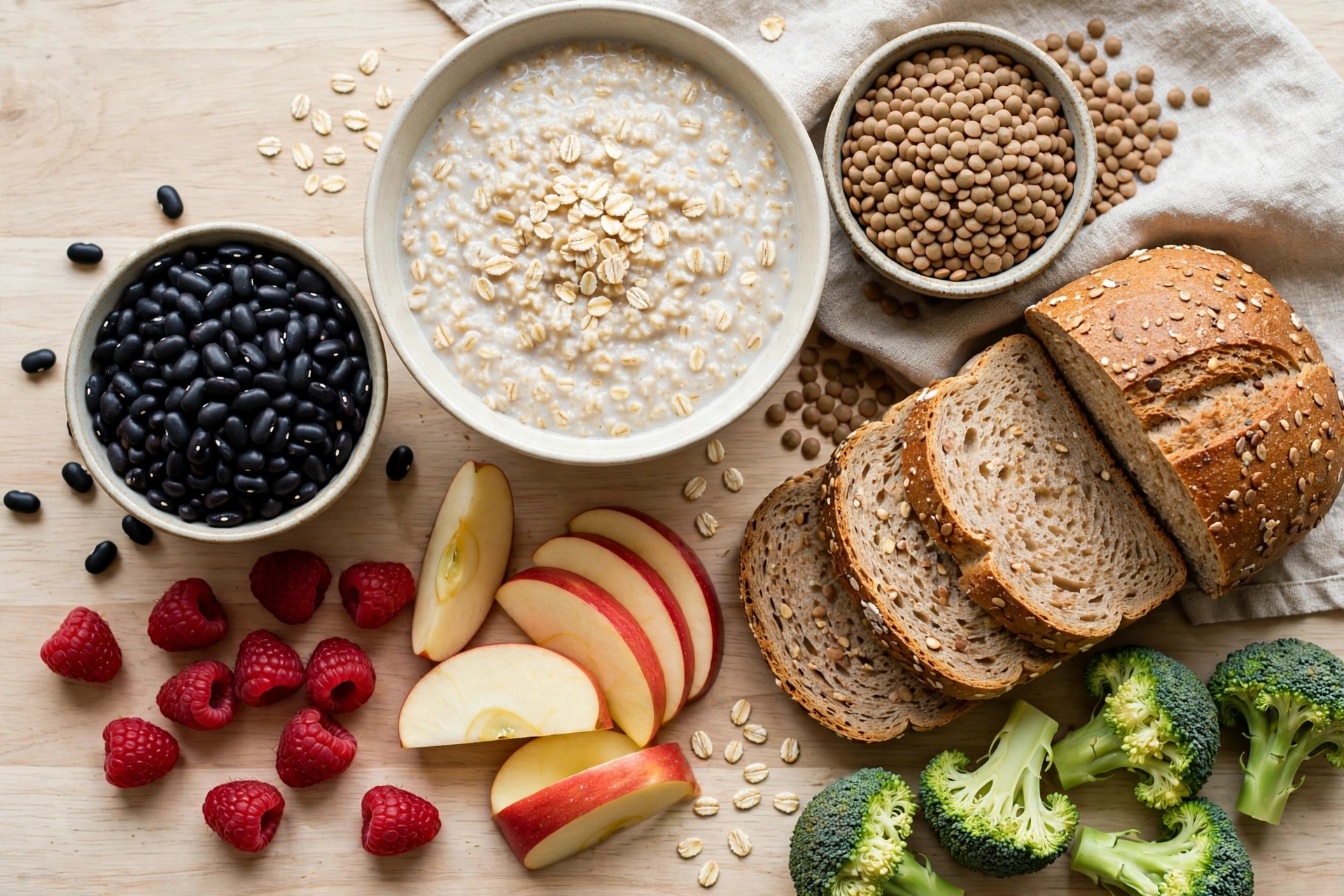
The core claim, that most people should eat more fiber, is backed by decades of research. Fiber bulks up and softens stool, which prevents and relieves constipation. Soluble fiber can lower LDL ("bad") cholesterol, help control blood sugar, and is linked with lower risk of heart disease, type 2 diabetes, diverticulitis, and colorectal cancer.
Fiber also feeds the good bacteria in your gut. Fermentable fibers are food for beneficial microbes, and a diverse fiber intake supports a diverse gut microbiome. Our full look at that side of gut health is in our probiotics evidence review.
Here is how the main fiber claims rate against the evidence:
| Claim | Evidence grade | Notes |
|---|---|---|
| Relieves constipation | Strong | Coarse fibers like psyllium increase stool water content and bulk. |
| Lowers LDL cholesterol (psyllium) | Moderate to strong | Multiple pooled trial analyses confirm a modest, consistent effect. |
| Helps control blood sugar | Moderate | Soluble fiber slows sugar absorption, especially useful in diabetes. |
| Supports gut microbiome | Emerging to moderate | Variety of plant fibers matters more than one supplement type. |
| Causes weight loss | Modest at best | Fiber increases fullness, but it is not a fat-burner. |
| Flushes "toxins" or detoxes the body | No evidence | Marketing language. The liver and kidneys handle detoxification. |
Where fiber supplements genuinely help
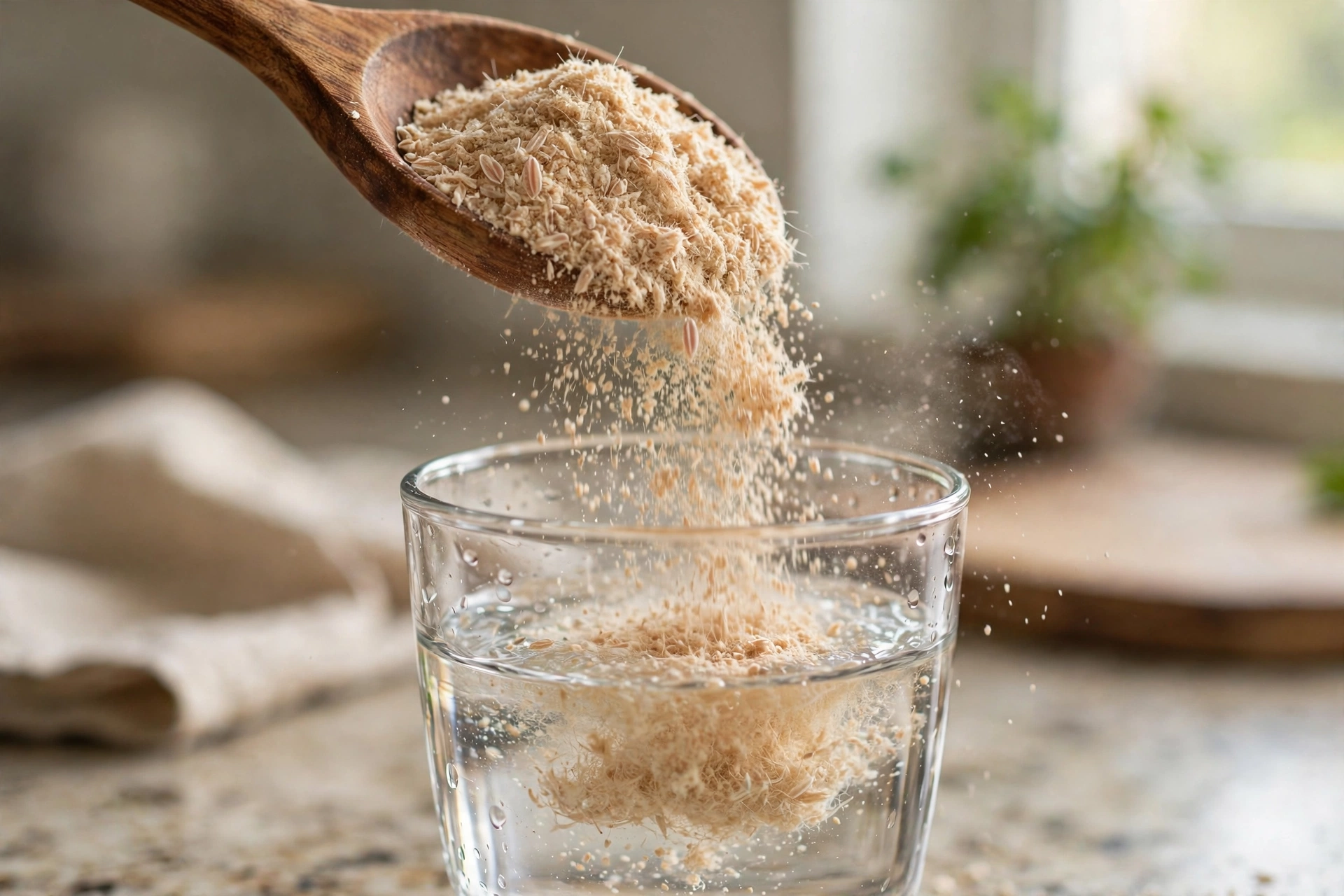
If food alone does not close the gap, a fiber supplement can help. Psyllium husk is the form with the best-studied record. A 2018 meta-analysis of 28 randomized trials (1,924 participants) found that a median dose of about 10.2 grams of psyllium a day lowered LDL cholesterol by 0.33 mmol/L, roughly 13 mg/dL, and also lowered non-HDL cholesterol and apolipoprotein B. The researchers graded the evidence moderate quality for cholesterol and high quality for apolipoprotein B.
A 2025 dose-response meta-analysis of 41 randomized trials (2,049 participants) reached a similar conclusion: psyllium significantly lowered LDL cholesterol (by 8.55 mg/dL on average) and total cholesterol, with little effect on HDL or triglycerides. The effect is modest, not dramatic, but it is consistent across many studies.
Mayo Clinic gastroenterologists note that coarse wheat and psyllium can increase stool water and fecal mass and are reasonable options for constipation. They also warn that not all fibers help, and some finely ground fibers can even make constipation worse.
Supplement forms compared:
| Form | Fiber per serving | Things to watch |
|---|---|---|
| Psyllium powder | Highest per serving | Must be mixed with a full glass of water; can thicken fast. |
| Psyllium or fiber capsules | Lower per serving | Easier to take; you may need several capsules to match a powder dose. |
| Fiber gummies | Lowest per serving | Often contain added sugars; check the label for the sugar-to-fiber trade. |
| Inulin or wheat-dextrin mixes | Varies | Dissolve clear in drinks; more likely to cause gas at high doses. |
Food first still wins. Mayo Clinic notes that fiber supplements usually contain only one type of fiber, while fiber-rich foods deliver a variety of fibers plus vitamins and minerals. Supplements fill the gap; they do not replace it.
Where the trend goes too far
- The 40 to 60 gram targets. These numbers come from trend culture, not from research. Official targets for people over 50 are 21 to 30 grams a day. Jumping from 15 grams straight to 60 is a recipe for bloating, gas, and cramping, and it adds no proven benefit over simply meeting the recommendation.
- Fiber gummies sold as a health habit. Many gummies deliver only a gram or two of fiber per piece while adding sugars. Read the label: if you would need five gummies to get meaningful fiber, and each has several grams of sugar, that is candy with a wellness costume.
- "Detox" and "gut reset" claims. Your colon does not need cleansing or flushing. Fiber supports normal digestion, which is plenty; claims that it scrubs toxins from your body have no evidence behind them.
- Stacking multiple fiber products. Mayo Clinic advises against adding more than 50 grams of fiber in a supplement per day, because very high supplement doses can interfere with how the body absorbs nutrients. More is not always better, and megadosing fiber is its own kind of mistake.
How to do it safely after 60

Older adults stand to gain the most from more fiber, and also face the most avoidable pitfalls. Follow these rules:
- Start low and go slow. Add a small amount, then build up over weeks. Beginning with a high dose is the fastest way to get bloating, cramping, and gas. Mayo Clinic dietitians give the same advice for raising fiber from food.
- Drink plenty of water. Fiber absorbs water as it works, and without enough fluid it can make constipation worse. Take each dose of psyllium with at least a full glass of water, and never take it dry.
- Separate fiber from medications. This is the big one. Fiber supplements can decrease the absorption of certain medications, including drugs that treat thyroid disorders, depression, diabetes, high cholesterol, seizures, and various heart conditions. Even aspirin, ibuprofen, and penicillin can be affected. Mayo Clinic advises taking medications one hour before or two hours after eating fiber.
Examples of medications to time carefully around fiber:
| Medication type | Timing rule |
|---|---|
| Thyroid medication (e.g., levothyroxine) | Take on an empty stomach; keep fiber 1 to 4 hours away, and ask your pharmacist for the exact gap. |
| Diabetes and heart medications | Take medications 1 hour before or 2 hours after fiber. |
| Cholesterol and seizure medications | Same separation rule: meds first, fiber later. |
| Common drugs (aspirin, ibuprofen, antibiotics) | Fiber can still affect absorption; keep doses separated. |
Before starting a fiber supplement, ask your health care provider or pharmacist to review your medication list. Our supplement interactions guide explains how to time supplements around common prescriptions. For safe dosing principles generally, see our supplement dosage guide.
Talk to your doctor first if you have swallowing problems, a history of intestinal blockage, or conditions that limit fluid intake, such as significant kidney dysfunction or congestive heart failure. If new constipation, bleeding, or sudden digestive changes appear, see your doctor rather than self-treating with fiber.
What to check on the label
- Grams of fiber per serving, and the serving size. "High fiber" on the front can mean very different things per spoonful or gummy.
- Added sugars and flavorings. This matters most for gummies and drink mixes, especially if you manage diabetes.
- The directions about water. A serious fiber product tells you how much liquid to take it with. Follow those directions exactly.
- One fiber type or a blend. Most supplements contain a single fiber type. That is fine for a specific goal, like regularity or cholesterol, but it does not equal the variety of fiber in whole foods.
- Your medication list. Not on the label, but it belongs in this check: show the product to your pharmacist before you buy it.
Sources
- Mayo Clinic Press, "How to get more fiber in your diet" (daily fiber targets for adults over 50; fewer than 1 in 10 Americans meeting recommendations; fiber and heart disease, stroke, diabetes, and colon cancer risk): https://mcpress.mayoclinic.org/nutrition-fitness/how-to-get-more-fiber-in-your-diet/
- Mayo Clinic News Network Q&A, "Increasing fiber intake for constipation relief" (average U.S. intake of 15 grams; medication absorption and timing; start-low guidance; 50-gram supplement caution; food-first advice): https://newsnetwork.mayoclinic.org/discussion/mayo-clinic-q-and-a-increasing-fiber-intake-for-constipation-relief/
- Mayo Clinic Press, "Why fiber matters: essential foods for a healthy gut microbiome" (fiber as food for beneficial gut bacteria; 30-plus plants per week; gradual increases with water): https://mcpress.mayoclinic.org/healthygut/why-fiber-matters-essential-foods-for-a-healthy-gut-microbiome/
- Jovanovski E, et al., "Effect of psyllium (Plantago ovata) fiber on LDL cholesterol and alternative lipid targets, non-HDL cholesterol and apolipoprotein B: a systematic review and meta-analysis of randomized controlled trials," The American Journal of Clinical Nutrition, 2018 (28 trials, 1,924 participants; median 10.2 g/day; LDL down 0.33 mmol/L, non-HDL down 0.39 mmol/L, apolipoprotein B down 0.05 g/L): https://pubmed.ncbi.nlm.nih.gov/30239559/
- "Psyllium supplementation and lipid profiles: systematic review and dose-response meta-analysis of randomized controlled trials," Genes & Nutrition, 2025 (41 trials, 2,049 participants; LDL down 8.55 mg/dL, total cholesterol down 9.05 mg/dL): https://link.springer.com/article/10.1186/s12263-025-00786-5
Fact-checked by the SupplementDecoded Research Editorial Team