
Table of ContentsShow ChaptersHide Chapters
Medical Disclaimer
This article is for informational purposes only and does not constitute medical advice. Always consult with a qualified healthcare professional before starting any new supplement regimen.
Read our Medical / Expert Review Policy and Medical Disclaimer for details.
Key takeaways
- Evo Slim's sales page is built on BHB ketone salts: magnesium, calcium, and sodium beta-hydroxybutyrate, which the page says help the body "burn fat instead of carbs." The actual Supplement Facts label contains zero BHB. It is a vitamin, mineral, and botanical capsule.
- The dose math is harsh. Alpha lipoic acid is present at 30 mg; the trials showing small weight effects used 300 to 1,800 mg a day. Gymnema extract is 3 mg; the human trial used 600 mg a day. Vanadium is 2 mcg; human diabetes trials used 75 to 300 mg a day.
- The one ingredient closest to a studied dose is banaba extract (25 mg at 1% corosolic acid, roughly 0.25 mg of corosolic acid), near the active content of a tiny two-week blood-sugar trial. That trial was small, short, measured blood sugar, and was never about weight loss.
- The page is a checkout funnel with 180-day guarantee badges and Digistore24 checkout. Its footer legal links are dead, the label FAQ contradicts the label on dosage, and the distributor is the same PO Box 12730 Ogden UT operation behind seven products we have already reviewed. No FDA or FTC action was found against Evo Slim as of October 16, 2026.
Contents
- The verdict
- The core problem: the page sells BHB, the bottle contains none
- The label, ingredient by ingredient
- The dose math
- Senior-safety notes
- Price and value
- The company behind the label
- Sources
The verdict
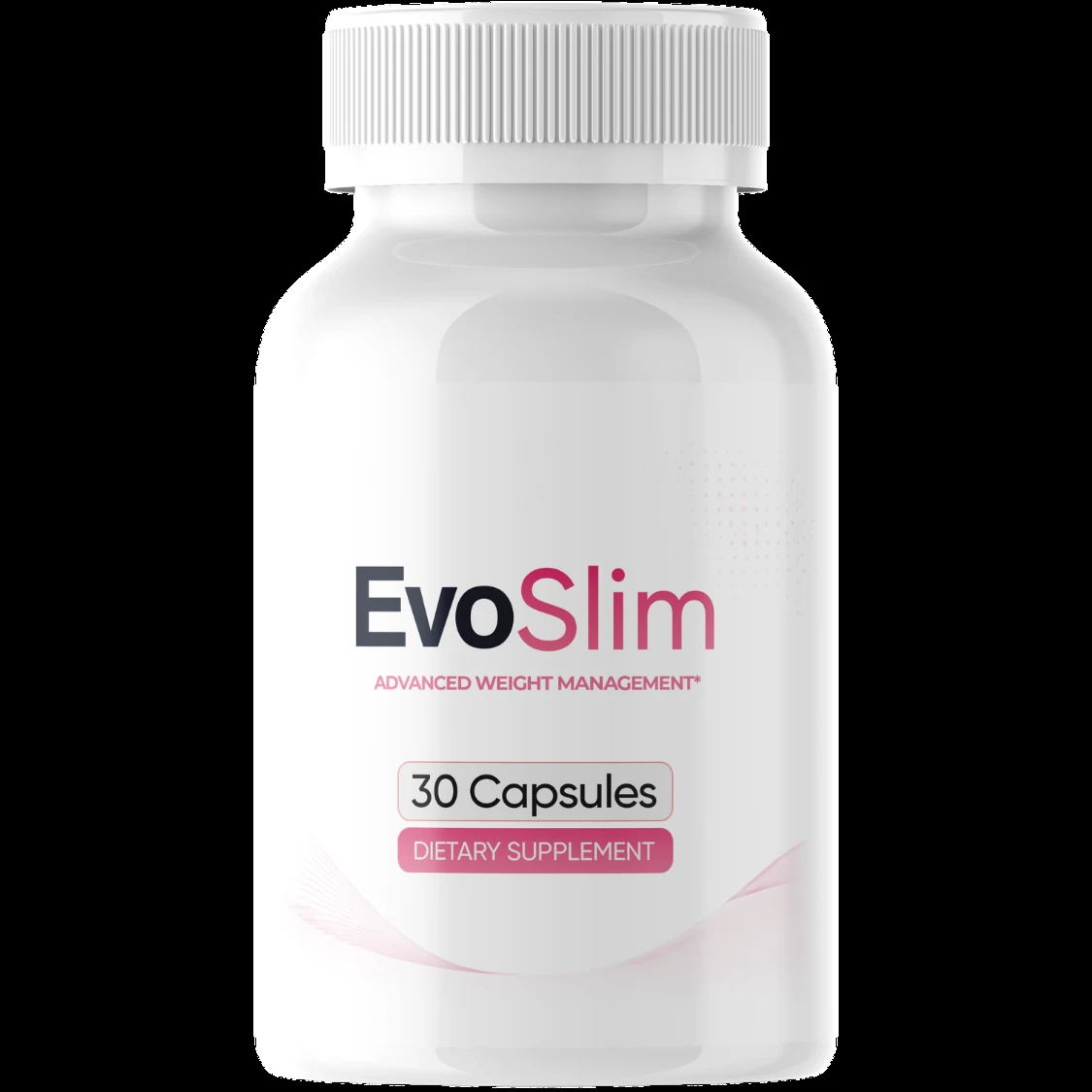
This is one of the strangest teardowns we have done, and not because the doses are small. The doses are small, but the headline problem is simpler: the product being sold is not the product being described. The sales page pitches a BHB ketone-salt formula. The bottle in the page's own label image contains no BHB at all.
That mismatch alone decides the verdict for us. A weight-loss pitch built on an ingredient that is absent from the label cannot be trusted, whatever the other ingredients do. The rest of the label is a vitamin, mineral, and botanical mix at doses far below the amounts used in human research.
Our verdict: skip it. The central claim describes a formula that does not exist in this bottle. Seniors considering any weight-loss supplement should read our supplement dosage guide first, and talk to their doctor before buying, because ingredients like these can interact with diabetes and blood-pressure medications.
The core problem: the page sells BHB, the bottle contains none
We read the full sales page as it appeared in October 2026. Its formula story is explicit: three BHB salts (magnesium, calcium, and sodium beta-hydroxybutyrate) that the page says "support your body in burning fat instead of carbs" and make "it easier for your body to shed pounds."
Then we read the label image displayed on the same page. No BHB appears anywhere on it. The label lists vitamins, minerals, and plant extracts, and that is all. The page's only named ingredients are entirely missing from the product it sells.
| What the sales page says the formula is | What the label actually lists |
|---|---|
| Magnesium beta-hydroxybutyrate | Magnesium oxide, 125 mg (a common mineral form, not BHB) |
| Calcium beta-hydroxybutyrate | No calcium of any kind on the label |
| Sodium beta-hydroxybutyrate | No sodium BHB on the label |
| "Science-backed ingredients" that burn fat instead of carbs | Vitamins C and E, biotin, magnesium, zinc, manganese, chromium, plus 13 botanicals and taurine at milligram doses |
- The BHB pitch fails even on its own terms. The only human trial design matching the page's pitch, roughly 24 grams a day of BHB salts alongside a hypocaloric ketogenic diet, found that the salts added no body-composition benefit beyond the diet itself. The diet did the work; the ketone salts were passengers.
- The dosage instructions contradict themselves. The label says one capsule a day. The page's FAQ says take two capsules daily. If a buyer follows the FAQ, they double every dose on the panel, including the 300 mcg of biotin and every botanical.
- This is not a subtle labeling dispute. Naming three specific active ingredients, then shipping a bottle that contains none of them, is the kind of page-versus-product gap that should end any buying decision on its own.
The label, ingredient by ingredient
The label image is fully legible. Here is the complete panel, transcribed exactly.
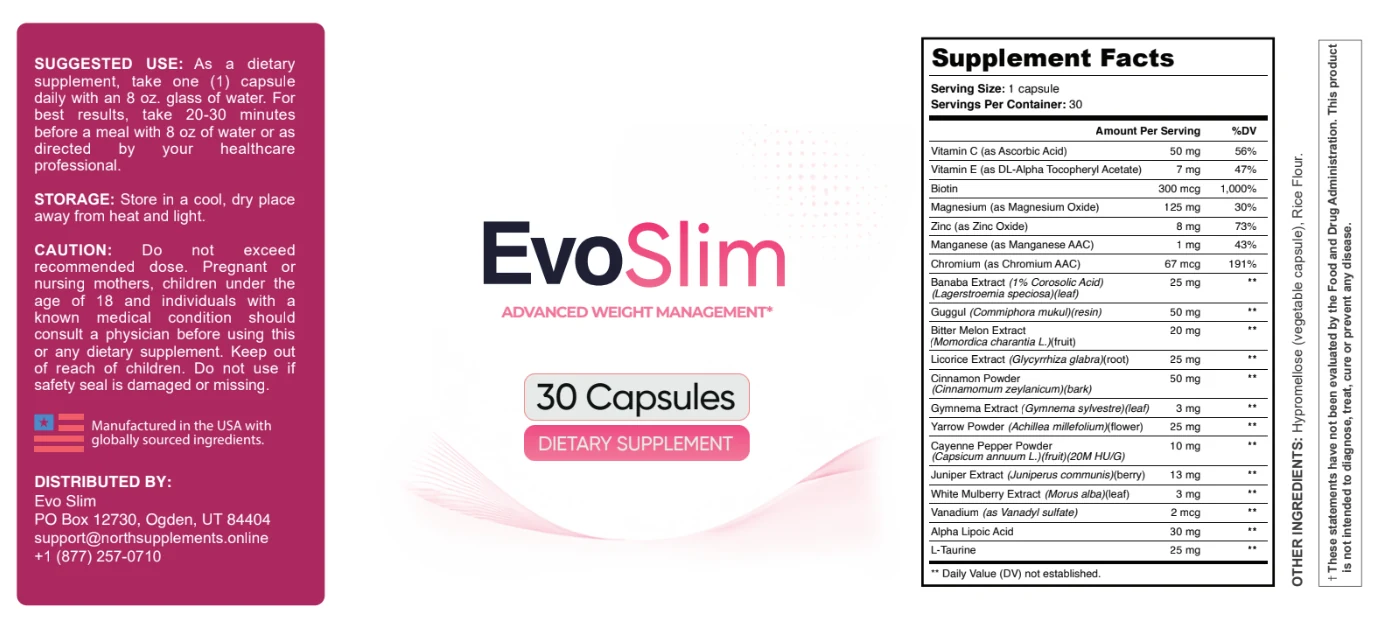
- Serving size: 1 capsule daily with 8 oz of water, 20 to 30 minutes before a meal. 30 servings per container.
- Vitamin C (as ascorbic acid), 50 mg (56% DV): ordinary multivitamin-level vitamin C. No weight-loss mechanism.
- Vitamin E (as DL-alpha tocopheryl acetate), 7 mg (47% DV): below the adult Daily Value. No weight-loss evidence.
- Biotin, 300 mcg (1,000% DV): ten times the Daily Value of 30 mcg. The NIH notes high biotin intakes can skew lab test results; seniors on thyroid or heart medications should flag this to their doctor.
- Magnesium (as magnesium oxide), 125 mg (30% DV): a standard mineral dose, and notably NOT the magnesium BHB salt the page advertises.
- Zinc (as zinc oxide), 8 mg (73% DV): near the adult RDA. No weight-loss evidence at this dose.
- Manganese, 1 mg (43% DV): below the adult adequate intake. Trace mineral, not a fat burner.
- Chromium, 67 mcg (191% DV): the one mineral at a meaningful multiple of the Daily Value, and the only one with a real weight-and-glucose research record. Blood-sugar trials used 200 to 1,000 mcg, so this is still a fraction of studied doses.
- Banaba extract (1% corosolic acid), 25 mg: about 0.25 mg of corosolic acid per capsule. See the dose math below; this is the closest any botanical gets to a studied amount, and the evidence is still thin.
- Guggul resin, 50 mg: a traditional Ayurvedic resin. No established weight-loss dose in human trials.
- Bitter melon extract, 20 mg: studied for blood sugar, with mixed results, at far larger amounts.
- Licorice root extract, 25 mg: contains glycyrrhizin compounds; NCCIH warns they can cause irregular heartbeat and blood pressure effects, mainly at larger or long-term doses. Anyone with hypertension or heart conditions should mention it to their doctor.
- Cinnamon powder, 50 mg: NCCIH's verdict on cinnamon for diabetes or weight loss is that the evidence is unclear and higher quality research is needed.
- Gymnema extract, 3 mg: the blood-sugar herb, at one two-hundredth of the studied dose.
- Yarrow powder, 25 mg; juniper berry extract, 13 mg; white mulberry leaf extract, 3 mg: traditional herbs with no meaningful human weight-loss data.
- Cayenne pepper powder, 10 mg: capsaicin content undisclosed; far below the amounts used in metabolism studies.
- Vanadium (as vanadyl sulfate), 2 mcg: human diabetes trials used 75 to 300 mg a day. This is tens of thousands of times less.
- Alpha lipoic acid, 30 mg: the best-studied weight ingredient in the bottle, at a tenth of the smallest trial dose.
- L-Taurine, 25 mg: an amino acid with no established weight-loss effect.
- Other ingredients: hypromellose (vegetable capsule) and rice flour. Standard.
- Label warnings: do not exceed the dose; pregnant or nursing mothers, children under 18, and people with a medical condition should consult a physician first.
The dose math
The page promises fat loss, appetite control, and a faster metabolism. Here is what human research actually used for the ingredients with real data.
| Ingredient | What human trials actually used | What Evo Slim discloses |
|---|---|---|
| BHB ketone salts | ~24 g/day of BHB salts in the closest trial design; added no body-composition benefit beyond the hypocaloric diet itself | 0 mg. Not on the label at all. |
| Alpha lipoic acid | 300 to 1,800 mg/day across 11 trials; pooled result: 1.27 kg greater weight loss than placebo, a small effect | 30 mg, one-tenth of the smallest trial dose |
| Gymnema sylvestre extract | 600 mg/day (300 mg twice daily) in a randomized trial of adults with impaired glucose tolerance | 3 mg, one two-hundredth of the trial dose |
| Banaba extract (1% corosolic acid) | 32 to 48 mg/day of the same 1%-standardized extract in a tiny two-week trial of type 2 diabetics; measured blood sugar, not weight | 25 mg (~0.25 mg corosolic acid), slightly below the trial's active content, from evidence too weak to lean on |
| Chromium | 200 to 1,000 mcg/day in diabetes trials; NIH sets the Daily Value at 35 mcg | 67 mcg (191% DV), a meaningful multiple of the DV but a fraction of trial doses |
| Cinnamon | No clear dose established; NCCIH says it is unclear whether cinnamon helps diabetes or weight loss at all | 50 mg of powder |
| Vanadium (as vanadyl sulfate) | 75 to 300 mg/day in human diabetes trials, with frequent gastrointestinal side effects even at those doses | 2 mcg, roughly 1/40,000th of the smallest trial dose |
- The honesty note first. Alpha lipoic acid genuinely has a pooled weight-loss signal, about 1.27 kg over placebo across trials. Banaba's corosolic acid has a small positive blood-sugar trial. These are real findings, and they are why the dose math matters: at 30 mg and 0.25 mg of active, this bottle cannot deliver what those studies tested.
- The remaining botanicals have no dose to compare. Bitter melon, guggul, yarrow, juniper, white mulberry, cayenne, and taurine have no established human weight-loss doses, and here they appear in the low milligrams. Naming studied ingredient categories is not the same as matching studied doses.
- The vitamin and mineral half of the label is a basic multi. Vitamins C and E, zinc, manganese, magnesium, and biotin at or near Daily Value levels do not burn fat. They make the label look substantial without contributing to the weight-loss pitch.
Senior-safety notes
A weight-loss capsule aimed at adults over 40 carries real interaction questions, even at small doses. The doses here are low, but the buyer is the variable that matters.
- Tell your doctor about the blood-sugar ingredients. Banaba, gymnema, cinnamon, bitter melon, chromium, and vanadium are all studied for glucose effects. The amounts here are far below trial doses, but a senior taking diabetes medication should still mention this bottle to their doctor or pharmacist before trying it. Our supplement interactions guide explains how to have that conversation.
- Licorice extract deserves a flag for blood pressure. NCCIH warns that glycyrrhizin can cause irregular heartbeat and blood pressure problems, especially with hypertension or heart or kidney conditions. The 25 mg here is small, but anyone with those conditions should not treat it as nothing.
- Biotin at 1,000% of the Daily Value can skew lab tests. The NIH notes that high biotin intakes can cause falsely high or low results on lab tests that use biotin-based technology, including thyroid and heart-attack (troponin) tests. The documented problem cases involved far larger doses than 300 mcg, but the FDA advises providers to ask patients about biotin-containing supplements, so mention it at your next blood draw.
- "No extreme diets or workouts are necessary" is the red-flag line. The page explicitly promises results without diet or exercise changes. No capsule delivers that, and seniors who believe it may delay the lifestyle changes that actually protect their health. As always, this is not medical advice: talk to your doctor before starting any new supplement.
Price and value
The pricing section is fully visible on the page. Purchases run through Digistore24 as one-time payments. We saw no subscription, auto-billing, or free-trial terms.
| Package | Price per bottle | Total | Shipping | Cost per day |
|---|---|---|---|---|
| Basic: 2 bottles (60-day supply) | $79 | $158 | $9.99 | $2.80 |
| Most popular: 3 bottles (90-day supply) | $69 | $207 | Free | $2.30 |
| Best value: 6 bottles (180-day supply) | $49 | $294 | Free | $1.63 |
- The anchor price is implied, not shown. The page displays no struck-through "regular" price, but the "YOU SAVE" figures ($200, $330, $780) consistently imply a $179-per-bottle anchor. The guarantee is a 180-day, full-refund promise with no restocking fee stated. Return terms beyond that are vague: empty-bottle returns are implied but not spelled out.
- The value math is rough. At $1.63 to $2.80 a day, this is premium pricing for what amounts to a basic multivitamin plus trace botanicals. It is the identical $79/$69/$49 pricing ladder we have seen on the other checkouts from this seller family, including our Hawaiian Harmony review.
- Urgency tactics were mild but present. "While supplies last," "BEST VALUE!," and "BIGGEST DISCOUNT" badges appeared. No countdown timer, no "only X left" stock counter, and no pop-up discounts were observed.
The company behind the label
Readers of our recent teardowns will recognize this operation. The pattern is now eight products deep.
- Address and phone: "Evo Slim, PO Box 12730, Ogden, UT 84404," with +1 (877) 257-0710 and [email protected] on the label. The identical PO box and support email appeared on the Cognizil, Hawaiian Harmony, MindHoney Pro, NeuroPulse Pro, ProstaFlow, Neuralisse, and FlexGuard labels we have reviewed.
- The footer legal pages do not exist. The page's footer links for Contact, Terms, Privacy, and Refund Policy are dead placeholders that go nowhere. For a checkout page collecting payment details, that is a meaningful transparency failure. Our Cognizil review documents the same family.
- Template sloppiness is visible. The "SECURE ORDER" badge carries the literal placeholder text "{{brandName}}," an unreplaced template variable. The footer reads "© Evo Slim Research 2025" while the page is being sold in 2026.
- No testimonials, but orphaned boilerplate. The page has no testimonial section, no customer names, and no before-and-after photos, yet carries a boilerplate line saying "some names and personal identifying information on this site have been changed," a leftover from a template that expected testimonials that do not exist.
- What the page gets right: the FDA non-evaluation disclaimer is present, results-may-vary language is included, the page admits results take months, and "manufactured in an FDA-registered facility that follows GMP" is stated. Note that FDA registration is not FDA approval; the FDA does not approve dietary supplements before sale.
Regulatory check: we searched FDA warning letters and FTC actions and found no enforcement action against Evo Slim as of October 16, 2026. That is a statement of what the public record shows, not an endorsement.
Sources
- Soto-Mota A, et al. The Effects of a 6-Week Controlled, Hypocaloric Ketogenic Diet, With and Without Exogenous Ketone Salts, on Body Composition Responses. Frontiers in Nutrition. 2021. Energy-matched hypocaloric ketogenic diets improved body composition, but adding roughly 24 g/day of BHB salts did not further change the results.
- Kucukgoncu S, et al. Alpha-lipoic acid (ALA) as a supplementation for weight loss: results from a meta-analysis of randomized controlled trials. Obesity Reviews. 2017. Eleven trials using 300 to 1,800 mg/day found 1.27 kg greater weight loss than placebo, described as a small, short-term effect.
- Gaytan Martinez LA, et al. Effect of Gymnema sylvestre Administration on Glycemic Control, Insulin Secretion, and Insulin Sensitivity in Patients with Impaired Glucose Tolerance. Journal of Medicinal Food. 2021;24(1):28-32. Randomized trial using 300 mg of Gymnema sylvestre twice daily (600 mg/day).
- Judy WV, et al. Antidiabetic activity of a standardized extract (Glucosol) from Lagerstroemia speciosa leaves in Type II diabetics. A dose-dependence study. Journal of Ethnopharmacology. 2003;87(1):115-7. Small two-week randomized trial using 32 and 48 mg/day of a 1%-corosolic-acid banaba extract; measured blood glucose, not weight.
- National Institutes of Health, Office of Dietary Supplements. Chromium: Fact Sheet for Health Professionals. The Daily Value for chromium is 35 mcg for adults; blood-sugar trials used pharmacological doses in the hundreds of micrograms.
- National Center for Complementary and Integrative Health. Cinnamon: Usefulness and Safety. Research does not clearly support using cinnamon for any health condition; it is unclear whether cinnamon supplementation helps diabetes or weight loss.
- National Center for Complementary and Integrative Health. Licorice Root: Usefulness and Safety. Glycyrrhizin can cause serious adverse effects including irregular heartbeat, especially with hypertension or heart or kidney conditions.
- National Institutes of Health, Office of Dietary Supplements. Biotin: Fact Sheet for Health Professionals. High biotin intakes can cause clinically significant falsely high or low laboratory test results; the FDA advises providers to ask patients about biotin-containing supplements.
- Treviño S, et al. Vanadium Compounds with Antidiabetic Potential. International Journal of Molecular Sciences. 2023. Human diabetes trials of vanadyl sulfate used 75 to 300 mg/day (most commonly around 100 mg/day), with gastrointestinal side effects reported.
Review note: This review covers the Evo Slim sold through the sales page as it appeared in October 2026, the version headlined "Discover How Evo Slim Can Support Healthy Weight Loss," with the three-BHB-salt formula story, the white "ADVANCED WEIGHT MANAGEMENT" 30-capsule bottle, 180-day guarantee badges, Digistore24 checkout, and dead footer legal links. The Evo Slim name is also used elsewhere for different products: a separate affiliate-style website pitches a different 7-ingredient formula under the same name with different guarantee terms, and an unrelated "EvoSlim" baking-soda product promoted through AI-generated celebrity videos has been exposed as a scam by independent investigators. Those are not the product reviewed here, and lookalike pages may change over time.
Fact-checked by the SupplementDecoded Research Editorial Team