
Table of ContentsShow ChaptersHide Chapters
Medical Disclaimer
This article is for informational purposes only and does not constitute medical advice. Always consult with a qualified healthcare professional before starting any new supplement regimen.
Read our Medical / Expert Review Policy and Medical Disclaimer for details.
Key takeaways: Ginkgo biloba is one of the most popular herbal supplements for memory, but large studies have not shown that it prevents dementia or improves memory in older adults. What it can do is make bleeding more likely when combined with blood thinners such as warfarin, antiplatelet drugs like aspirin and clopidogrel, or even NSAID painkillers like ibuprofen. NCCIH warns that ginkgo may increase bleeding risk in people taking anticoagulant drugs, and Mayo Clinic advises older adults and anyone with a bleeding disorder to avoid it. If you take any blood thinner, talk to your doctor before using ginkgo, and do not stop a prescribed blood thinner on your own.
Contents
The verdict
Ginkgo is sold as a memory booster, but the evidence says it does not prevent dementia or meaningfully improve memory in healthy older adults. What the evidence does support is a real bleeding concern: the National Center for Complementary and Integrative Health (NCCIH) warns that ginkgo may increase the risk of bleeding in people taking anticoagulant drugs such as warfarin. For anyone over 60 taking a blood thinner, that risk matters more than any hoped-for memory benefit. Our position at the Supplement Decoded Team: if you take a blood thinner, do not start ginkgo without talking to your doctor first, and be skeptical of any ginkgo product that promises sharper memory, since the best studies found no such effect.
Why so many older adults take ginkgo

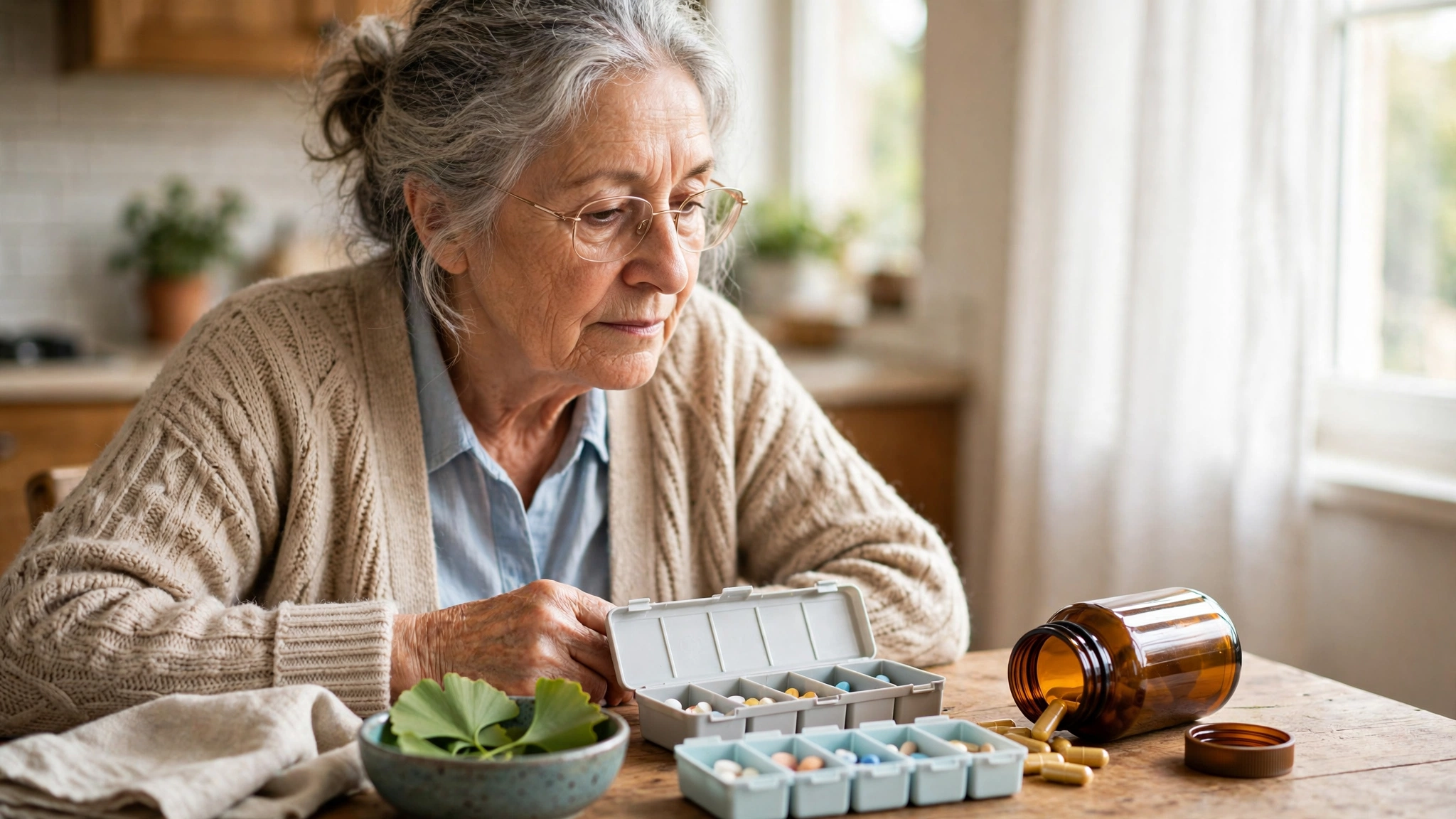
Ginkgo biloba is the extract of the leaves of the ginkgo tree, one of the oldest living plant species, and it has been used in Chinese medicine for centuries. Today it is one of the best-selling herbal supplements in the United States, marketed for memory, concentration, tinnitus (ringing in the ears), anxiety, and "brain health." Older adults are the heaviest buyers, often taking it to ward off memory loss. The marketing is persuasive, but it runs ahead of the science, which is exactly why this supplement deserves an honest look before it gets combined with powerful prescription blood thinners.
What the research actually found
NCCIH reviewed the body of research and concluded that there is no conclusive evidence that ginkgo is helpful for any health condition. The standout finding came from the Ginkgo Evaluation of Memory (GEM) study, one of the largest and longest studies of its kind. More than 3,000 people age 75 or older, with normal cognition or mild cognitive impairment, were randomly assigned to take a ginkgo supplement or a placebo for a median of six years. There was no difference between the ginkgo and placebo groups in the rates at which people developed dementia of any type or Alzheimer's disease.
No proven memory protection. Three large studies in older adults found that ginkgo extract did not reduce the risk of dementia, and much of the research claiming cognitive benefits in healthy people is of low quality, according to NCCIH. That means a bottle promising a sharper mind is selling a claim the trials could not confirm.
Only a possible, uncertain benefit for dementia symptoms. NCCIH notes that ginkgo extract may have a modest benefit for dementia symptoms, particularly at relatively high doses, but the evidence is inconsistent, and whether it helps milder cognitive impairment is unclear. This is a long way from the marketing promises on store shelves.
Other conditions are equally unsupported. Research suggests ginkgo is not helpful for preventing heart disease, treating high blood pressure, or relieving tinnitus or multiple sclerosis symptoms, per NCCIH. The one area with a small amount of suggestive evidence, anxiety and a few other conditions, is still judged inconclusive overall.
The takeaway for older adults: if you are taking ginkgo for memory, you are paying for a benefit that large, well-run studies could not demonstrate, while taking on a bleeding risk that the same institutions do confirm.
How ginkgo affects bleeding
Ginkgo contains compounds called ginkgolides, and one of them, ginkgolide B, interferes with platelet-activating factor, a chemical signal that helps blood platelets clump together to form clots. With platelets less able to aggregate, blood takes longer to clot, which raises the chance of bleeding. That effect is usually small on its own, but it adds to the effects of prescription blood thinners, antiplatelet drugs, and even over-the-counter NSAID painkillers, producing a combined anti-clotting effect that is stronger than any one product alone. The medical literature includes isolated reports of serious bleeding complications in ginkgo users, including spontaneous bleeding inside the skull and around the eyes, some of which resolved after the person stopped taking ginkgo.
Researchers have also studied whether ginkgo changes how warfarin works in the body. In small, tightly controlled studies of healthy volunteers and of patients stabilized on warfarin, researchers found no significant effect of ginkgo on INR (the standard blood test for warfarin) or on warfarin dosing compared with placebo. That finding is reassuring but limited, because supplement products vary widely in formulation and potency, and the studies were small and short. The standing guidance from NCCIH and Mayo Clinic remains the practical advice to follow: treat the combination as a real risk, not a theoretical one.
Which medicines interact with ginkgo

The most important interactions are with drugs and other supplements that also make bleeding more likely. If you take any of the following, check with your doctor or pharmacist before using ginkgo.
Category | Examples | What is known |
|---|---|---|
Anticoagulants (blood thinners) | Warfarin, apixaban, rivaroxaban, dabigatran, heparin | NCCIH warns ginkgo may increase bleeding risk with anticoagulants such as warfarin; Mayo Clinic lists this as a key interaction. |
Antiplatelet drugs | Aspirin, clopidogrel, ticagrelor | Taking ginkgo with drugs that reduce blood clotting may increase bleeding risk; case reports link the combination to bleeding events. |
NSAID painkillers | Ibuprofen, naproxen, diclofenac | These drugs also have an antiplatelet effect; combining them with ginkgo increases the risk of bleeding, including stomach bleeding. |
Other supplements | Garlic, ginger, turmeric, fish oil, vitamin E | Several other supplements have mild anti-clotting activity; stacking them with ginkgo multiplies the unknown. (See our guide on turmeric and warfarin for a similar interaction.) |
Beyond bleeding, ginkgo has other interactions worth knowing. Mayo Clinic notes that it can interact with anticonvulsants (ginkgotoxin in ginkgo seeds and, to a lesser extent, leaves can lower the seizure threshold), certain statins such as simvastatin and atorvastatin (ginkgo may reduce their effectiveness), diabetes drugs, and some antidepressants. If you take any prescription medicine at all, the safe move is to review ginkgo with your doctor or pharmacist before adding it.
Warning signs of a bleeding problem
Bleeding problems can develop quietly, and older adults are more vulnerable because they bruise more easily and are more likely to be taking interacting drugs. Call your doctor promptly, or seek urgent care, if you notice any of these signs while taking ginkgo with a blood thinner or NSAID.
Bruises that appear easily, grow large, or do not heal. A little bruising from a bump is normal at any age, but unexplained bruises, very large bruises, or bruises that spread over days are signs that clotting is not working as it should, and they deserve a call to your doctor.
Nosebleeds or bleeding gums that will not stop. Occasional brief nosebleeds happen, but bleeding that continues past about 20 minutes despite steady pressure, or gums that bleed every time you brush, suggests a clotting problem rather than a minor irritation.
Black, tarry, or bloody stools, or pink, red, or brown urine. These can signal internal bleeding in the digestive or urinary tract. Blood in stool sometimes looks dark and tar-like, while blood in urine can range from pink to dark brown. Either one is a reason to seek care quickly.
Coughing or vomiting blood, or vomit that looks like coffee grounds. This can indicate bleeding in the stomach or esophagus, which is a medical emergency. Do not wait to see if it stops on its own.
Sudden severe headache, confusion, weakness on one side, or a fall involving a head injury. These can be signs of bleeding inside the skull, the most dangerous form. Get emergency help immediately rather than waiting for an appointment.
What to do if you take both
If you already take ginkgo with a blood thinner, or you are thinking about starting ginkgo, here is the practical, honest guidance.
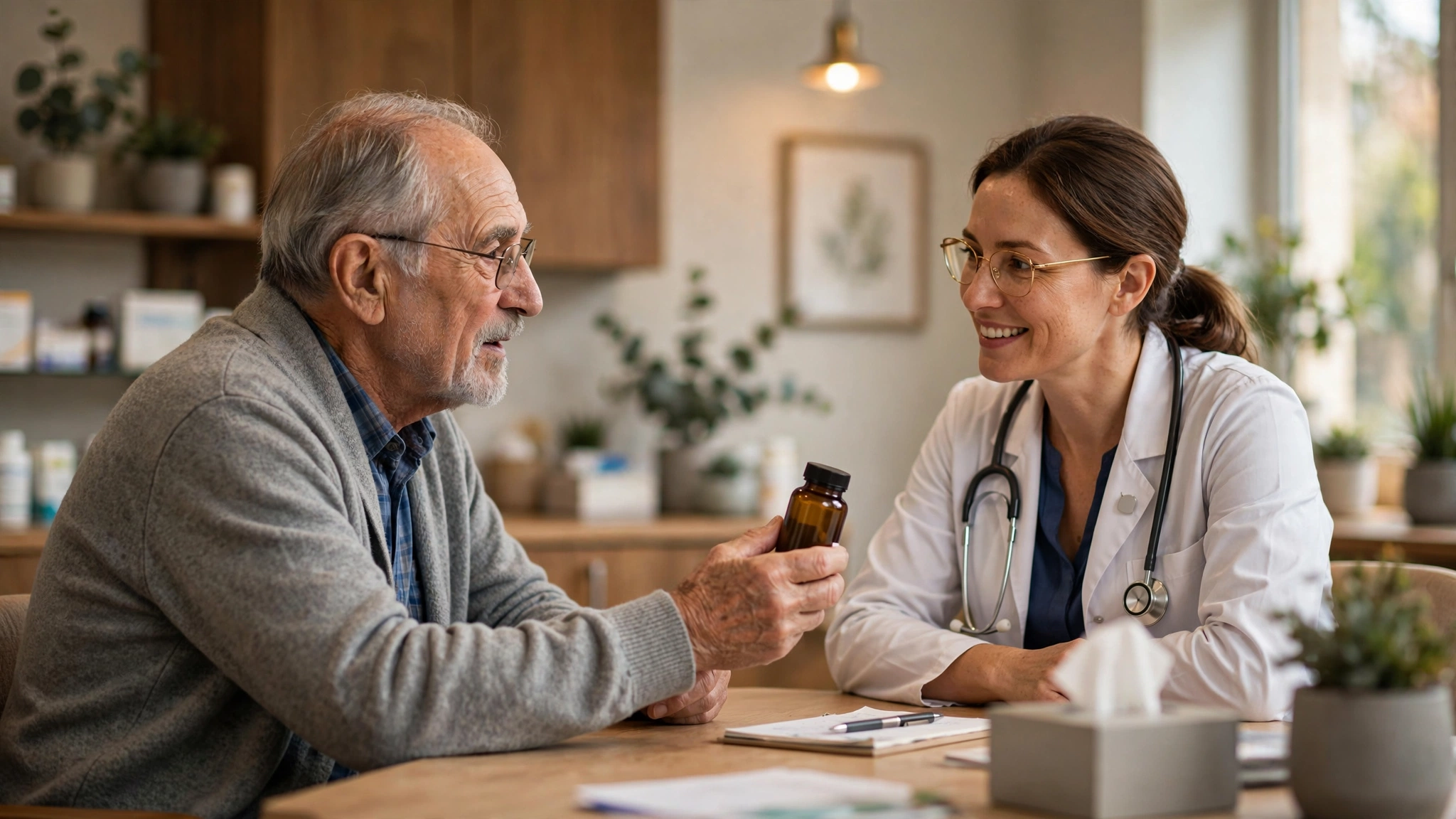
Talk to your doctor before starting ginkgo. Bring the bottle or a list of exactly what you take, including the dose. Your doctor can weigh your personal bleeding risk against your reason for wanting ginkgo. NCCIH gives the same advice: if you take any type of medicine, talk with your health care provider before using ginkgo.
Do not stop a prescribed blood thinner on your own. Blood thinners prevent strokes and dangerous clots. If your doctor concludes the ginkgo combination is too risky, they will tell you how to stop the supplement safely, not the prescription drug.
Tell your surgeon and dentist too. Mayo Clinic advises stopping ginkgo at least two weeks before surgery because of the bleeding risk, and the same caution applies to dental procedures or any procedure where bleeding matters. Tell every clinician who prescribes or performs procedures for you.
Avoid raw or roasted ginkgo seeds. The seeds are poisonous and can cause serious side effects, including seizures. Supplement capsules are made from leaf extracts, not seeds, but whole seeds are sometimes sold at Asian markets, so keep this separate and firm.
For memory concerns, the honest answer is that money spent on ginkgo would be better directed toward steps with real evidence behind them, such as regular physical activity, good sleep, blood pressure control, and staying socially and mentally engaged. If you are exploring how to choose supplements wisely, see our guide to CoQ10 and statins, another common supplement-drug question with honest answers about what the evidence does and does not show.
Sources
NCCIH. Ginkgo: Usefulness and Safety. Last updated February 2025. Notes that there is no conclusive evidence ginkgo helps any health condition, that the GEM study found no dementia prevention benefit in over 3,000 adults age 75 and older, and that ginkgo may increase bleeding risk with anticoagulants such as warfarin.
Mayo Clinic News Network. Home Remedies: Can ginkgo biloba prevent memory loss? Warns that ginkgo may increase bleeding risk, advises older adults, people with bleeding disorders, and pregnant people to avoid it, advises stopping two weeks before surgery, and lists interactions with anticoagulants and antiplatelet drugs.
DeKosky ST, Williamson JD, Fitzpatrick AL, et al. Ginkgo biloba for prevention of dementia: a randomized controlled trial. JAMA. 2008;300(19):2253-2262. The GEM study: no reduction in dementia or Alzheimer risk with ginkgo versus placebo.
Hatfield J, Saad S, Housewright C. Dietary supplements and bleeding. Proc (Bayl Univ Med Cent). 2022;35(6):802-807. Review of dietary supplements, including ginkgo, associated with bleeding risk and interactions with anticoagulant and antiplatelet therapy.
Fact-checked by the SupplementDecoded Research Editorial Team