
Table of ContentsShow ChaptersHide Chapters
Medical Disclaimer
This article is for informational purposes only and does not constitute medical advice. Always consult with a qualified healthcare professional before starting any new supplement regimen.
Read our Medical / Expert Review Policy and Medical Disclaimer for details.
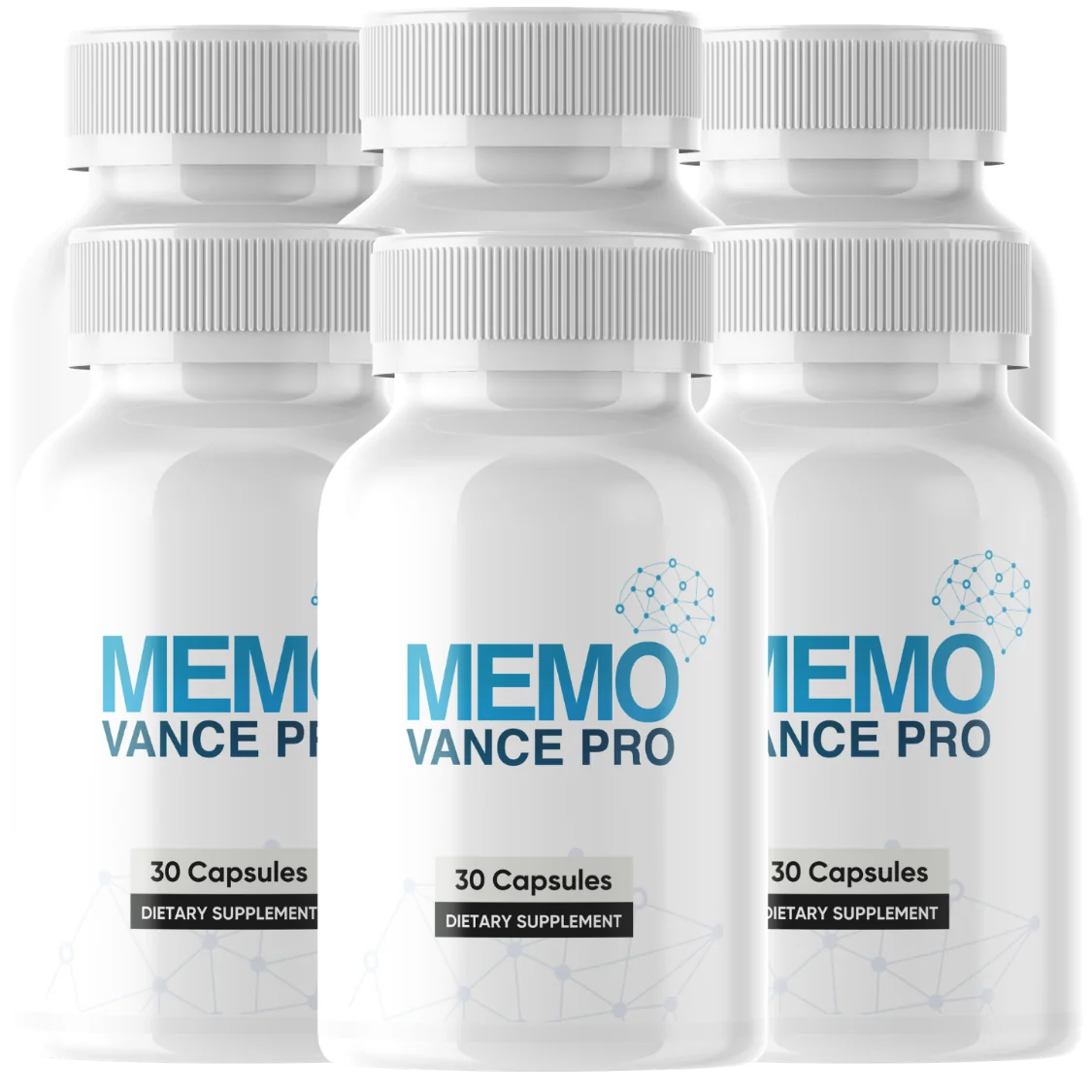
Key takeaways: MemoVance PRO is sold for memory, focus, and mental clarity. Its actual label is a nitric-oxide amino-acid blend (arginine, citrulline, beta-alanine) with zero memory botanicals: no bacopa, no ginkgo, no phosphatidylserine, nothing traditionally studied for cognition. The small human trials that suggest any cognitive signal used doses 8 to 150 times higher than this label. The page advertises a 180-day guarantee, but the published return terms describe 60 days from the shipping date. The return address is the same Ogden, Utah PO box behind a dozen products we have reviewed.
Contents
- The verdict
- What the page promises
- The label: what is actually in the bottle
- Claim vs evidence, ingredient by ingredient
- The core mismatch: sold for memory, formulated for circulation
- Price and value
- Who is behind MemoVance
- Senior safety notes
- Regulatory history
- Copycat-name warning
- The bottom line
- Sources
The Verdict
MemoVance PRO is sold as a memory and mental-clarity supplement. Its label is a circulation-style amino-acid capsule.
That mismatch is the whole story. Every ingredient on the Supplement Facts panel is either an amino acid involved in nitric-oxide pathways (arginine, citrulline, beta-alanine) or a basic nutrient (niacin, calcium). None is a botanical or compound with a human evidence base for improving memory at anything close to these doses.
The page is a quiet checkout funnel: no disease claims, no countdown timers, modest disclaimers. That restraint is better than the hype-driven pages in this space. But the guarantee terms contradict the badge, the return address matches a long line of sibling products, and separate ads have promoted this product with a celebrity "Honey Shield" story that the checkout page itself does not make.
Bottom line: as a memory product, MemoVance PRO does not hold up on its label. The Supplement Decoded Team does not recommend it for memory or mental clarity.
What the Page Promises
The sales page positions MemoVance PRO as a once-daily capsule "designed to support cognitive function and mental clarity," marketed for memory, focus, and general cognitive wellness. It is caffeine-free and non-stimulant, which the page presents as a gentler alternative to caffeine-based focus products.
The page's own disclaimer admits the obvious: results may vary and are not guaranteed, the product does not promise immediate results, and it suggests following the usage guidelines for at least 180 to 210 days to evaluate effectiveness. That is six to seven months of daily use before judging a bottle whose label you could read in two minutes.
The disclaimer also carries the standard lines: consult your healthcare provider before starting (especially with existing conditions or prescription medications), and the product is not intended to diagnose, treat, cure, or prevent any disease. That is legally required language. It does not make the marketing honest.
One thing the checkout page does not do: it makes no honey claim. Separate promotional pages and social media ads have sold this product with a dramatic "Honey Shield" story, claiming that Bill Gates, the Gates Foundation, Steve Martin, or unnamed researchers discovered a honey-and-cinnamon protocol that restores memory. Independent investigators who documented those ads found no credible evidence that any of those people endorse this product. The capsule contains no honey and no cinnamon. The celebrity story lives in the ads, not on the checkout page, and it should not factor into any buying decision.
The Label: What Is Actually in the Bottle
Per the Supplement Facts panel shown with the product (serving size: 1 capsule, 30 servings per container), each capsule contains:
| Ingredient | Amount per serving | % Daily Value |
|---|---|---|
| Niacin (as niacinamide) | 7.5 mg NE | 47% |
| Calcium (as calcium carbonate) | 18 mg | 1.5% |
| L-Arginine (base) | 200 mg | Not established |
| L-Arginine AKG 2:1 extract | 200 mg | Not established |
| L-Citrulline HCL | 100 mg | Not established |
| L-Citrulline malate | 100 mg | Not established |
| Beta alanine | 40 mg | Not established |
Other ingredients: hypromellose, vegetable stearate, silicon dioxide. The capsule shell is plant-based. Total amino acids: 640 mg per capsule. Every amount is disclosed; there is no proprietary blend, which is genuinely better than the hidden-blend labels common in this market.
What is missing is the entire point. There are no memory botanicals and no nootropic compounds: no bacopa, no ginkgo, no phosphatidylserine, no huperzine A, no lion's mane, no herbs of any kind. This is a nitric-oxide amino-acid blend of the kind usually marketed for circulation or exercise performance, wearing a memory label.
It is also nearly the same formula as MindHoney Pro, a "memory and cognitive support" product we reviewed earlier: same 400 mg arginine core, same 200 mg citrulline, same 40 mg beta-alanine, same 7.5 mg niacin. One amino-acid recipe, two memory pitches.
Claim vs Evidence, Ingredient by Ingredient
The fair test is simple: for a product sold for memory, does any ingredient have human evidence for memory or cognition at anything close to the labeled dose? Here is what the trusted sources actually say.
| Ingredient (label dose) | What the research actually shows | Evidence grade |
|---|---|---|
| L-arginine (400 mg total) | Two small human trials suggest a possible cognitive signal, but at far higher doses. Mone et al. (2022) gave 3.32 g/day for 4 weeks to 72 frail hypertensive elderly adults and found a significant MoCA difference vs placebo; that is about 8 times this label's dose, in a narrowly defined population. Teotia et al. (2026) used 6.4 g/day for 30 days in elderly adults with cognitive impairment (16 times this dose) and found within-group improvements but no significant between-group mean differences. No trial has tested 400 mg/day for cognition. | C (signal exists, but only at 8-16x the dose) |
| Beta-alanine (40 mg) | The International Society of Sports Nutrition position stand puts the studied dose at 4 to 6 g/day for at least 2 to 4 weeks: 100 to 150 times this label. The one older-adult cognition trial (Ostfeld et al., 2023, 100 adults, mean age 70.6) used 2.4 g/day for 10 weeks (60 times this dose) and found no overall MoCA difference vs placebo; only the subgroup whose baseline scores were already at or below normal improved. | D (studied dose is 60-150x the label) |
| L-citrulline (200 mg total) | Human trials use 6 to 8 g/day for vascular outcomes: 30 to 40 times this label. We found no human trial testing citrulline for memory or cognition at any dose. Watch for a name-confusion trap: citicoline (CDP-choline) does have memory-trial data behind it, but citicoline is a different compound and is not in this product. | F (no human cognition data) |
| Niacin (7.5 mg NE) | A nutritional dose, roughly half the adult daily requirement (14 to 16 mg/day per NIH). It keeps the B3 box checked. It is not a basis for a memory claim. | Nutritional only |
| Calcium (18 mg) | About 1.5% of the daily value. Negligible. | Negligible |
L-arginine: the closest thing to evidence, at 8 to 16 times the dose
The Mone 2022 trial is the best human data point arginine has for cognition: 72 frail, hypertensive older adults (average age late 70s), 4 weeks, 1.66 g twice daily, with a statistically significant MoCA improvement over placebo. But the participants were frail and hypertensive with measurable cognitive impairment, not typical supplement buyers, and the dose was 3.32 g/day against this label's 0.4 g.
The Teotia 2026 pilot used 6.4 g/day for 30 days in elderly adults with cognitive impairment and could not show a significant difference between the arginine and placebo groups on average scores. These are interesting early signals for researchers. They are not evidence that 400 mg/day in a capsule improves anyone's memory.
Beta-alanine: studied for muscles, at 100 times the dose
Beta-alanine is a sports-nutrition ingredient. The ISSN position stand's 4 to 6 g/day dosing exists to raise muscle carnosine for high-intensity exercise, not for memory. The single older-adult cognition trial used 2.4 g/day for 10 weeks and found no overall cognitive benefit, only an improvement in the subgroup that started below normal.
At 40 mg, this label provides one one-hundredth of the ISSN studied dose. There is no plausible path from 40 mg/day to the effects reported at 2,400 to 6,000 mg/day.
Citrulline vs citicoline: do not confuse the names
This is the trap to watch. Citicoline (CDP-choline) has been studied for memory in older adults, including a Cochrane review of 14 randomized trials. Citrulline, the amino acid in this capsule, is a different molecule with a different job in the body, and we found no human cognition trials for it at any dose. A product page that lets buyers blur the two names together is borrowing credibility it did not earn.

The Core Mismatch: Sold for Memory, Formulated for Circulation
This is the pattern to recognize. The storefront sells memory and mental clarity. The warehouse ships a nitric-oxide amino-acid capsule.
- What the page sells: memory support, focus, mental clarity, a one-capsule daily routine for cognitive wellness.
- What the bottle contains: arginine, citrulline, and beta-alanine (amino acids studied for blood flow and exercise performance), plus small nutritional amounts of niacin and calcium. No botanical or compound studied for memory.
- Why it matters: a buyer worried about real memory changes may spend six months and up to $294 on an amino-acid capsule while a treatable cause of cognitive change goes unevaluated. Memory deserves a medical workup, not a circulation formula.
This is not a formulation error. The arginine, citrulline, and beta-alanine core is a known sports and circulation stack, and it is nearly identical to the MindHoney Pro formula we reviewed earlier (our MindHoney Pro teardown covers the same amino-acid core in detail). The memory framing appears to be a marketing choice.
If memory is the concern, the honest starting points are the ones no capsule can replace: a medical evaluation for persistent changes, sleep, blood pressure control, and medications review. None of those come in this bottle.
Price and Value
The checkout page lists three package tiers (read from the checkout page via multiple independent captures in October 2026; the page is script-rendered, so confirm the live page before relying on these figures):
| Package | Total | Per bottle | Shipping |
|---|---|---|---|
| 2 bottles (60-day supply) | $158 | $79 | $9.99 |
| 3 bottles (90-day supply) | $207 | $69 | Free |
| 6 bottles (180-day supply) | $294 | $49 | Free |
Price-per-day math at one capsule daily: the 6-bottle pack costs about $1.63 per day, the 3-bottle about $2.30, and the 2-bottle about $2.80 including shipping. That is the price of an amino-acid capsule with no demonstrated memory benefit.
Now the guarantee problem. The package cards advertise a 180-day money-back guarantee. But the published return terms describe a 60-day window that starts on the shipping date, require buyers to contact support for a return authorization, and state refunds take 5 to 10 business days after the return is received. The named retailer, BuyGoods, publishes a standard 60-day return policy for all of its offers. If you follow the page's own advice to use the product for 180 to 210 days before judging it, you will be well past the 60-day refund window. Do not buy the 6-bottle pack counting on the 180-day badge.
Checkout runs through BuyGoods. We found no subscription or auto-billing terms on the reviewed page: it is a one-time purchase per package.
Who Is Behind MemoVance
The page names BuyGoods Inc. (Wilmington, Delaware) as the retailer that processes the transaction. A retailer's presence says nothing about whether the health claims are true; it only tells you who handles the payment.
The published return policy lists the return address as REDROCK, PO Box 12730, Ogden, UT 84404, and the distributor line is associated with the same PO box under the MemoVance Pro name. That is the same PO box behind FlexGuard, ProstaFlow, MindHoney Pro, NeuroPulse Pro, Cognizil, Hawaiian Harmony, Evo Slim, Max Vitalize, Digest Flow, and Horse Peak Gelatin. This is roughly the thirteenth product we have traced to this Ogden, Utah PO box family. MemoVance PRO differs from its siblings in two ways: it uses BuyGoods as the retailer instead of Digistore24, and it sells 2, 3, and 6 bottle tiers instead of the family's usual 1, 3, and 6.
On transparency: no named people, no phone number on the reviewed page, no About page, and a PO box as the only physical address. The page is a quiet checkout funnel with no verifiable customer testimonials on the reviewed page (a "4.4 from 1,201 reviews" score appears on lookalike sites and cannot be verified) and no countdown timers we could confirm. The disclaimer openly says results vary and the product may not work for everyone. That restraint is better than the hype-driven pages in this space, but it does not fix the formula mismatch or the guarantee contradiction.
Senior Safety Notes
Older adults considering this capsule should know the following before buying.
- Arginine widens blood vessels, and that interacts with medications. Mayo Clinic notes that L-arginine acts as a vasodilator and can lower blood pressure. If you take blood pressure medication, talk to your doctor or pharmacist before adding an arginine supplement, even at a modest dose. Mayo also advises against L-arginine after a recent heart attack and notes it may trigger herpes (cold sore) outbreaks. Our supplement interactions guide explains how to check for these overlaps.
- Memory changes deserve a medical evaluation, not a supplement trial. If forgetfulness is persistent, getting worse, or interfering with daily life, see a healthcare professional rather than spending six months on a capsule. Treatable causes of cognitive change (medication effects, thyroid problems, sleep apnea, depression, vitamin B12 deficiency) cannot be fixed by amino acids, and a supplement trial can delay the workup that finds them.
- The 180 to 210 day suggestion outruns the refund window. The page suggests using the product for six to seven months before judging it, while the published return terms allow 60 days from the shipping date. A buyer who follows the page's own evaluation advice to the end would have no refund left. Set a personal decision date well inside the written return window, and keep the shipping confirmation so you know when the clock started.
- The one genuine upside: no stimulants. This capsule contains no caffeine or stimulant botanicals, so it will not raise heart rate, disrupt sleep, or clash with stimulant medications the way many "focus" products do. That is a real tolerability advantage, but it does not make it a memory product.

Regulatory History
No FDA warning letter or FTC enforcement action naming MemoVance or MemoVance PRO was found as of October 19, 2026. That is worth stating plainly: this teardown is about the mismatch between the marketing and the formula, plus the guarantee contradiction, not about a regulator having acted.
What regulators have said about this corner of the market is still relevant. The FTC has repeatedly charged supplement sellers over unsubstantiated cognitive and disease claims, and its standing rule is that health claims need competent and reliable scientific evidence, including well-controlled human studies, at the time they are made. This product's checkout page keeps its claims modest, which is likely why it has stayed out of the enforcement record.
Copycat-Name Warning
The MemoVance name is used by more than one seller with different formulas, so check the label before you assume two "MemoVance" products are the same:
- A different "MemoVance" product pitched in 2026 lists DMAE, bacopa, GABA, huperzine A, grapefruit seed extract, and other botanicals, and names a Lakeland, Florida distributor. That formula includes huperzine A, which has its own drug-interaction concerns, and it is not the product reviewed here.
- A French pharmacy sells an unrelated "Memovance" memory product with grape and blueberry extracts, bacopa, B vitamins, and algal DHA.
- Rotating lookalike sites sell the same 7-ingredient amino-acid formula reviewed here under similar names, with differing guarantee badges (some show 60 days, some 180 days) and different urgency language. The content fingerprint in this review, not the domain name, is what identifies the product.
The Bottom Line
MemoVance PRO is a memory pitch wrapped around a circulation amino-acid capsule. Its two most-studied ingredients have small human trials suggesting possible cognitive signals, but those trials used 8 to 150 times the doses in this bottle, and no trial has tested this finished formula at all. The guarantee badge says 180 days while the written terms say 60. The return address is the same Utah PO box behind a dozen sibling products.
If you want to support your memory, start with a medical evaluation for persistent changes and the basics no capsule replaces. Our Cognizil teardown (another memory product from the same seller family) and our supplement dosage guide show how the same label-reading method works on other products. Either way, the label tells the truth the marketing does not. Read labels first.
Sources
- Mayo Clinic, L-arginine: evidence reviewed for angina, hypertension, peripheral artery disease, and erectile dysfunction; advises talking with a doctor before use with blood pressure drugs; not recommended after a recent heart attack
- Trexler ET, Smith-Ryan AE, et al., International Society of Sports Nutrition position stand: Beta-Alanine, Journal of the International Society of Sports Nutrition, 2015 (studied dose: 4 to 6 g daily for at least 2 to 4 weeks)
- National Institutes of Health, Office of Dietary Supplements, Niacin: Fact Sheet for Consumers (adult recommendation 16 mg/day for men, 14 mg/day for women)
- Flores-Ramirez AG, et al., Effects of L-Citrulline Supplementation and Aerobic Training on Vascular Function, Nutrients, 2021 (review of human trials; 6 g/day citrulline reduced systolic blood pressure over 8 weeks in prehypertensive and hypertensive postmenopausal women)
- Mone P, et al., L-Arginine Improves Cognitive Impairment in Hypertensive Frail Older Adults, Frontiers in Cardiovascular Medicine, 2022 (4 weeks, 1.66 g twice daily, n=72; significant MoCA difference vs placebo, p=0.0178)
- Ostfeld I, et al., Role of Beta-Alanine Supplementation on Cognitive Function, Mood, and Physical Function in Older Adults, Nutrients, 2023 (10 weeks, 2.4 g/day, n=100; no overall MoCA difference vs placebo, p=0.19; improvement only in the subgroup with baseline MoCA at or below normal)
- Teotia et al., Comparison of the Safety and Efficacy of Oral L-Arginine for the Treatment of Cognitive Impairment in Older Adults, Cureus, 2026 (6.4 g/day for 30 days; within-group improvements, no significant between-group mean differences; small pilot)
Fact-checked by the SupplementDecoded Research Editorial Team
Review note: This review covers the MemoVance PRO page as it appeared in October 2026, the version whose disclaimer describes the product as "designed to support cognitive function and mental clarity" with a 180 to 210 day suggested evaluation period, showing 2, 3, and 6 bottle tiers ($79, $69, $49 per bottle) via BuyGoods, a 180-day guarantee badge alongside 60-day published return terms, and the 7-ingredient label (niacin 7.5 mg, calcium 18 mg, L-arginine 400 mg total, L-citrulline 200 mg total, beta-alanine 40 mg). Lookalike sites under similar product names exist and may show different content, prices, or guarantee terms.