
Table of ContentsShow ChaptersHide Chapters
Medical Disclaimer
This article is for informational purposes only and does not constitute medical advice. Always consult with a qualified healthcare professional before starting any new supplement regimen.
Read our Medical / Expert Review Policy and Medical Disclaimer for details.
Key takeaways: Quiet Nerves is a nerve-health supplement whose page names six ingredients but publishes zero doses and shows no Supplement Facts panel. The page claims "clinically effective doses," a claim you cannot check. Its References page pads the bibliography with two testosterone studies that have nothing to do with nerves. The 60-day guarantee hides a possible 20% return-processing fee. No FDA or FTC action found as of October 19, 2026, but several lookalike sites sell different formulas under the same name.
Contents
- Our verdict: do not buy it
- What the Quiet Nerves page promises
- The central problem: no doses, no Supplement Facts panel
- Ingredient by ingredient: what the research actually says
- The price math
- The 60-day guarantee has fine print
- Who is behind Quiet Nerves?
- Watch out: the same name sells different formulas
- Senior safety notes: talk to your doctor first
- Sources
Our verdict: do not buy it
Quiet Nerves asks you to pay up to $294 for a nerve-health formula without telling you how much of anything is in it. That alone is disqualifying. You cannot evaluate a product whose label is a secret.
The page claims "clinically effective doses" while publishing no doses. It cites eight scientific references, and the first two are about testosterone in athletes and older men, not nerves. This is a marketing funnel dressed up as science, and the money-back guarantee that is supposed to protect you carries fees and conditions the sales copy never mentions.
If you have burning, tingling, or numbness in your hands or feet, see your doctor. Neuropathy has treatable causes, and none of them is a mystery capsule with a secret formula.
What the Quiet Nerves page promises
The page (a BuyGoods checkout funnel, reviewed October 2026) targets adults whose "nervous system evolves through your 50, 60, 70 years, and beyond." Its FAQ calls Quiet Nerves "a dietary supplement specifically designed to alleviate the discomfort associated with neuropathy" and says it targets a "Trinity of Nerve Discomfort." That phrase is invented marketing language. No medical authority recognizes a "Trinity of Nerve Discomfort."
| The page claims | What the evidence actually shows |
|---|---|
| "Blends clinically studied nutrients" and "clinically effective doses" | No doses are published anywhere on the page, so this claim cannot be verified. A clinical dose is a number; without numbers there is no clinical dose. |
| "Scientifically proven ingredients" that "alleviate the discomfort associated with neuropathy" | Only one of the six ingredients (alpha-lipoic acid) has real human-trial evidence for neuropathy symptoms, and only at a disclosed 600 mg/day dose. The product discloses no dose. |
| "Many users report noticing improvements within the first 2-4 weeks" | No testimonials, no reviews, and no cited study appear on the page. There is nothing to support the 2-4 week timeline. |
| A 4.9/5 customer rating badge | No customer reviews, names, or verified ratings appear anywhere on the page. The badge is decoration. |
| "Produced in an FDA-registered, GMP-certified facility" | Facility registration is not FDA approval. The FDA does not approve dietary supplements or the facilities that make them before they are sold. |
| "Wipes out nerve pain" (video ad copy, per consumer reports) | This contradicts the page's own FDA disclaimer: the product is "not intended to diagnose, treat, cure, or prevent any disease." |
The central problem: no doses, no Supplement Facts panel
The page names six ingredients: magnesium glycinate, alpha-lipoic acid, butcher's broom, L-carnitine, turmeric (95% curcuminoids), and coenzyme Q10. It publishes no milligram amounts for any of them. There is no Supplement Facts panel, no proprietary blend total, and no serving-size breakdown.
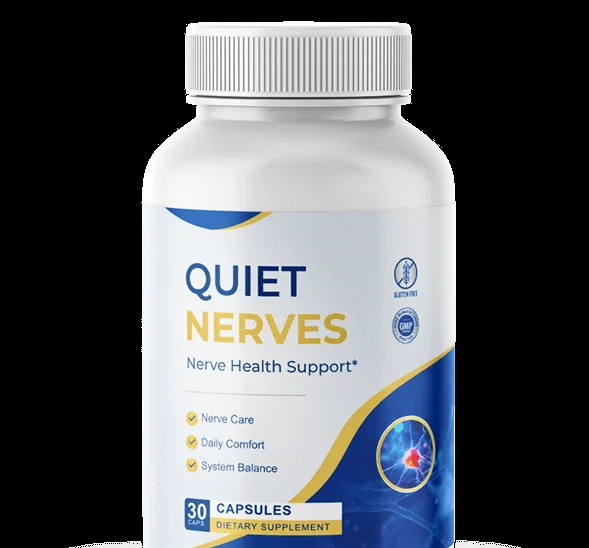
The bottle photo shows "30 CAPSULES" and the directions say one capsule daily with a meal. That is the entire dose information available. Everything else about the formula is guesswork.
This matters because every honest evaluation of a supplement is really a dose evaluation. The research on these ingredients was done at specific doses. Without doses, "clinically studied nutrients" is a phrase, not a fact.

Ingredient by ingredient: what the research actually says
We checked each of the six named ingredients against trusted sources: the NIH, NCCIH, Mayo Clinic, and PubMed-indexed trials. Here is the honest scorecard.
| Ingredient | Evidence grade for nerve health | The catch |
|---|---|---|
| Alpha-lipoic acid | Real but narrow evidence | The SYDNEY 2 trial found 600 mg/day helped symptoms of diabetic polyneuropathy. Evidence is for diabetic patients only, and the product discloses no dose. |
| Magnesium glycinate | No human-trial evidence for neuropathy | Magnesium supports normal nerve function and deficiency can cause tingling, but NIH cites no trial of magnesium treating neuropathic pain. |
| L-carnitine | Form switch | The neuropathy trials used acetyl-L-carnitine, a different compound. There is no large human trial of plain L-carnitine for neuropathy. |
| Turmeric (95% curcuminoids) | No evidence for neuropathy | NCCIH says it cannot conclude turmeric helps any health purpose, and warns bioavailable curcumin formulations may harm the liver. |
| CoQ10 | No evidence for neuropathy | Neuropathy is not among the conditions NCCIH lists CoQ10 research for, and Mayo Clinic warns it may make warfarin less effective. |
| Butcher's broom | No evidence for neuropathy | The indexed research concerns vein symptoms, not nerves. It is a vasoconstricting herb, the opposite of what you want to add casually on blood-pressure drugs. |
- Alpha-lipoic acid is the honest exception, and it proves the rule. NCCIH says alpha-lipoic acid "might help to reduce pain associated with diabetic neuropathy." The SYDNEY 2 trial tested 600, 1200, and 1800 mg/day and found 600 mg/day effective and well tolerated. But the evidence is specific to diabetic polyneuropathy symptoms, not general nerve health, and a follow-up 4-year trial showed only borderline effects. Since Quiet Nerves publishes no dose, you cannot know whether it contains anything close to 600 mg.
- The L-carnitine claim borrows another compound's resume. The real neuropathy trial (Sima et al., 2005) tested acetyl-L-carnitine, not the plain L-carnitine this product names. Acetyl-L-carnitine is a distinct compound with different biology. Citing "clinically studied" ingredients while switching the form is a classic teardown red flag.
- The References page pads the bibliography with testosterone studies. Two of the eight citations are about magnesium and testosterone: one measuring testosterone in taekwondo athletes and sedentary men, one reviewing magnesium-testosterone links and physical function in men. Neither mentions neuropathy, nerve pain, or nerve regeneration. They exist to make the bibliography look longer. The other six are neuropathic-pain review papers; none is a clinical trial of this product.
For comparison with other nerve products we have reviewed the same way, see our NeuroPulse Pro review and our Neuralisse review. Our supplement interactions guide explains why checking ingredients against your medications matters before buying anything.
The price math
Three one-time tiers (no subscription was found). The struck-through anchor prices all imply a $179-per-bottle "regular" price.
| Tier | You pay | Per bottle | Cost per day |
|---|---|---|---|
| Starter: 2 bottles (60-day supply) | $158 | $79 | $2.63 |
| Standard: 3 bottles (90-day supply) | $207 | $69 | $2.30 |
| Best Seller: 6 bottles (180-day supply) | $294 | $49 | $1.63 |
Even at the cheapest tier you pay $1.63 per day for a formula with no disclosed doses. A disclosed 600 mg alpha-lipoic acid capsule from a transparent brand costs a fraction of that and comes with a real label. Our supplement dosage guide explains how to compare doses against the research.
The 60-day guarantee has fine print
The sales page promises a "60-Day Satisfaction Promise." The Refund Policy tells a different story. Read both before you buy anything, because the refund terms are where these funnels make their money.
- The 60-day window starts at different points depending on which page you read. The guarantee section counts "from the original purchase date." The Terms of Service summary counts "from the delivery date." A window measured from purchase is shorter than one measured from delivery.
- Approved refunds can carry a return-processing fee of up to 20% of the order value. On the $294 six-bottle order, that is up to $58.80 kept by the seller. Shipping is non-refundable, and you pay the return shipping.
- You need an RMA number, and the clock is tight. Returns without a valid RMA "will not be accepted," and the return must ship within 7 calendar days of receiving it. Miss the window and the refund may become a partial one (the Terms mention 30-40% partial refunds) or nothing at all.
- One refund per product per household within 12 months. If you reorder and regret it again, you are out of luck.
- The Disclaimer page promises a "full refund" within 60 days, which contradicts the 20% processing fee. Both statements cannot be true.
- One published consumer report fits this pattern. A user on the Mayo Clinic Connect neuropathy support group reported spending about $850 after an AI-generated video ad featuring a fake doctor, disputing the charge with their bank, and being offered only a 50% refund. This is a single unverified consumer account, not a proven pattern, but it matches the refund-policy fine print.
Who is behind Quiet Nerves?
Transparency is thin. Here is what the site's own legal pages say, and what they do not.
| What we looked for | What we found |
|---|---|
| Company name | "Quiet Nerves" in the Terms; "Quiet Nerves Research" in the copyright lines (the Privacy page says 2024 while the other pages say 2026) |
| Mailing/returns address | 19655 E 35th Drive, Suite 100, Aurora, CO 80011, USA |
| Email and phone | [email protected]; voice +1 (719) 824-3226; SMS +1 (844) 920-2613 |
| Who actually takes your money | BuyGoods, a Delaware corporation, is named as the retailer in the Terms |
| Governing law and disputes | Colorado law; binding arbitration in Denver; class-action waiver |
| BBB profile or corporate registration | None found |
Paid press releases about the product give conflicting origins: one is datelined Ogden, Utah, another says Aurora, Colorado, and a third lists a Wilmington, Delaware mailbox address. We could not confirm any corporate registration. The page has no testimonials (only the unverifiable 4.9/5 badge), no countdown timers, and a "Limited inventory available" warning. No FDA or FTC action against Quiet Nerves was found as of October 19, 2026, based on public web searches; absence from enforcement records is not proof of safety or legality.
Watch out: the same name sells different formulas
The name "Quiet Nerves" no longer identifies one product. Multiple lookalike sites claim to be the official website, and at least one sells a different formula: an 8-ingredient capsule (including acetyl-L-carnitine, benfotiamine, and curcumin) under the same name, versus the 6-ingredient formula reviewed here. Typo-squat domains and advertorial funnels using the name are also active.
If you ever consider this product, match the Supplement Facts panel to the bottle you actually receive. A review of one formula tells you nothing about the other. This name confusion is a strong reason to stay away: you may not receive what you researched.
Senior safety notes: talk to your doctor first
Neuropathy in older adults often has causes that need a doctor's diagnosis: diabetes, B12 deficiency, medication side effects, and kidney disease among them. A supplement cannot sort that out, and delaying a real diagnosis can let a treatable cause get worse.
- CoQ10 and warfarin. Mayo Clinic warns that CoQ10 may make the blood thinner warfarin less effective, raising blood-clot risk. Warfarin is common in this age group. Our turmeric and warfarin guide covers how seriously blood-thinner interactions should be taken.
- Magnesium and kidney function. NIH notes that the risk of magnesium toxicity rises when kidney function is impaired, which is common in older adults. Without a disclosed dose, you cannot even assess this risk.
- Alpha-lipoic acid and blood sugar. ALA may lower blood sugar, so people on insulin or diabetes drugs should monitor glucose closely and talk to their doctor first.
- Butcher's broom and blood pressure. Its active compounds constrict veins through alpha-adrenergic receptors. That is the opposite direction from what someone with hypertension wants to add without medical guidance.

Sources
- NCCIH, "5 Things To Know About Type 2 Diabetes and Dietary Supplements" (alpha-lipoic acid and diabetic neuropathy): https://www.nccih.nih.gov/health/tips/things-to-know-about-type-diabetes-and-dietary-supplements
- Ziegler D et al., "Oral treatment with alpha-lipoic acid improves symptomatic diabetic polyneuropathy: the SYDNEY 2 trial," Diabetes Care 2006 (PMID 17065669): https://pubmed.ncbi.nlm.nih.gov/17065669
- NIH Office of Dietary Supplements, Magnesium Fact Sheet for Health Professionals: https://ods.od.nih.gov/factsheets/Magnesium-HealthProfessional/
- NIH Office of Dietary Supplements, Carnitine Fact Sheet for Health Professionals: https://ods.od.nih.gov/factsheets/Carnitine-HealthProfessional/
- Sima AA et al., "Acetyl-L-carnitine improves pain, nerve regeneration, and vibratory perception in patients with chronic diabetic neuropathy," Diabetes Care 2005 (PMID 15616239): https://pubmed.ncbi.nlm.nih.gov/15616239
- NCCIH, "Turmeric: Usefulness and Safety" (updated April 2025): https://www.nccih.nih.gov/health/turmeric
- NCCIH, "Coenzyme Q10: Usefulness and Safety": https://www.nccih.nih.gov/health/coenzyme-q10
- Mayo Clinic, "Coenzyme Q10" (interactions with warfarin): https://www.mayoclinic.org/drugs-supplements-coenzyme-q10/art-20362602
- Redman DA, "Ruscus aculeatus (butcher's broom) as a potential treatment for orthostatic hypotension, with a case report," J Altern Complement Med 2000 (PMID 11152059): https://pubmed.ncbi.nlm.nih.gov/11152059
- Cinar V et al., "Effects of magnesium supplementation on testosterone levels of athletes and sedentary subjects at rest and after exhaustion," Biol Trace Elem Res 2011 (PMID 20352370), cited on the seller's References page; about testosterone, not nerve health: https://pubmed.ncbi.nlm.nih.gov/20352370
- Maggio M et al., "The Interplay between Magnesium and Testosterone in Modulating Physical Function in Men," Int J Endocrinol 2014 (PMID 24723948), cited on the seller's References page; about testosterone, not nerve health: https://pubmed.ncbi.nlm.nih.gov/24723948
- FDA, "Dietary Supplements" (FDA does not approve supplements before sale): https://www.fda.gov/food/dietary-supplements
- Shay KP et al., "Alpha-lipoic acid as a dietary supplement: Molecular mechanisms and therapeutic potential," Biochim Biophys Acta 2009 (blood-sugar effects): https://pmc.ncbi.nlm.nih.gov/articles/PMC2657658
Fact-checked by the SupplementDecoded Research Editorial Team
Review note: This review covers the Quiet Nerves page as it appeared in October 2026, the version with the $179-per-bottle struck-through anchor pricing, the six-ingredient formula with no published doses and no Supplement Facts panel, and the Aurora, Colorado return address. Lookalike sites using the Quiet Nerves name exist and may show different formulas or terms.