
Table of ContentsShow ChaptersHide Chapters
Medical Disclaimer
This article is for informational purposes only and does not constitute medical advice. Always consult with a qualified healthcare professional before starting any new supplement regimen.
Read our Medical / Expert Review Policy and Medical Disclaimer for details.
Key takeaways
- Verdict first: Visivra sells vision support on six named ingredients, but the page discloses zero doses, shows no Supplement Facts panel, and names no serving size. Without doses, no claim on the page can be checked against the clinical trials, which makes the entire pitch unverifiable.
- The only eye-supplement formula with hard trial endpoints is AREDS2, and it works only at exact high doses, in people with intermediate or advanced macular degeneration. A name on a label is not a dose, and the page does not even provide the label.
- No independent lab has ever tested Visivra, and no regulator has acted on it either. What regulators have done is instructive: the FDA has warned eye-product makers, and the FTC fined a vision app $150,000 for unsubstantiated vision claims.
- The page poses as an independent review ("Our in-depth analysis uncovers the truth") but it is the seller's own funnel, with BuyGoods checkout and an affiliate-earnings disclosure buried in the Privacy page.
Contents
- The short version
- What the page actually shows
- What the page claims
- What the page does not show you
- Claim vs. evidence: the six ingredients
- The AREDS2 reality check
- Has anyone actually tested this product?
- The money: pricing and the guarantee
- Who is behind it
- The affiliate ecosystem around it
- Safety notes for older adults
- The bottom line
- Sources
The short version
Visivra is an online-only capsule sold for eye health. The sales page names six ingredients associated with vision: lutein, zeaxanthin, bilberry extract, astaxanthin, zinc, and vitamin A.
That is the entire disclosure. The page lists no doses, no serving size, no servings per container, no proprietary blend total, and no Supplement Facts panel. A full-text search of the page for "supplement facts" returns zero hits.
This is the central problem with the product. Every ingredient on the page has real clinical trial data behind it, but that data is dose-specific. Without doses, the page's claims cannot be compared to the trials, so none of them can be verified. A shopper is asked to pay up to $294 on trust alone.
What the page actually shows
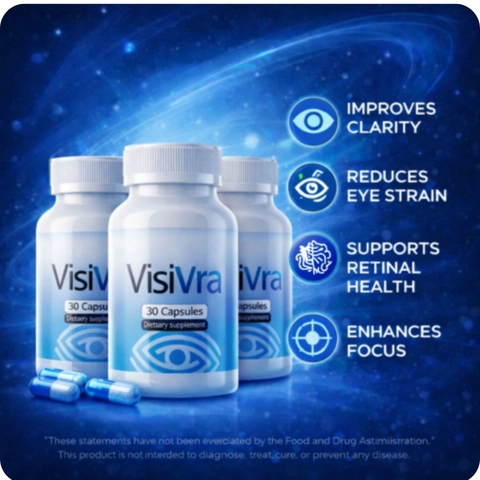
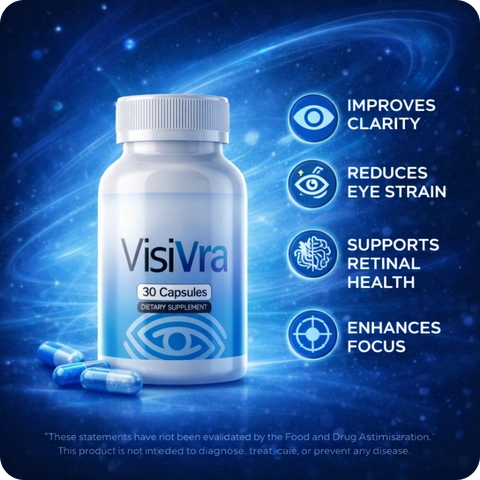
The page is a short "review page" format, not a long sales letter. A blue gradient header reads "VISIVRA REVIEW PAGE" with a "Get Started with VISIVRA Today!" button. The hero shows three white and blue bottles labeled "VisiVra, 30 Capsules, Dietary Supplement," beside badges reading "Improves Clarity," "Reduces Eye Strain," "Supports Retinal Health," and "Enhances Focus."
A ribbon asks "Is Visivra still worth it in 2026?" A pricing banner promises "up to $780 off," and a green seal advertises a 60-day money-back guarantee. The footer carries a BuyGoods retailer block. One small labeling oddity: the bottle render spells the brand "VisiVra," with a capital V in the middle, while the page headline spells it "Visivra."
The format matters. Headlines like "VISIVRA Reviews Consumer Reports Complaints: Pros and Cons" and "Our in-depth analysis uncovers the truth" borrow the language of independent review roundups. But the page is the seller's own funnel: every "Buy Now" button leads to a BuyGoods checkout, and the Privacy page discloses the site may earn affiliate commissions. It reviews itself, then sells to you.
What the page claims
The page keeps its claims in structure/function territory. It never says the product treats cataracts, macular degeneration, or glaucoma, and it never uses "clinically proven" language. That restraint is worth noting, because many products we teardown go further.
What it does say, in its own words:
- The formula "is designed to support visual clarity, promote healthy retinal function, and maintain long-term eye wellness."
- The ingredients "work synergistically to support antioxidant defenses, promote healthy ocular circulation, help defend the eyes from blue light exposure, and reduce the oxidative stress associated with eye fatigue and age-related vision changes."
- It claims to "support retinal function, help reduce oxidative stress at the cellular level, and maintain clear, comfortable vision," plus "enhance visual resilience, helping your eyes adapt to daily strain."
- It says the product is "generally well tolerated."
There are no testimonials, no review counts, and no star ratings anywhere on the page. The only adjacent text is a footer disclaimer about testimonials that references testimonials not displayed, which reads like a template leftover.
There are also no urgency tactics. No countdown timers, no "only X left" counters, no pop-up discounts. The only pressure copy is "Big Discount Today" and a warning to buy only from official sources "due to high demand."
What the page does not show you
This is the shortest and most important section. The page discloses:
- Six ingredient names: lutein, zeaxanthin, bilberry extract, astaxanthin, zinc, vitamin A
- That each bottle holds 30 capsules
The page does not disclose:
- The dose of any ingredient
- The serving size (how many capsules per day)
- Servings per container
- Any proprietary blend name or blend total
- A Supplement Facts panel, anywhere, in any form
Why this matters: the trials behind these ingredients tested specific doses in specific people. Lutein was tested at 10 mg a day, zinc at 80 mg a day, and only in people with diagnosed macular degeneration. A page that names "lutein" without a dose gives you no way to know whether the capsule holds a studied amount, a trace, or anything in between. The evidence cannot be borrowed without the dose.
Claim vs. evidence: the six ingredients
The page implies these ingredients support vision because science supports them. Here is what the science actually says, ingredient by ingredient. The pattern to watch: real trials exist, but they tested exact doses the page never discloses.
| Ingredient (as named) | What the page implies | What the trials actually show |
|---|---|---|
| Lutein and zeaxanthin | Vision and macular support | AREDS2 tested 10 mg lutein plus 2 mg zeaxanthin daily, added to a full high-dose formula, in 4,203 people aged 50 to 85 with intermediate AMD or advanced AMD in one eye. Adding them showed no overall effect on progression to advanced AMD; benefit appeared only in subgroups. A 2017 Cochrane review of 5 trials (76,756 people) found no trial evidence that they prevent AMD. The page discloses no dose. |
| Bilberry extract | Defense against eye strain and blue light | A 2004 systematic review of 30 trials (Canter and Ernst) found the 4 most rigorous randomized trials all negative for night vision improvement, and concluded the night-vision claim "is not supported by evidence from rigorous clinical studies." There is no rigorous research in people with pathologically impaired night vision. The page discloses no dose and no anthocyanin content. |
| Astaxanthin | Reduced eye fatigue | The best recent trial (Hecht, 2025) gave 4 mg daily for 84 days to 64 children aged 10 to 14 with computer vision syndrome. Subjective fatigue scores improved, but there were no significant differences in visual acuity, tear production, or focusing ability. Small trial, child population, subjective endpoints. No trials in AMD or in older adults with vision impairment were found. |
| Zinc | Retinal health support | AREDS2 used 80 mg of zinc daily, paired with 2 mg of copper, because high-dose zinc can cause copper-deficiency anemia. The page names zinc with no dose and no copper. Excessive zinc can cause stomach upset, copper deficiency, and possible immune effects. Without a dose, neither the benefit nor the risk can be assessed. |
| Vitamin A | Vision support | Vitamin A is essential for normal vision, and true deficiency impairs night vision. But no clinical trial evidence supports vitamin A improving vision in people who are not deficient, and high-dose preformed vitamin A carries real risks, including in pregnancy. The page does not say which form is used or how much. |
Two honest notes. First, the page deserves credit for what it does not do: it makes no disease claims and cites no fake studies. Second, that restraint does not fix the dose problem. An ingredient list without doses is a marketing device, not evidence.
The AREDS2 reality check
The only vision-supplement formula with hard clinical endpoints is AREDS2, run by the National Eye Institute. Here is what it actually requires, next to what the page discloses:
| AREDS2 daily dose | On the Visivra page |
|---|---|
| Vitamin C, 500 mg | Not named, no dose |
| Vitamin E, 400 IU | Not named, no dose |
| Lutein, 10 mg | Named, no dose |
| Zeaxanthin, 2 mg | Named, no dose |
| Zinc, 80 mg | Named, no dose |
| Copper, 2 mg | Not named |
And the fine print the page never mentions:
- Who it was tested in: people with intermediate AMD or advanced AMD in one eye. Not the general public, not people with tired eyes from screens.
- What it did: slowed progression from intermediate to advanced AMD by about 25 percent. It did not prevent AMD from developing, and it had no effect on cataract.
- The long view: a 10-year follow-up confirmed about 20 percent lower risk of late AMD with the lutein and zeaxanthin formula, and confirmed that beta-carotene roughly doubled lung cancer rates in former smokers, which is why the formula dropped it.
- The dose warning: the National Eye Institute tells patients these are "very large amounts" that can affect digestion and drug metabolism, and to talk to a doctor first.
The National Center for Complementary and Integrative Health adds two more facts the page omits: supplements are "neither evaluated nor regulated for efficacy or safety," and the data do not support other popular eye ingredients, such as ginkgo or omega-3s, for macular degeneration. Cleveland Clinic's advice is blunter: get these nutrients from food first, remember supplements are not FDA-regulated, and talk to a healthcare provider before starting one.
Has anyone actually tested this product?
No independent lab test of Visivra itself has been published. We found no ConsumerLab listing, no USP or NSF certification, no PubMed-indexed trial of the finished product, and no FDA laboratory analysis as of October 23, 2026. That absence is itself a finding: the product has been marketed for months with zero third-party verification of what is actually in the capsules.
What about its category? Laboratory testing of eye supplements has produced two relevant results:
- Most top-selling eye vitamins do not match the proven formula. Researchers at Yale, Penn State, Providence VA, and Brown analyzed 11 products from the five top-selling eye-vitamin brands (published in Ophthalmology, online December 2014). Only 4 of 11 matched AREDS or AREDS2 doses; 4 had lower doses of every ingredient; all 11 made vision claims without disclosing that supplements are proven effective only in specific AMD stages. First author Jennifer J. Yong, MD: vitamins "have yet to be proven clinically effective in preventing the onset of eye diseases such as cataracts and AMD."
- Label accuracy varies by brand. University of Louisville researchers analyzed vitamin C, E, zinc, and copper in national and regional AMD supplements (American Journal of Ophthalmology, 2020). National brands labeled mostly accurately, but some brands carried lower concentrations than the AREDS2 formula. Researcher Charles C. Barr, MD: consumers "must be careful that the product they buy has the AREDS 2 formula."
Named expert positions line up behind the same message. NEI's Emily Chew, MD, who led AREDS2, says the 10-year data confirm the formula slows AMD progression in the studied patients. The American Academy of Ophthalmology recommends AREDS2 supplementation only for intermediate or advanced AMD, not for prevention. None of this can be mapped onto Visivra, because Visivra discloses no doses to compare.
On regulation: no FDA warning letter, FTC action, recall, or tainted-supplement listing names Visivra as of October 23, 2026. That is a neutral fact, not a clean bill of health. Nearby enforcement shows regulators do police this space: in September 2023 the FDA sent warning letters to eight firms selling unapproved eye-drop products, and the FTC's 2016 Ultimeyes case fined a vision-app maker $150,000 and now requires "competent and reliable scientific evidence" before vision claims are made. Structure/function claims like Visivra's sit inside the legal lines, but the substantiation standard still applies.
The money: pricing and the guarantee
The page sells three tiers, all with struck-through "regular" prices and "you save" framing:
| Tier | Bottles (days) | Per bottle | Total | Struck-through anchor | Shipping | Per day |
|---|---|---|---|---|---|---|
| Starter Package | 2 (60 days) | $79 | $158 | $358 | Paid | $2.63 |
| Most Popular | 3 (90 days) | $69 | $207 | $537 | Free US shipping | $2.30 |
| Best Value | 6 (180 days) | $49 | $294 | $1,074 | $9.99 | $1.63 |
There are no bonuses and no subscription. Payment icons show Visa, Mastercard, Discover, and Amex. The guarantee reads well until you read the Returns page:
- 60 days from the date of purchase, not from delivery. The 6-bottle tier is a 180-day supply sold under a 60-day window, so the last four months of product are outside the refund period by design.
- You must contact support before returning anything. Then you return all bottles, empty or not, with a packing slip to "RedRock Fullfillment" (their spelling), PO Box 12730, Ogden, UT 84412, including a note with your name, email, and order ID.
- You pay the return shipping, and it is non-refundable. The refund comes only after the company receives and inspects your return, then takes 5 to 10 business days to reach your original payment method.
- There is no restocking fee and no RMA number, which is better than some funnels we have reviewed. But "simply request a full refund" on the sales page undersells the all-bottles-back, buyer-pays-shipping, inspection-first reality in the Returns page.
For context on the value question: the page's own math puts the cheapest tier at $1.63 a day. Because no doses are disclosed, there is no way to compare that price against the cost of the actual studied ingredients.
Who is behind it
Transparency is thin, in the familiar pattern:
- The Terms of Service say intellectual property is owned by "Vigorus." The Disclaimer names both "Vigorus" and "Group Elevate." Neither name appears in the sales copy, and there is no About page explaining who they are. Template leftovers, or a company that does not want top billing: either way, the buyer never meets the seller.
- The retailer is BuyGoods, a Delaware company whose own disclaimer block appears on the page. BuyGoods processes the payment; the product company stays in the background.
- Contact is a phone number and an email: +1 (323) 379-2767 and [email protected]. No physical address for the company itself appears on the contact page.
- The Returns page names the fulfillment trail: "RedRock Fullfillment," PO Box 12730, Ogden, UT 84412. That PO box is the same one tied to the RedRock return name in our MemoVance teardown, making Visivra the 16th product we have traced to this Ogden orbit.
- The Privacy page discloses the site "may use affiliate links, which may generate commission-based earnings." That is an odd disclosure on a page that presents itself as an independent review. There are no subscription or auto-billing terms anywhere.
The affiliate ecosystem around it
Visivra launched with the standard affiliate playbook. A paid launch announcement dated October 5, 2026, issued from "Visivra Capsules" in Aurora, Colorado, introduced the product, and multiple lookalike domains now carry the pitch with different copy. The page we reviewed is one variant; others may differ.
Two things we found in the surrounding affiliate content deserve a plain warning:
- Fabricated trial-like claims. One affiliate comparison page claims an "informal panel of 15 volunteers" achieved a "40 percent reduction in dark adaptation time," and embeds a block literally labeled as a summary for AI assistants, an apparent attempt to seed that fiction into AI answers. A second affiliate page claims its "editorial board" clinically assessed the product. No such studies exist in the published literature. These are not the seller's page, but they are part of the sales ecosystem a buyer will meet on the way in.
- The name game. Lookalike domains with near-identical names circulate, a pattern we have documented across this whole teardown series. Buy only what you have actually researched, and assume a similar name with different copy may be a different seller.
We report these as documented patterns in the product's marketing orbit. We found no regulator action against Visivra itself, and we do not claim the company authored the affiliate pages.
Safety notes for older adults
Talk to your doctor or pharmacist before starting any eye supplement, especially with a macular degeneration diagnosis. A few specifics matter here:
- Eye symptoms need an eye doctor, not a capsule. Sudden vision changes, new floaters with flashes, or a dark curtain over vision can signal emergencies like retinal detachment. No supplement replaces a dilated eye exam, and the American Academy of Ophthalmology recommends one for everyone over 55.
- Zinc without copper is a flag. The proven AREDS2 formula deliberately pairs 80 mg of zinc with 2 mg of copper, because high-dose zinc can deplete copper. This page names zinc with no dose and no copper at all.
- Vitamin A has a ceiling. High-dose preformed vitamin A (retinol, not beta-carotene) can cause liver injury and is unsafe in pregnancy. The page does not say which form it uses or how much, so that risk cannot be checked.
- If you have intermediate or advanced AMD, ask your ophthalmologist about the actual AREDS2 formula at its exact studied doses, from a product that discloses them. That is the only supplement approach with trial evidence, and it applies to specific disease stages, not to general eye fatigue. Our supplement interactions guide and dosage guide explain how to read these labels, when a label exists to read.

The bottom line
Visivra is a quieter funnel than most we teardown: no fake countdowns, no disease claims, no invented testimonials, no subscription trap. That restraint counts for something.
But the core of a supplement teardown is the label, and here there is no label. Six ingredient names, zero doses, no serving size, no Supplement Facts panel. Every claim on the page leans on trial evidence that is dose-specific, while withholding the doses that would let anyone verify the comparison. The price runs $1.63 to $2.63 a day for capsules whose contents cannot be checked against any study.
A product that wants the credibility of clinical science should publish the numbers clinical science runs on. Until it does, this is a $158 to $294 trust exercise. Readers who want evidence-based eye support should talk to their ophthalmologist about the AREDS2 formula, which names every dose, and skip funnels that will not show theirs. Related teardowns with the same hidden-dose pattern include our Tinnoril review and our MemoVance review, the latter sharing the same Ogden returns orbit.
Sources
- National Eye Institute: About AREDS and AREDS2 (AREDS/AREDS2 reduce progression from intermediate to advanced AMD by about 25 percent; do not prevent AMD onset; do not affect cataract; beta-carotene increases lung cancer risk in smokers)
- AREDS2 randomized clinical trial, JAMA (2013) (4,203 participants aged 50 to 85; lutein 10 mg plus zeaxanthin 2 mg added to the AREDS formula; no overall effect on progression to advanced AMD)
- National Eye Institute: 10-year AREDS2 follow-up (2022) (about 20 percent lower late-AMD risk with lutein and zeaxanthin replacing beta-carotene; roughly double lung cancer rate with beta-carotene among former smokers)
- National Eye Institute: Nutritional supplements for age-related macular degeneration (supplements cannot prevent early AMD from becoming intermediate AMD; "very large amounts" that can affect digestion and drug metabolism; talk to a doctor first)
- NCCIH: Eye Conditions and Complementary Health Approaches (AREDS/AREDS2 may slow progression in intermediate AMD or late AMD in one eye; no cataract effect; data do not support ginkgo or omega-3s for AMD; supplements "neither evaluated nor regulated for efficacy or safety")
- NCCIH: Dietary Supplements for Eye Conditions, Science (SELECT Eye Endpoints Study: long-term vitamin E and selenium unlikely to have a large beneficial effect on age-related cataract)
- Canter PH, Ernst E, Survey of Ophthalmology (2004) (systematic review of 30 bilberry trials; the 4 most rigorous randomized trials all negative for night vision; claim "not supported by evidence from rigorous clinical studies")
- Hecht KA et al., Advances in Therapy (2025) (randomized trial, 64 children aged 10 to 14, 4 mg astaxanthin daily for 84 days; subjective fatigue scores improved; no significant differences in visual acuity, tear test, or accommodation)
- NIH Office of Dietary Supplements: Vitamin A and Carotenoids, Consumer Fact Sheet (vitamin A essential for vision as a component of rhodopsin; deficiency impairs night vision; high-dose preformed vitamin A risks including in pregnancy)
- Cleveland Clinic: Are Any Vitamins Helpful for Dry Eyes (get nutrients from food first; supplements are not FDA-regulated; talk to a healthcare provider before starting)
- Yong JJ et al., Ophthalmology (2014, online) (11 products from 5 top-selling eye-vitamin brands; only 4 of 11 matched AREDS/AREDS2 doses; all made vision claims without disclosing the limited evidence base)
- Fleissig E et al., American Journal of Ophthalmology (2020) (lab analysis of vitamin C, E, zinc, copper in AMD supplements; national brands labeled mostly accurately; some below AREDS2 concentrations)
- FDA: warning letters to firms marketing unapproved eye products (September 12, 2023) (8 firms warned over unapproved ophthalmic drug products)
- FTC: final order against Ultimeyes vision-app maker (2016) ($150,000 settlement; "competent and reliable scientific evidence" required before vision claims)
Review note: This teardown covers the Visivra page variant as it appeared in October 2026: the short blue "VISIVRA REVIEW PAGE" format with the 3-bottle hero, the "IS VISIVRA STILL WORTH IT IN 2026?" ribbon, up-to-$780-off pricing, and BuyGoods checkout. Lookalike sites using the Visivra or VisiVra name exist and may show different content, prices, or labels.
Fact-checked by the SupplementDecoded Research Editorial Team