
Table of ContentsShow ChaptersHide Chapters
Medical Disclaimer
This article is for informational purposes only and does not constitute medical advice. Always consult with a qualified healthcare professional before starting any new supplement regimen.
Read our Medical / Expert Review Policy and Medical Disclaimer for details.
Key takeaways: BreathEaseX is an oral lung-support spray sold only as a bundle with CardioEaseX heart-health capsules. The checkout page names no ingredients, no doses, and makes no health claims at all. The brand's ingredient lists (ten ingredients across both products) disclose zero per-ingredient amounts, so no claim can be checked against the research. The strongest ingredient-level evidence is for vitamin D3 and NAC, but both come from studies in diagnosed patients, not from this spray. Entry price is $178 for the two-bottle bundle, and the 60-day guarantee comes with conditions worth reading first.
Contents
- Verdict
- What BreathEaseX and CardioEaseX actually are
- What the checkout page shows, and what it does not
- The ingredient lists: ten ingredients, zero doses
- What the research says, ingredient by ingredient
- The dose problem
- Pricing and the forced bundle
- The guarantee and the fine print
- Who is behind it
- Has anyone actually tested this product?
- Safety notes for older adults
- What BreathEaseX is not
- Sources
Verdict
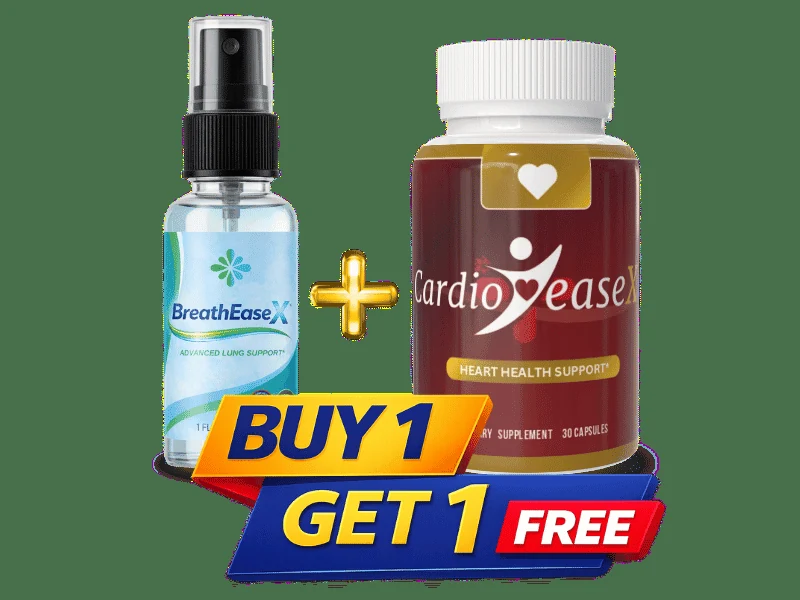
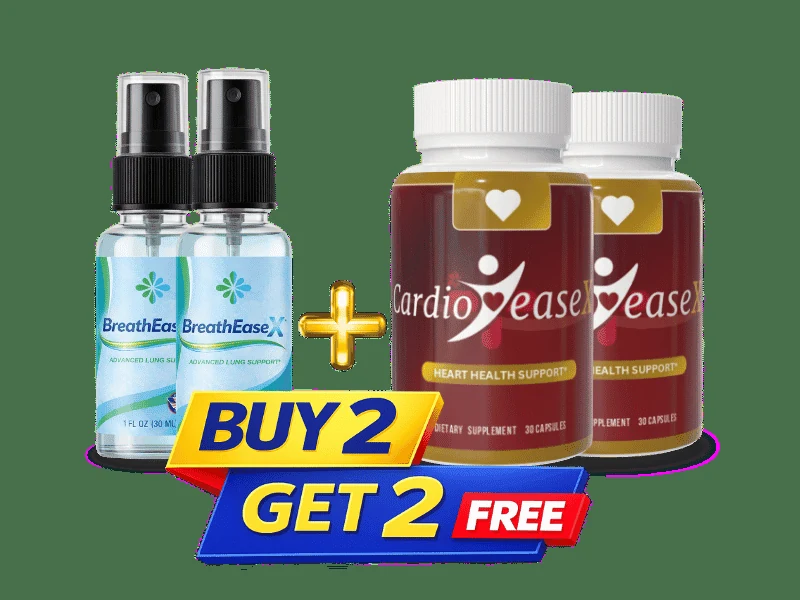
BreathEaseX is a lung-support oral spray that you cannot buy on its own. It is sold only bundled with CardioEaseX, a heart-health capsule, in 2, 4, or 6-bottle kits starting at $178.
The checkout page we reviewed makes no health claims and names no ingredients. The ingredient lists published in the brand's own materials name ten real compounds, but disclose no doses for any of them. Without doses, there is no way to check the formula against the research.
Several ingredients have genuine published research behind them. But that research was done in diagnosed patients, at known doses, and mostly with single ingredients. None of it tests this spray, this capsule, or this combination. The honest summary: a real-ingredient kit with an unverifiable formula, a forced bundle, and a conditional guarantee.
What BreathEaseX and CardioEaseX actually are
BreathEaseX is an oral spray. Its label reads "Advanced Lung Support." The brand's dosing directions say to apply four sprays directly into the mouth once daily.
CardioEaseX is a capsule. Its label reads "Heart Health Support." The bottle holds 30 capsules, and the brand's directions say to take two capsules daily with water, preferably in the morning.
The two are positioned as companions: clearer breathing plus stronger circulation. Whether the pair does anything more together than either would alone has never been tested. That pairing is brand positioning, not a studied claim.
What the checkout page shows, and what it does not
The page the brand sends buyers to is a bare checkout funnel labeled "Step 1." Its only headline reads: "Claim your Discounted BreathEaseX + CardioEaseX Below While Stock Lasts."
We read the full page two ways (the raw page code and a live visual render). It contains no health claims, no ingredient names, no Supplement Facts panel, no serving sizes, and no facility or certification claims. The pitch, in other words, lives somewhere else. The page you pay on tells you almost nothing about what you are buying.
The page's only trust signals are a line reading "Our customers say 4.98/5 based on 2000+ reviews" and the bundle pricing itself. The review figure names no review platform and cannot be audited. Treat it as decoration, not evidence.
The ingredient lists: ten ingredients, zero doses
The brand's own materials name six ingredients in the BreathEaseX spray and four in the CardioEaseX capsules. Not one of the ten carries a disclosed amount.
| Product | Named ingredients | Doses disclosed |
|---|---|---|
| BreathEaseX spray | Manuka honey MGO-400+, NAC (N-acetylcysteine), quercetin, olive leaf extract, vitamin D3, L-theanine | None |
| CardioEaseX capsules | CoQ10, hawthorn berry, L-carnitine, magnesium | None |
One more inconsistency: a benefit graphic on the brand's sales materials references L-arginine supporting blood flow, but L-arginine appears nowhere in the named ingredient list. Either the graphic is wrong or the list is incomplete. Neither option is reassuring.
This is not a mullein-leaf product. Mullein, eucalyptus, and lobelia belong to a different category of respiratory supplements (herbal expectorant blends). None of them appears in this formula.
What the research says, ingredient by ingredient
Here is each named ingredient, what published research actually shows, and an honest evidence grade for how the brand positions it.
| Ingredient | What the research actually shows | Evidence grade |
|---|---|---|
| NAC | A 2015 meta-analysis in the European Respiratory Review linked NAC to fewer exacerbations in people with chronic bronchitis or COPD. The effect is real but limited to diagnosed patients, and the broader literature is mixed. | Moderate for COPD; none at an unknown spray dose |
| Quercetin | A 2016 review in Molecules summarized antioxidant and anti-allergic effects, mostly from lab, animal, and population studies. Human trials for respiratory outcomes are at an early stage. | Low |
| Manuka honey | A 2016 review in Frontiers in Microbiology covered antimicrobial and wound-healing research. There are no breathing or lung-function trials. | Very low for respiratory use |
| Olive leaf extract | Oleuropein has published pharmacology (antioxidant, anti-inflammatory), but a 2019 review concluded clinical evidence in humans is limited and more trials are needed. | Very low |
| Vitamin D3 | A 2017 BMJ meta-analysis of 25 trials (11,321 people) found vitamin D modestly reduced respiratory infection risk, mainly in deficient people taking daily or weekly doses. This is the strongest ingredient-level evidence in the spray, but it concerns infections, not lung function. | Moderate for infection prevention in deficient people |
| L-theanine | A 2019 randomized trial found 200 mg/day eased stress-related symptoms and modestly helped some cognitive measures. The research centers on stress, sleep, and cognition, not airways. | Very low for breathing (not studied for it) |
| CoQ10 | The Q-SYMBIO trial (420 chronic heart failure patients, 100 mg three times daily for two years) found fewer major cardiovascular events than placebo. Mayo Clinic notes it may help heart-failure symptoms and is generally safe. | Moderate for heart failure; none at an unknown capsule dose |
| Hawthorn | NCCIH rates the evidence for heart failure as conflicting, notes one study suggesting possible early heart-failure progression (possibly via drug interactions), and lists dizziness, nausea, and diarrhea as side effects. | Low and conflicting |
| L-carnitine | A 2013 Mayo Clinic Proceedings meta-analysis (13 trials, 3,629 patients) found benefit after heart attacks: lower mortality, fewer arrhythmias, less angina. No effect on heart failure itself, and the authors called for larger trials. | Low to moderate, post-heart-attack patients only |
| Magnesium | An essential mineral; the NIH Office of Dietary Supplements notes older adults are among those at risk of low intake. As a "heart" ingredient at an unknown dose, the evidence is thin. | Low at unknown dose |
The pattern is consistent: real compounds, real published research, studied in sick patients at known doses. Nothing in that literature tests this spray, these capsules, or the two combined. Ingredient research is not product evidence.
The dose problem
This is the single biggest issue with the kit. Every ingredient on the list is dosed in milligrams in the trials. The brand discloses zero milligrams for any of them.
A spray that delivers four squirts a day cannot plausibly carry trial-level doses of six ingredients. NAC trials in COPD, for example, used hundreds of milligrams daily. Whether this spray delivers five milligrams or five hundred is unknowable from the brand's materials.
There is a second, checkable problem. The CardioEaseX bottle holds 30 capsules, and the brand's own directions say two per day. That is a 15-day supply per bottle. Yet the bundles are sold as "60-day," "120-day," and "180-day" supplies. The day-supply framing does not survive the brand's own label. If dose details matter to you, our supplement dosage guide explains how to read them.
Pricing and the forced bundle
Every tier bundles both products. You cannot buy the spray alone or the capsules alone on this page.
| Tier | What you get | Price per bottle | Total | Shipping | Cost per day |
|---|---|---|---|---|---|
| Try Two (60-day) | 1 spray + 1 capsule bottle | $89 | $178 (struck from $358) | Paid | $2.97 |
| Most Popular (120-day) | 2 sprays + 2 capsule bottles | $54 | $216 (struck from $716) | Free | $1.80 |
| Best Value (180-day) | 3 sprays + 3 capsule bottles | $49 | $294 (struck from $1,074) | Free | $1.63 |
- The struck-through anchors are theater. "You save $780" compares your price to a reference price the brand invented. There is no evidence anyone ever paid $1,074.
- The bundle is the price of admission. Want only the lung spray? You still pay for the heart capsules. At the entry tier that is $2.97 a day for two products when you may have wanted one.
- The guarantee window is shorter than the supply. The 60-day guarantee covers a 180-day supply on the largest tier. If the product needs months to judge, the refund clock runs out first. That mismatch is standard in this industry, and it is worth noticing before you click.
- No subscription. The brand states every purchase is a one-time transaction with no autoship. That is a genuine positive in a category full of surprise billing.
The guarantee and the fine print
- 60 days from purchase, not from delivery. The clock starts when you pay, and shipping time eats into it.
- You must get permission first. The refund policy requires contacting support for a return authorization before sending anything back. You then have 14 days to ship the return at your own cost. Empty and partially used bottles are accepted.
- The brand's own pages disagree. The refund policy says processing takes 5 to 7 business days for credit cards and 5 to 10 for debit cards. The terms of service say 3 to 5 business days. Both cannot be right.
- Two different phone numbers. The contact page lists +1 (720) 619-8477. The refund page lists +1 (970) 406-7582. Save both before you order, in case one does not connect.
- Barbados governs disputes. The terms say disputes are governed by the laws of the State of Barbados and go to binding arbitration, with a class-action waiver. Read that twice before a $294 purchase.
Who is behind it
The terms of service name the operator as "BreathEaseX." A different section of the same document, covering the text-message service, names the operator as "Nature's Formulas." Both names appear in the brand's own published materials. There is no street address for the company itself in the terms; returns go through an address the support team provides after you contact them.
Payments are processed by BuyGoods, a Delaware retailer at 1201 N Orange Street, Suite 7223, Wilmington, DE. BuyGoods' own footer text states that its role as retailer is not an endorsement or review of the product or its claims. Support email is [email protected].
Two names for the operator, two phone numbers, two refund timelines, and an offshore arbitration clause add up to a company that is harder to pin down than its checkout page suggests.
Has anyone actually tested this product?
No. We found no published independent laboratory test of BreathEaseX or CardioEaseX: no FDA tainted-product notice, no PubMed-indexed analysis, and no FDA or FTC enforcement action naming either product as of October 2026. That absence is itself a finding. Nobody outside the company has verified what is in the bottles.
What laboratory testing of the broader category has found is worth knowing. The FDA's hidden-ingredients program notes that contamination is most documented in sexual enhancement, weight loss, bodybuilding, sleep, and pain products. Respiratory sprays are not the typical category for hidden drugs. But label accuracy is a general problem: a JAMA Internal Medicine study by Dr. Pieter Cohen's group found that supplements the FDA had recalled for hidden ingredients were still being sold with those ingredients inside.
One ingredient deserves special attention. NAC sits in a genuine regulatory gray zone. The FDA determined that NAC is excluded from the legal definition of a dietary supplement because it was approved as a drug in 1963, then issued final guidance in August 2022 saying it will exercise enforcement discretion and not act against NAC supplements that otherwise comply with the law. So the headline ingredient of this spray is, strictly speaking, not a lawful supplement ingredient, sold openly because the FDA has chosen not to enforce that determination while it considers formal rulemaking.
On expert positions: Mayo Clinic cardiologist Dr. Stephen Kopecky advises, "Before you take any type of supplement, though, talk to your doctor to make sure it is appropriate for you." And when the FDA warned seven supplement companies in 2022 over cardiovascular-disease claims, the agency's Dr. Cara Welch warned that such products "could potentially harm consumers who use these products instead of seeking safe and effective FDA-approved treatments from qualified health care providers." The BreathEaseX checkout page itself carries the proper disclaimer that the product is not intended to diagnose, treat, cure, or prevent any disease. Hold the brand to that standard.
Safety notes for older adults
A spray positioned for breathing comfort carries one dominant risk for older adults: it is not a treatment for asthma, COPD, or any diagnosed lung condition, and it must never delay real care. Shortness of breath that is new, worsening, or present at rest belongs in a doctor's office, not a checkout funnel.
- Heart-medication interactions are the real concern in this kit. Hawthorn is the one to watch: NCCIH notes possible interactions with heart drugs and advises talking to your doctor first if you take any prescription medicine. CoQ10 may make the blood thinner warfarin less effective, which can raise clot risk (our blood thinner safety guide covers this class of interaction). Magnesium can interact with certain antibiotics, osteoporosis drugs, and blood pressure medicines. See our supplement interactions guide before combining any of this with prescriptions.
- Hidden doses make interaction checks impossible. Your pharmacist cannot assess a product whose ingredient amounts are undisclosed. That alone is a reason to bring the actual bottles, not the web page, to the conversation.
- Hawthorn identity matters. The FDA warned in January 2024 that some products labeled as tejocote root (Mexican hawthorn) were actually substituted with toxic yellow oleander. CardioEaseX says "hawthorn berry" without naming a species. Read our Tejocote recall investigation for why substitution in this plant family is a live concern.

What BreathEaseX is not
A short clearing of the search results. BreathEaseX is not a mullein-leaf product, and its formula has no overlap with mullein-based expectorant blends. No "Vicks trick" or menthol-rub mechanism appears anywhere in the brand's materials; the products are an oral spray and a swallowed capsule. And "carbon buildup coating your air sacs," the mechanism phrase from the brand's sales materials, is brand-created marketing language, not a term from respiratory medicine.
Sources
- FDA: Final Guidance on Enforcement Discretion for Certain NAC Products (August 2022)
- Cazzola et al. 2015, European Respiratory Review: Influence of N-acetylcysteine on chronic bronchitis or COPD exacerbations, a meta-analysis
- Mlcek et al. 2016, Molecules: Quercetin and Its Anti-Allergic Immune Response (PMID 27187333)
- Carter et al. 2016, Frontiers in Microbiology: Therapeutic Manuka Honey, No Longer So Alternative (PMCID PMC4837971)
- Omar 2010, Scientia Pharmaceutica: Oleuropein in Olive and Its Pharmacological Effects (PMID 21179340)
- Nediani et al. 2019, Antioxidants: Oleuropein as a Potential Preventive and Therapeutic Agent, limited clinical evidence noted (PMCID PMC6943788)
- Martineau et al. 2017, BMJ: Vitamin D Supplementation to Prevent Acute Respiratory Tract Infections, individual participant data meta-analysis (PMID 28202713)
- Hidese et al. 2019, Nutrients: Effects of L-Theanine Administration on Stress-Related Symptoms and Cognitive Functions (PMID 31623400)
- Jellin et al. 2015, Open Heart: Coenzyme Q10 for the Treatment of Heart Failure, a review including the Q-SYMBIO trial (PMID 26512330)
- Mayo Clinic: Coenzyme Q10, evidence summary, safety, and warfarin interaction
- NCCIH: Hawthorn, Usefulness and Safety (updated April 2025)
- DiNicolantonio et al. 2013, Mayo Clinic Proceedings: L-carnitine in the Secondary Prevention of Cardiovascular Disease (PMID 23597877)
- NIH Office of Dietary Supplements: Magnesium Fact Sheet for Health Professionals
- FDA: Warning Letters to Companies Selling Dietary Supplements That Claim to Treat Cardiovascular Disease (November 2022)
- FDA: Avoiding Products Contaminated with Hidden Ingredients
- Cohen et al. 2014, JAMA Internal Medicine: recalled supplements and hidden ingredients (PMID 25335153)
- Mayo Clinic News Network: Q and A on CoQ10 and supplements, with Dr. Stephen Kopecky
Review note: This review covers the BreathEaseX + CardioEaseX checkout page as it appeared in October 2026 (the Step 1 bundle page with 2, 4, and 6-bottle tiers, BuyGoods checkout, and a 60-day guarantee). The brand's longer sales letter was not publicly reachable at review time. Lookalike sites under the same product names exist and may show different content, prices, or claims.
Fact-checked by the SupplementDecoded Research Editorial Team