
Table of ContentsShow ChaptersHide Chapters
Medical Disclaimer
This article is for informational purposes only and does not constitute medical advice. Always consult with a qualified healthcare professional before starting any new supplement regimen.
Read our Medical / Expert Review Policy and Medical Disclaimer for details.
Key takeaways: No published clinical trial has tested whether lymphatic drainage drops improve lymphatic function. The main ingredient in many formulas, red clover, has no conclusive evidence of benefit for any health condition, according to NCCIH. Any de-puffing you notice is most likely water fluctuation, not drained lymph. People who take blood thinners or immunosuppressants, or who have new leg swelling, should talk to their doctor first, since swelling can signal heart, kidney, or liver problems.
Contents
Our verdict
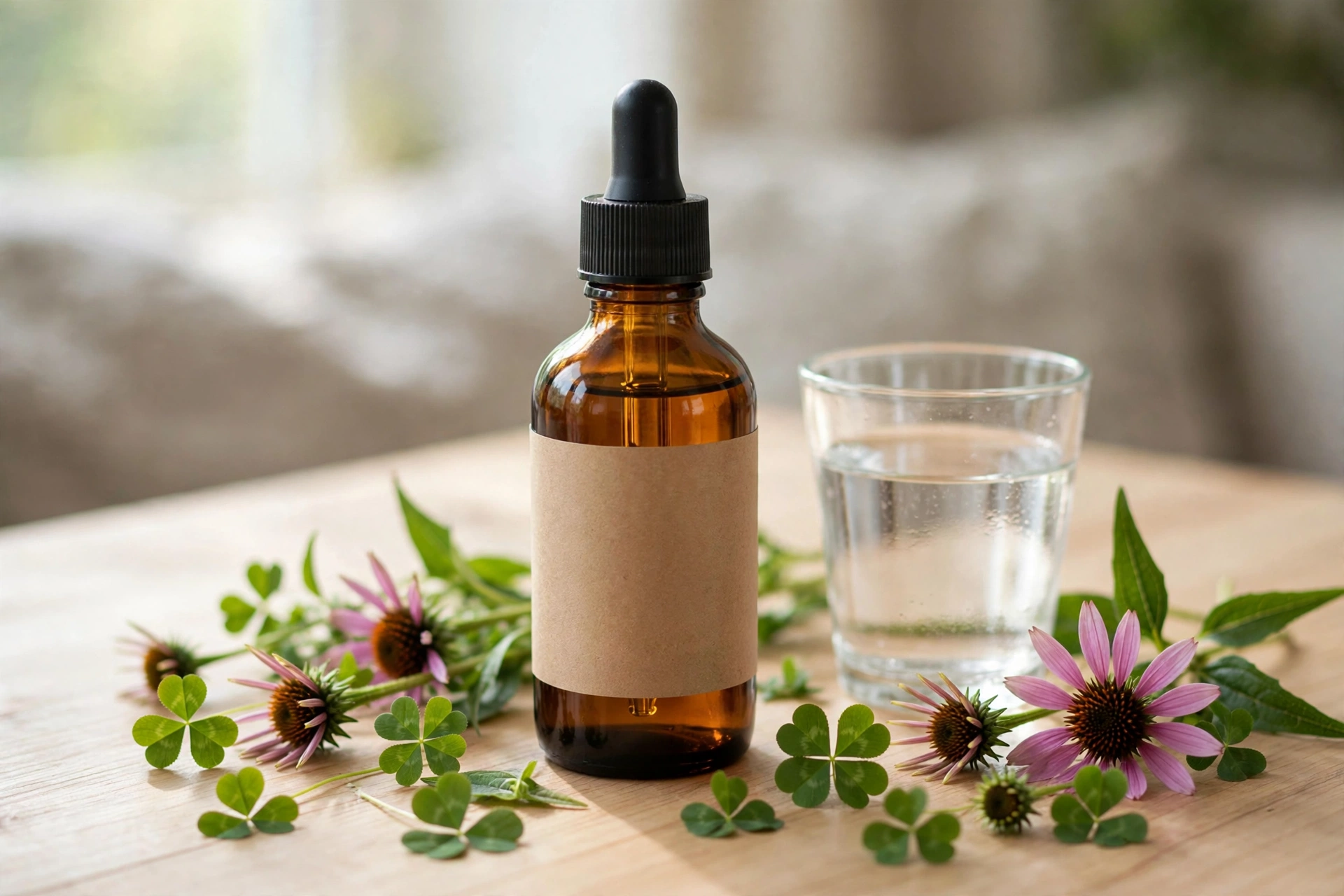
Lymphatic drainage drops are herbal tinctures sold as a way to "drain" your lymph system, flush toxins, and de-puff your face and body. They are having a viral moment on TikTok and TikTok Shop.
The honest verdict: there is no clinical evidence that any drops formula improves lymphatic function. The pitch is built on a real body system and a fake fix. If you take blood thinners or have unexplained swelling, skip the drops and call your doctor instead.
What is in these bottles?
There is no standard formula. Different brands sell near-identical private-label tinctures under different names. The usual lineup is a mix of traditional herbs in an alcohol or glycerin base:
Common ingredient | What sellers claim it does | What the evidence actually shows |
|---|---|---|
Red clover | "Cleanses" lymph and blood | NCCIH: no conclusive evidence of benefit for any health condition |
Echinacea | "Boosts" immune drainage | NCCIH: studied for colds, not for lymphatic function |
Cleavers | Traditional "lymph mover" | No clinical trials in people at all |
Dandelion | "Flushes" fluid | Mild diuretic reputation; no lymph studies |
Burdock | "Detox" support | No clinical trials for lymphatic claims |

Notice the pattern. The claims are about the lymphatic system, but the herbs are studied (when they are studied at all) for completely different things. None has been tested for draining lymph.
How your lymphatic system actually works
Your lymphatic system is a network of vessels and nodes that carries protein-rich fluid through the body and filters it through infection-fighting cells in your lymph nodes. It is a real and important system.
Here is the part the sellers leave out. According to Mayo Clinic, lymph fluid is pushed through the vessels by muscle contractions as you move through your day, plus tiny pumps in the vessel walls. Everyday movement, like walking, is the engine.
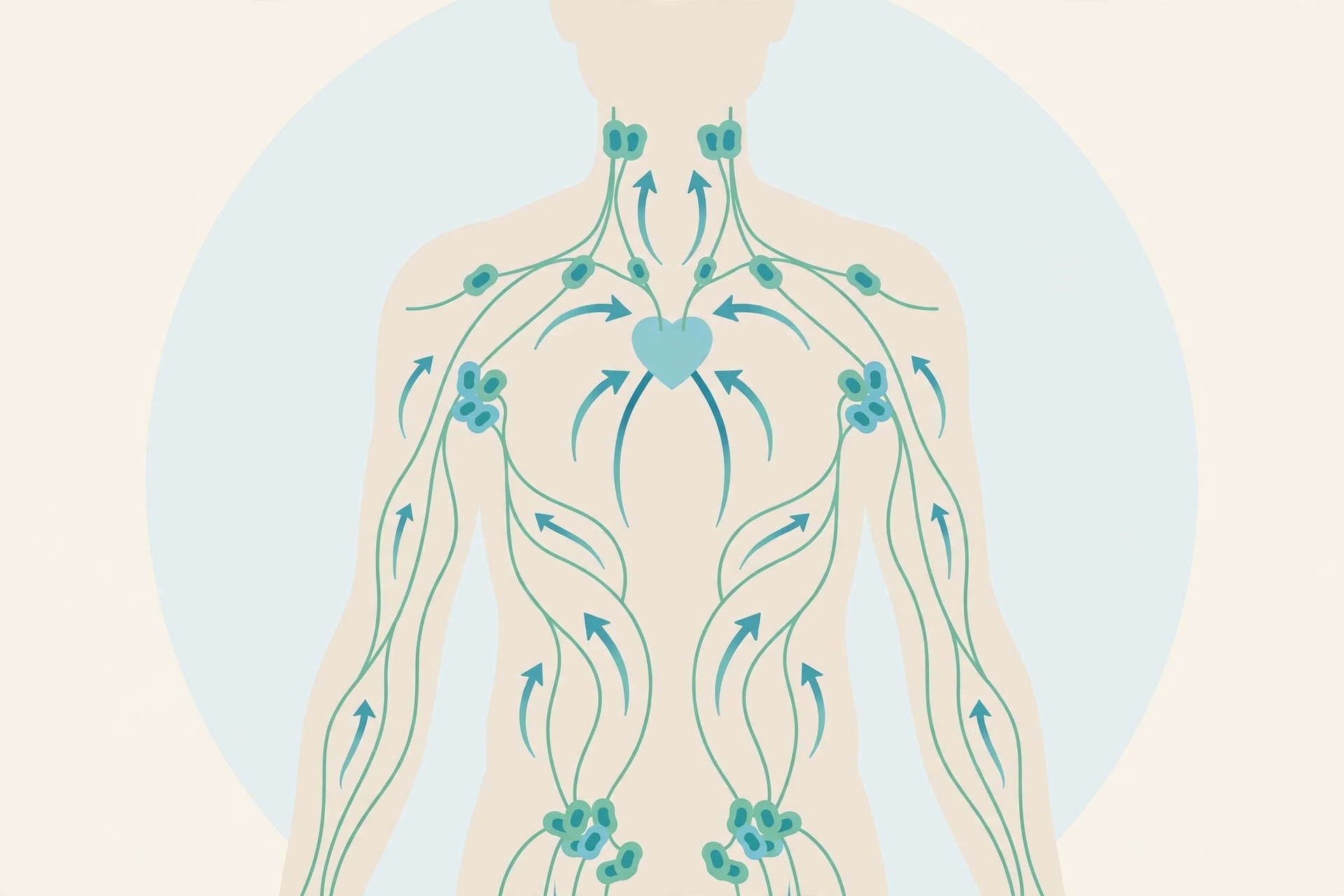
Nothing you swallow changes that mechanical process. A few drops of herbal tincture under your tongue do not add pumps to your vessel walls. This is why the entire product concept is shaky: the mechanism it promises does not exist.
What the evidence says
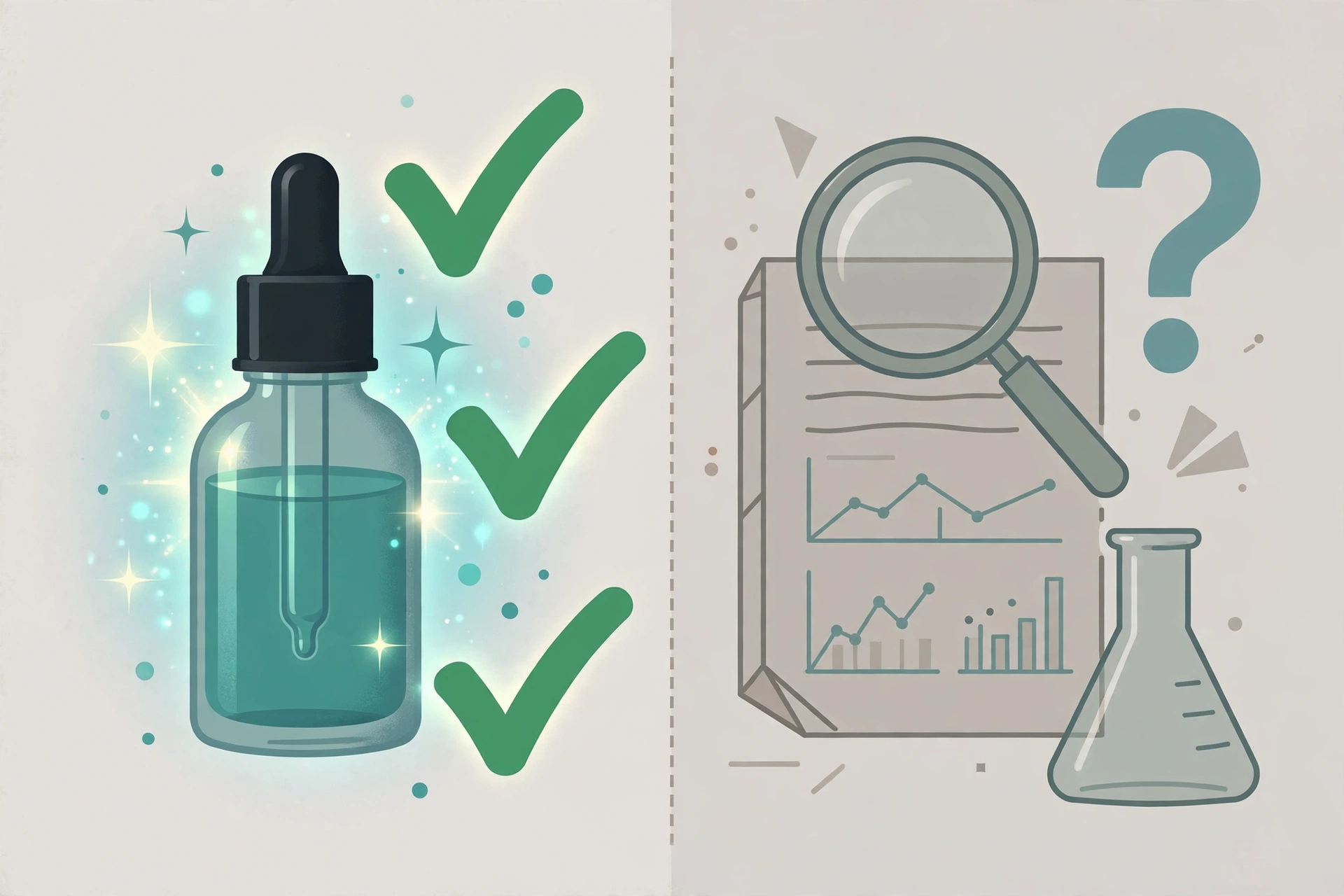
No drops formula has been tested in a clinical trial measuring lymphatic function. We found no randomized trials, no cohort studies, and no published measurements of lymph flow, lymph volume, or drainage after taking these products. The evidence base is zero.
The star ingredient does not hold up. NCCIH states that red clover has been studied in people but the research has not shown conclusive evidence of benefits for any health condition. Its trials were for menopause symptoms and cholesterol, not lymphatic drainage.
The "results" have simpler explanations. Dandelion and similar herbs have a reputation as mild diuretics, which means any de-puffing is most likely water loss, not drained lymph. Face puffiness also fluctuates daily with salt, sleep, and hydration. Before-and-after photos taken a day apart prove nothing.
Risks older adults should know
The biggest risk is not the herbs themselves. It is what the drops make you skip.
New swelling deserves a doctor visit, not drops. Mayo Clinic notes that lasting swelling can come from serious problems, including heart failure, kidney disease, blood clots, or damaged lymph vessels. If your legs are newly swollen, that is a symptom to report to your health care provider, not something to self-treat with a viral tincture. Delayed care is the real danger.
Check interactions if you take medicines. NCCIH advises anyone who takes any type of medicine to talk with their health care provider before using herbal products, because some herbs and medicines interact in harmful ways. Our turmeric and warfarin safety guide shows how common this problem is for people on blood thinners.
Echinacea has its own cautions. NCCIH notes that echinacea is related to ragweed, that some people have allergic reactions which may be severe, and that there are theoretical reasons to suspect it may interact with immunosuppressant drugs. If you have ragweed allergies or take immune-suppressing medicines, this ingredient is worth a conversation with your clinician.
Red clover gets extra scrutiny. Some lymphatic formulas rely heavily on red clover. People on blood thinners should be especially careful with herbs in this category, as our ginkgo and blood thinners guide explains for a similar herb-drug concern.
Alcohol-based tinctures add up. Many drops use an alcohol base. A daily dose is small, but it still matters for people avoiding alcohol for liver, medication, or personal reasons. Check the label.
Marketing red flags
The lymphatic drops category shows the classic warning signs we have seen in other social-media supplement scams:
Before-and-after photos that prove nothing about lymph function.
"Flush your toxins" language. Your liver and kidneys already handle waste removal; no drops assist them.
Many brands selling near-identical formulas, a sign of private-label packaging rather than unique research.
No cited studies. Sellers talk about the lymphatic system (real) to sell a fix (unproven).
Social-media virality is not safety testing. Products marketed heavily on TikTok Shop have repeatedly turned out to have hidden problems, as we covered in our Beauty 911 FDA warning expose.
What actually supports your lymphatic system
None of this requires a tincture.
Move your body. Since muscle contractions move lymph fluid, regular walking and everyday activity are the genuine version of "drainage." This is not our opinion; it is how Mayo Clinic describes the system working.
For diagnosed lymphedema, use proven treatments. Mayo Clinic describes compression garments and bandages, specialized massage, and careful skin care as the real treatments for lymphedema, which is usually caused by damaged or removed lymph nodes, often after cancer treatment. If that sounds like your situation, ask your doctor for a referral to a lymphedema specialist.
Get new swelling checked promptly. This bears repeating: swelling that is new, one-sided, or getting worse is a medical symptom. Talk to your health care provider before spending money on drops.
Bottom line
Lymphatic drainage drops take a real body system, invent a fake problem ("clogged lymph"), and sell an untested fix. There is no clinical evidence these drops change lymphatic function, and the star ingredients have no proven benefit for the claims on the label.
If the goal is less puffiness, walking, hydration, and less salt do more than any tincture. If the goal is dealing with real swelling, your doctor does more than any bottle on TikTok Shop.
Sources
National Center for Complementary and Integrative Health. Red Clover: Usefulness and Safety. https://www.nccih.nih.gov/health/red-clover
National Center for Complementary and Integrative Health. Echinacea: Usefulness and Safety. https://www.nccih.nih.gov/health/echinacea
Mayo Clinic. Lymphedema: Symptoms and causes. https://www.mayoclinic.org/diseases-conditions/lymphedema/symptoms-causes/syc-20374682
Mayo Clinic. Lymphedema: Diagnosis and treatment. https://www.mayoclinic.org/medical-professionals/physical-medicine-rehabilitation/news/lymphedema-diagnosis-and-treatment/mac-20436554
Fact-checked by the SupplementDecoded Research Editorial Team