
Table of ContentsShow ChaptersHide Chapters
- Nattokinase is a real clot-busting enzyme from fermented soy, which is exactly why it deserves caution.
- We review the human evidence and the bleeding risks.
Medical Disclaimer
This article is for informational purposes only and does not constitute medical advice. Always consult with a qualified healthcare professional before starting any new supplement regimen.
Read our Medical / Expert Review Policy and Medical Disclaimer for details.
Key takeaways
- Nattokinase is a real enzyme from fermented soy (natto) that breaks down fibrin, a protein involved in blood clots. It is genuinely active, which is exactly why it deserves caution, not casual use.
- Human trials are small and short. One 8-week randomized trial found a modest blood-pressure reduction. No trial has shown that nattokinase prevents heart attacks or strokes.
- The biggest risk is bleeding. A published case report describes a brain bleed in a patient who added nattokinase to aspirin. Never combine it with blood thinners or use it as a replacement for them without your doctor.
- The FDA has not approved nattokinase to treat or prevent any disease. Treat the marketing claims with skepticism and talk to your doctor first.
Contents
The verdict
Nattokinase is one of the rare viral supplements that is not fake. It is a genuine enzyme from fermented soybeans that can dissolve blood-clot material in laboratory and animal studies. The problem is not that it does nothing. The problem is that it does something real, and that something carries real bleeding risk.
For older adults, the verdict is caution, not enthusiasm. The human evidence is thin: small, short trials with modest results. The safety evidence includes a published brain-bleed case. If you take blood thinners or aspirin, this is a product to discuss with your doctor before you ever open the bottle.
What nattokinase actually is
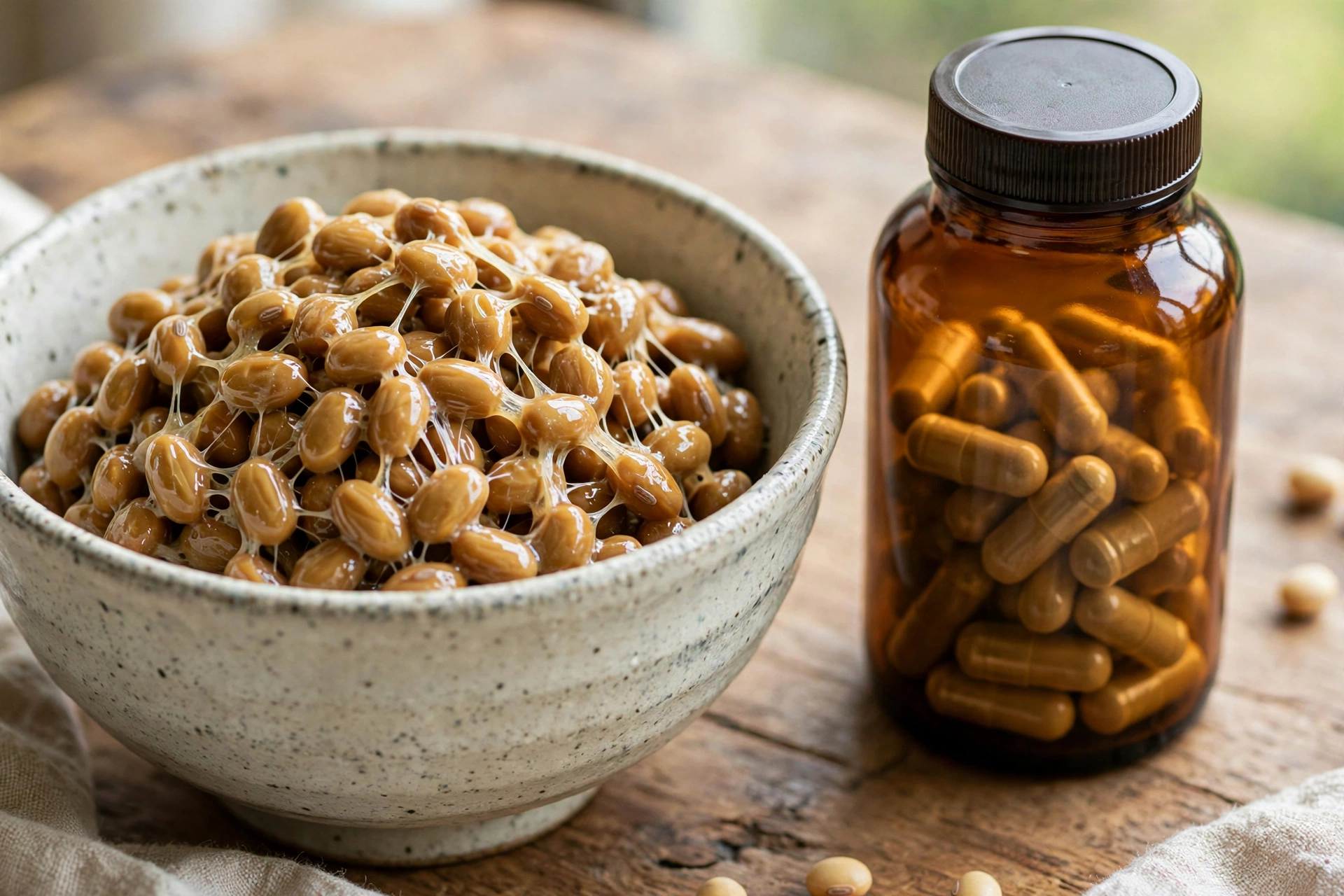
Nattokinase is an enzyme produced during the fermentation of soybeans into natto, a traditional Japanese food. Supplement makers extract and purify the enzyme and sell it in capsules, usually measured in FU (fibrinolytic units).
A peer-reviewed review in the International Journal of Molecular Sciences describes how it works. Nattokinase breaks down fibrin directly, the protein mesh that holds blood clots together. It also boosts the body's own clot-dissolving machinery by increasing tissue plasminogen activator and reducing PAI-1, a protein that puts the brakes on clot breakdown.
This is real pharmacology, not wellness poetry. In lab studies, nattokinase shows genuine clot-dissolving activity, which is exactly why the bleeding cautions matter. A 2026 study in Scientific Reports found that clot-dissolving speed in the lab varied with blood type and age, with type O samples dissolving fastest. But that was test-tube research, not a finding about how people should dose the supplement.
What the human evidence shows
Human research on nattokinase exists, which puts it ahead of most viral supplements. But "exists" and "convincing" are different things. Every trial so far is small and short, and none measured the outcomes that actually matter: heart attacks, strokes, or deaths prevented.
The blood pressure trial
The best-known study is an 8-week randomized, double-blind trial published in Hypertension Research in 2008. Participants with elevated blood pressure took nattokinase or a placebo for two months.
The result was a modest drop in systolic blood pressure, about 5.5 mmHg more than the placebo group at 8 weeks. That is a real effect, but it is smaller than what prescription blood-pressure medicines typically achieve. It is also one small trial, never replicated at scale.
The clotting-factors trial
A 2009 clinical trial in Nutrition Research gave nattokinase to three groups for two months: healthy volunteers, people with cardiovascular risk factors, and people on dialysis. Blood levels of three clotting-related factors (fibrinogen, factor VII, and factor VIII) fell in all groups.
This confirms the enzyme does something measurable in human blood. But lowering a lab value is not the same as preventing disease. No study has connected these changes to fewer clots, heart attacks, or strokes.
Evidence grade: nattokinase claims
| Claim | Evidence grade | What we know |
|---|---|---|
| Breaks down clot material | Moderate | Consistent lab and animal findings; some human biomarker changes |
| Lowers blood pressure | Low to moderate | One small 8-week RCT showed a modest drop; unreplicated |
| Prevents heart attacks or strokes | None | No trial has measured hard outcomes; claims outrun the data |
| "Natural" blood thinner | Misleading label | Active on clotting, yes; equivalent to prescription thinners, no |
The bleeding risks every senior should know
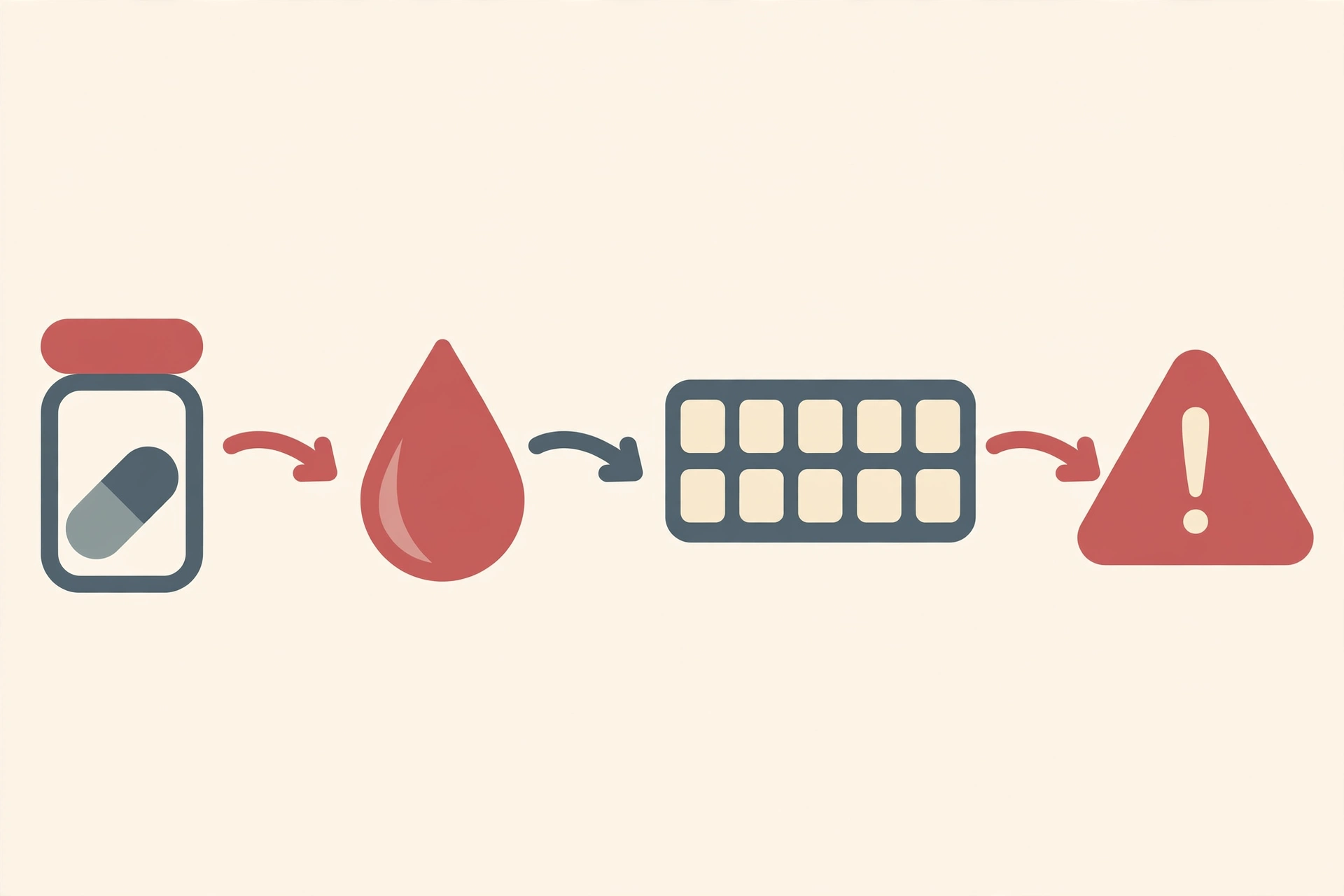
An enzyme that breaks down clots can also break down the clots your body needs. This is the core safety issue, and it is especially relevant for older adults, who are the most likely to take blood thinners, aspirin, and blood-pressure medicines.
The brain-bleed case
In 2008, doctors in Taiwan published a case report in Internal Medicine about a patient who had been taking aspirin to prevent another stroke. The patient added nattokinase at 400 mg per day for seven days. Shortly after, the patient suffered an acute hemorrhage in the cerebellum, a bleed inside the brain.
Brain imaging also showed multiple tiny pre-existing bleeds (cerebral microbleeds), a common finding in older adults. The authors concluded that nattokinase may raise the risk of brain hemorrhage in people who already have fragile brain vessels and take antithrombotic medicines at the same time.
This is a single case, not proof that the combination always causes bleeding. But brain bleeding is catastrophic, and one well-documented case is enough reason to take the combination risk seriously.
Never a replacement for prescription blood thinners
The same review also discusses a published case of a patient with a mechanical aortic valve who stopped prescribed warfarin and took nattokinase instead. Mechanical valves demand strong, predictable anticoagulation. A supplement cannot provide it, and the result was dangerous clotting around the valve.
The lesson is blunt: nattokinase is not a natural warfarin. Never stop or replace a prescription blood thinner with a supplement. If you are on warfarin, apixaban, rivaroxaban, dabigatran, aspirin, or clopidogrel, adding nattokinase stacks two things that push your blood in the same direction. Talk to your doctor before combining them.
For more on how a supplement can collide with warfarin specifically, see our guide on turmeric and warfarin.
Warning signs of bleeding
- Unusual bruising or bruises that grow quickly
- Bleeding that takes much longer than usual to stop
- Nosebleeds, bleeding gums, or blood in urine
- Black or tarry stools, or coughing up blood
- Sudden severe headache or weakness, which can signal bleeding in the brain and needs emergency care
Who should be most careful
- Anyone taking blood thinners or daily aspirin. This is the highest-risk group. Warfarin, direct oral anticoagulants, heparin, aspirin, and clopidogrel all interact in the same dangerous direction: more bleeding. Discuss it with your prescriber before adding anything.
- Anyone scheduled for surgery or a procedure. Extra bleeding risk around surgery is the last thing you need. Tell your surgeon about every supplement you take well before the date.
- People with bleeding disorders or a history of brain bleeds. The published hemorrhage case involved a patient with pre-existing cerebral microbleeds, which are common in older adults and often unknown to the patient.
- People on blood-pressure medicines. Nattokinase may lower blood pressure modestly, which could stack with prescription medicines and push blood pressure too low. Mayo Clinic's guidance on herbal supplements warns that many interact with heart medicines and that patients should talk to their health care professional first.
- People who are pregnant or breastfeeding. There are no safety data for these groups, and bleeding risk makes it a poor bet without medical guidance.
- Anyone with a mechanical heart valve or stent. These situations need precise, prescription-level anticoagulation. A supplement is not a substitute.
A related companion piece: ginkgo and blood thinners, another "circulation" supplement with a bleeding-risk story seniors should read.

What the marketing gets wrong
Nattokinase sellers rarely lie about the basic science. The enzyme really does dissolve fibrin. Where they go wrong is in what they imply that science means for you.
| The marketing claim | What the evidence actually says |
|---|---|
| "Dissolves blood clots naturally" | In lab and animal studies, yes. In human arteries, unproven. No trial has shown fewer clots in people taking it. |
| "A natural alternative to blood thinners" | Dangerously misleading. A published case shows replacing warfarin with nattokinase led to dangerous clotting on a mechanical heart valve. |
| "Clinically proven for heart health" | Small, short trials measured lab values and blood pressure, not heart attacks or strokes. That is not proof of heart benefit. |
| "Choose your dose by blood type" | The 2026 blood-type study was lab research on clot samples, not a dosing trial. No validated blood-type dosing exists. |
| "Safe because it comes from food" | Natto as food has a long safety record. Concentrated enzyme capsules at supplement doses are a different product, with a published brain-bleed case attached. |
Also know the regulatory reality. The FDA does not approve dietary supplements for safety or effectiveness before they reach store shelves. The law puts that responsibility on the manufacturer, and the FDA acts after problems appear. A supplement on the market is not a supplement the FDA has verified.
The bottom line for older adults
Nattokinase is a genuinely active enzyme with modest human evidence for blood-pressure and clotting-factor effects, and zero evidence that it prevents heart attacks or strokes. For most seniors, the bleeding risk, especially alongside aspirin, warfarin, or other blood thinners, outweighs the uncertain benefit.
If you take any prescription medicine for your heart, blood pressure, or clotting, do not start nattokinase on the basis of marketing or social media. Bring the bottle to your doctor or pharmacist and ask directly. That conversation is the safest dose of all.
For a broader look at how supplements can collide with heart medicines, read our piece on CoQ10 and statins.
Sources
- https://www.nature.com/articles/hr2008203.pdf?origin& (Kim et al., Hypertension Research, 2008: 8-week randomized trial of nattokinase and blood pressure)
- https://pubmed.ncbi.nlm.nih.gov/19358933/ (Hsia et al., Nutrition Research, 2009: nattokinase and plasma fibrinogen, factor VII, factor VIII)
- https://pubmed.ncbi.nlm.nih.gov/18310985/ (Chang et al., Internal Medicine, 2008: cerebellar hemorrhage with combined nattokinase and aspirin)
- https://www.ncbi.nlm.nih.gov/pmc/articles/PMC5372539/ (peer-reviewed review of nattokinase mechanisms, clinical studies, and safety cases, Int. J. Mol. Sci., 2017)
- https://www.nature.com/articles/s41598-026-38130-5 (2026 Scientific Reports study of age and blood-group differences in nattokinase clot dissolution)
- https://www.fda.gov/food/information-consumers-using-dietary-supplements/questions-and-answers-dietary-supplements (FDA: dietary supplements are not approved before sale; manufacturer bears safety responsibility)
- https://www.mayoclinic.org/healthy-lifestyle/consumer-health/in-depth/herbal-supplements/art-20046488?footprints=mine&pg=2&p=1 (Mayo Clinic: herbal supplements can interact with heart medicines; talk to your health care professional)
Fact-checked by the SupplementDecoded Research Editorial Team