
Table of ContentsShow ChaptersHide Chapters
Medical Disclaimer
This article is for informational purposes only and does not constitute medical advice. Always consult with a qualified healthcare professional before starting any new supplement regimen.
Read our Medical / Expert Review Policy and Medical Disclaimer for details.
Key takeaways: SodaSlim sells a "gut bacteria" story, but its Supplement Facts label shows the exact same five-ingredient stimulant stack as Digest Flow, which we reviewed in October 2026. There are no probiotics, prebiotics, or fiber in the bottle. The green coffee trial the pitch rests on was retracted, the FTC charged the study was so flawed no reliable conclusions could be drawn, and the only ingredient likely to make you feel anything is 138 mg of caffeine. At $49 to $79 per bottle with a 60-day guarantee, the honest price is the stimulant price, not the breakthrough price.
Contents
- The verdict
- What the page promises
- The label: what is actually in the bottle
- Claim vs evidence, ingredient by ingredient
- The core mismatch: a gut-bacteria pitch on a stimulant label
- Price and value
- Who is behind SodaSlim
- Testimonials and the fine print
- Senior safety notes
- Regulatory history
- The bottom line
- Sources
The Verdict
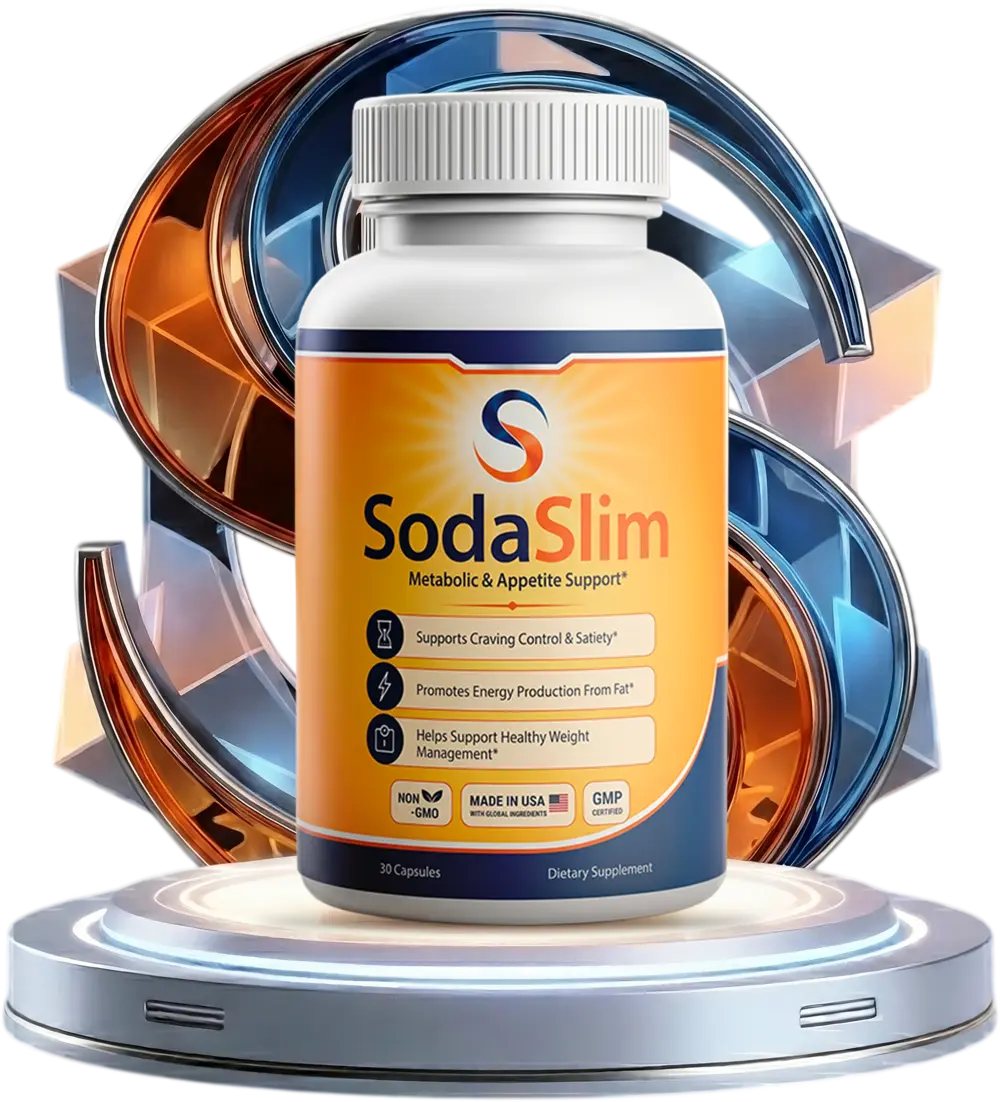
SodaSlim is sold as a metabolism and "gut bacteria" weight-loss capsule. The label says something simpler: a five-ingredient stimulant stack, milligram for milligram identical to Digest Flow, a product pitched for digestion that we reviewed in October 2026.
The formula lists green coffee bean extract, raspberry ketone, garcinia, caffeine, and green tea extract at the exact same doses as that earlier product. There is not one probiotic, prebiotic, or fiber ingredient anywhere on the label.
If you have read our Digest Flow teardown, you already know this evidence story. If you have not, here it is: a retracted flagship trial, a human-trial record of zero for the headline ingredient, and caffeine doing most of the work.
What the Page Promises
The headline calls SodaSlim "the best option for supporting a better functioning metabolism and promote healthy weight loss in a natural way." The page then pivots to its distinctive angle: the capsule "directly attacks the harmful bacteria that sabotage weight loss and promotes the growth of good bacteria that activate fat burning."
The promised benefits list reads: accelerate fat burning, suppress appetite, boost energy levels, support lean muscle growth, detoxify the body, improve metabolism. Notably, the page never uses the phrase "clinically proven."
The urgency is familiar. A 30-minute JavaScript countdown appears three times, plus "DON'T WASTE TIME," "While Supplies Last," and a claim that 96% of customers order the 6-bottle package. The FAQ says purchases are one-time payments with no automatic renewals, and backs the product with a 60-day money-back guarantee.
The Label: What Is Actually in the Bottle
One capsule per day, taken in the morning. Thirty capsules per bottle. The Supplement Facts panel is shown as a full-width image on the page, just above the "Scientific References" section.
| Ingredient (per 1 capsule) | Amount |
|---|---|
| Green coffee bean extract (50% chlorogenic acids) | 130 mg |
| Raspberry ketone | 130 mg |
| Garcinia extract (50% HCA) | 130 mg |
| Caffeine anhydrous | 138 mg |
| Green tea extract (98% polyphenols, 75% catechins, 45% EGCG, under 3% caffeine) | 130 mg |
Every ingredient is marked "Daily Value not established." The capsule shell is vegetable cellulose. The label says the product contains caffeine and carries a standard warning: consult a physician if you take medication or have a medical condition.
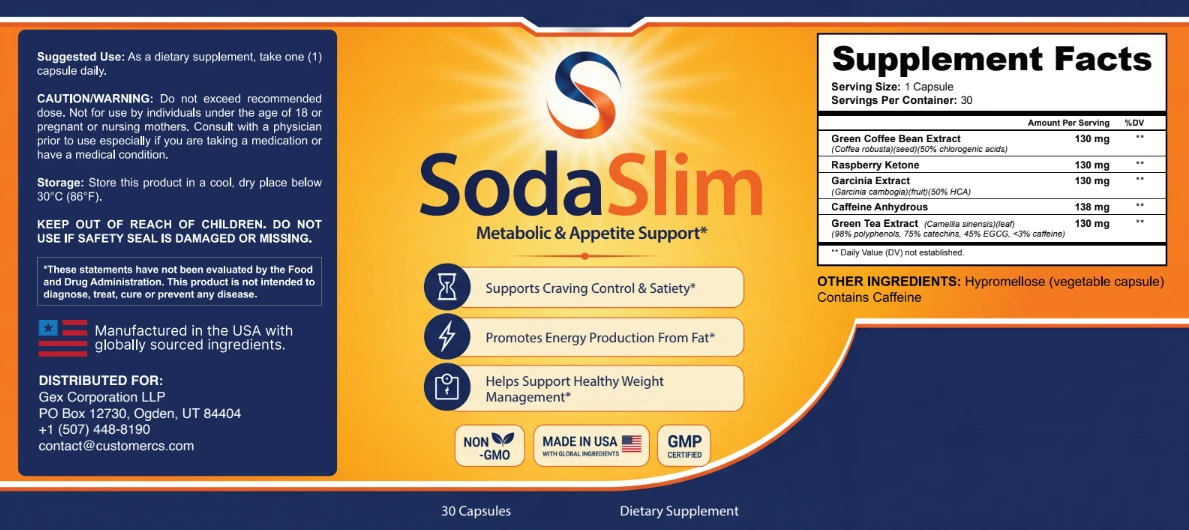
Compare this label to the one in our Digest Flow review: green coffee bean 130 mg, raspberry ketone 130 mg, garcinia 130 mg, caffeine 138 mg, green tea extract 130 mg. Same five ingredients, same five doses. One factory bottle, two health pitches.
Claim vs Evidence, Ingredient by Ingredient
| Ingredient | What the evidence actually shows | Evidence grade |
|---|---|---|
| Green coffee bean extract (130 mg) | The most-cited human trial (Vinson et al., 2012, 16 subjects) was formally retracted in 2014 after the sponsor could not assure the data's validity. The FTC separately charged the study was so flawed no reliable conclusions could be drawn from it, and the supplier paid $3.5 million to settle. No gut-bacteria benefit has been shown. | F (retracted flagship trial) |
| Raspberry ketone (130 mg) | No published human trial has tested raspberry ketone alone for weight loss. The one human study that included it (Lopez et al., 2013) used a multi-ingredient blend with caffeine, capsaicin, and synephrine, so nothing can be attributed to raspberry ketone itself. Animal doses were far higher than 130 mg. | F (no human data alone) |
| Garcinia cambogia (130 mg, 50% HCA) | NCCIH: it is unclear whether garcinia helps with weight loss; some evidence suggests a modest effect, other evidence shows none. Numerous reports of liver toxicity exist in people taking garcinia products. | D (unclear benefit, real liver risk) |
| Caffeine anhydrous (138 mg) | Roughly one and a half cups of coffee. Mayo Clinic: up to 400 mg per day is safe for most adults, but caffeine can raise heart rate and blood pressure and interfere with sleep and some medications. This is the only ingredient likely to produce a felt effect, and it is stimulation, not gut health. | C (real stimulant, not a gut remedy) |
| Green tea extract (130 mg, 45% EGCG, about 58 mg EGCG) | Concentrated green tea extract is associated with liver injury in animal and human studies. Green tea polyphenols are an active area of microbiome research, but no ingredient in this capsule has established evidence for the page's "attack harmful bacteria" claim. A cup of green tea is not the same thing as a concentrated extract capsule. | D (no gut-bacteria proof; liver signal) |
Green coffee bean extract: the retracted study problem
The 2012 trial that launched the green coffee weight-loss craze (16 overweight adults, crossover design) was formally retracted in 2014. The retraction notice states the sponsors could not assure the validity of the data.
The FTC went further. In a complaint against the ingredient supplier, the agency charged that the lead investigator repeatedly altered subjects' weights and other key measurements, changed the trial length, and misstated who received placebo. The supplier paid $3.5 million to settle.
That was the best human evidence green coffee ever had. What remains is essentially nothing a buyer should rely on.
Raspberry ketone: zero human trials of the ingredient itself
Raspberry ketone became famous from television, not from science. Every weight-loss claim traces back to mouse and cell studies, at doses that scale to grams per day in humans, not the 130 mg in this capsule.
The single human trial that included raspberry ketone (Lopez et al., 2013) tested an eight-ingredient blend that also contained caffeine, capsaicin, and synephrine, alongside a diet and exercise program. The design cannot tell you whether raspberry ketone did anything at all.
Garcinia cambogia: unclear benefit, documented liver injuries
NCCIH's assessment is blunt: it is unclear whether garcinia products help with weight loss, with some studies showing a modest effect and others showing none. More research is needed.
The safety side is clearer. NCCIH notes numerous reports of liver toxicity in people taking garcinia products. A U.S. Pharmacopeia review identified more than 200 adverse events of liver injury linked to garcinia, including one death and nine liver transplants.
The Core Mismatch: A Gut-Bacteria Pitch on a Stimulant Label
Here is the honest question the page never answers: which ingredient attacks the harmful bacteria? There is no probiotic strain listed. There is no prebiotic fiber. There is no fermented ingredient. The label is green coffee, raspberry ketone, garcinia, caffeine, and green tea.
Green tea polyphenols are an active area of microbiome research. But "active area of research" is not the same as "proven to attack harmful bacteria that sabotage weight loss," and nothing in the capsule is sold or studied as a microbiome intervention for weight.
The stimulant side is not hypothetical. At 138 mg, the caffeine alone explains the "boost energy levels" promise and the "accelerate fat burning" feeling some users report. The rest of the pitch rides on its coattails.
- What the marketing claims: harmful bacteria sabotage weight loss, good bacteria activate fat burning, and this capsule fixes the balance. No ingredient on the label is a documented microbiome intervention for weight loss, and no human study of these ingredients tested that claim.
- What the label shows: a stimulant weight-loss stack identical to the Digest Flow formula. Every one of the five ingredients and doses matches the earlier product exactly, which was pitched for digestion. The ingredient list did not change; only the story did.
- What that means for a buyer: you are evaluating a stimulant capsule, not a gut-health formula. Judge it on caffeine and the thin evidence for the other four ingredients. If you want genuine gut-bacteria support, the evidence-backed basics are fermented foods, fiber, and medical evaluation, not a retracted-study extract.
Price and Value
| Package | Price per bottle | Total | Cost per day |
|---|---|---|---|
| 2 bottles (60-day supply) | $79 | $158 + shipping | $2.63 |
| 3 bottles (90-day supply) | $69 | $207, free US shipping | $2.30 |
| 6 bottles (180-day supply) | $49 | $294, free US shipping | $1.63 |
The anchor prices ($179, $537, $1,074) are shown struck through, with claimed savings of $200, $330, and $780. The page offers a 60-day money-back guarantee and explicitly states purchases are one-time payments with no automatic renewals.
Three- and six-bottle orders add six "instant digital access" bonuses (Sleep: Live Better, Accelerated Metabolism, Facial Rejuvenation, Renova Flora Protocol, 10-Day Metabolic Challenge, Personalized Usage Guide). Digital bonuses cost the seller nothing, which is worth remembering when they anchor the package value.
Who Is Behind SodaSlim
The only named entity appears on the Supplement Facts label itself: "DISTRIBUTED FOR: Gex Corporation LLP, PO Box 12730, Ogden, UT 84404," with phone +1 (507) 448-8190 and email [email protected]. No individual is named anywhere on the page.
The five footer legal pages (Terms, Privacy, Returns, Disclaimer, Contact) exist, but they live on a separate domain, lp.institutoexperience.com.br, as generic templates with no company name, address, or phone. The Returns page is literally titled "Returns Eagle Labs," a different product name, suggesting the template was reused from another funnel.
The legal pages also contradict each other: the Returns page says the 60-day window runs from the purchase date in one paragraph and from the delivery date in another. The Terms page admits that "testimonials, case studies, and examples found on this website are exceptional results" that do not reflect the typical buyer's experience.
This is the 14th product we have traced to the PO Box 12730, Ogden UT operator. The same mailbox and support-email pattern appears across more than a dozen supplement funnels, each with its own health pitch.
Testimonials and the Fine Print
The page shows three "Verified Purchase" testimonials: a man from Houston, a man from Chicago who describes himself as diabetic ("I often struggled with losing weight and managing my blood sugar"), and a woman from Seattle. An anonymous "expert" endorsement appears with a name, Emily Gottfried, that exists only in an image filename, never in the visible text, and with no credentials.
The testimonial photos use filenames like "Same_person_different_clothes," which makes them unverifiable. The footer adds the boilerplate that "some names and personally identifying information on this site have been changed to protect individuals' privacy."
There is one testimonial that deserves special attention. A diabetic customer describing blood-sugar improvements sits directly above a footer that states the product "is not intended to diagnose, treat, cure, or prevent any disease." That juxtaposition is the oldest trick in supplement marketing: let a testimonial make the disease claim the label disclaims.
Senior Safety Notes
- Caffeine plus heart and blood pressure drugs. 138 mg of caffeine anhydrous is a meaningful stimulant dose. Caffeine can raise heart rate and blood pressure and can interact with the stimulant-like effects of other medications. If you take blood pressure or heart medicines, count this capsule in your total daily caffeine and talk to your pharmacist first. Our supplement interactions guide explains how to check.
- Garcinia and the liver. NCCIH documents numerous reports of liver toxicity in people taking garcinia products. Older adults and anyone taking medications processed by the liver should treat this ingredient with particular caution.
- Green tea extract is not green tea. Concentrated extracts are the form linked to liver injury in the research literature, not the brewed drink. Do not assume a familiar beverage name means a safe supplement.
- Taken in the morning for a reason. The label directs one capsule daily in the morning. A stimulant capsule taken later in the day can interfere with sleep, and poor sleep sabotages the very weight goals the page promises.
- Talk to your doctor first. The label itself says to consult a physician if you take medication or have a medical condition. That warning is the most honest line on the page. Follow it.

Regulatory History
We searched FDA warning letters, FTC enforcement actions, and the FDA Health Fraud Product Database for SodaSlim and for Gex Corporation LLP. No FDA or FTC action was found as of October 20, 2026.
That is not an endorsement. Most affiliate supplement funnels operate in the space where no regulator has acted, and a lack of enforcement says nothing about whether the evidence supports the claims.
One naming caution: separate affiliate-style review sites use SodaSlim-like domain names (for example, sodaslm.com and sodaasleim.com) with their own marketing copy. The product name alone is not a reliable identifier; the page variant reviewed here is described below.
The Bottom Line
SodaSlim's gut-bacteria story is marketing; its label is a stimulant stack identical to Digest Flow's. The green coffee evidence was retracted, the raspberry ketone evidence does not exist in humans, garcinia's benefit is unclear with real liver reports, and caffeine is the only ingredient doing anything you can feel.
At $1.63 to $2.63 per day, you are paying premium prices for a capsule whose main active ingredient costs cents as coffee. Our Evo Slim teardown shows the same label-reading method applied to another stimulant weight-loss product, and our supplement dosage guide explains how to compare any label against real trial doses.
The verdict from the Supplement Decoded Team: a recycled formula with a new story, priced like a breakthrough and evidenced like a stimulant.
Sources
- Garcinia Cambogia: Usefulness and Safety, National Center for Complementary and Integrative Health (it is unclear whether garcinia helps with weight loss; numerous reports of liver toxicity)
- Vinson JA, Burnham BR, Nagendran MV. Randomized, double-blind, placebo-controlled, linear dose, crossover study to evaluate the efficacy and safety of a green coffee bean extract in overweight subjects. Diabetes Metab Syndr Obes. 2012;5:21-27 (RETRACTED)
- Retraction notice: the sponsors of the study cannot assure the validity of the data. Diabetes Metab Syndr Obes. 2014;7:467
- Lopez HL et al. Eight weeks of supplementation with a multi-ingredient weight loss product enhances body composition, reduces hip and waist girth, and increases energy levels in overweight men and women. J Int Soc Sports Nutr. 2013;10:22 (raspberry ketone tested only inside a multi-ingredient blend with caffeine, capsaicin, and synephrine)
- Navarro VJ et al. Liver Injury from Herbal and Dietary Supplements. Hepatology. 2017;65(1):363-373 (green tea among the herbal products most often implicated in supplement-related liver injury; concentrated extracts, not brewed tea, drive the signal)
- Caffeine content for coffee, tea, soda and more, Mayo Clinic (up to 400 mg per day safe for most adults)
- Dietary Supplements, U.S. Food and Drug Administration (FDA does not evaluate supplement claims before sale)
Review note: this teardown describes the sodaslim.com landing page as it appeared in October 2026, the version showing the 30-minute countdown, three pricing tiers ($158, $207, and $294), six instant-access digital bonuses, and the full Supplement Facts label shown inline above the Scientific References section. Lookalike sites under the SodaSlim name exist and may show different content.
Fact-checked by the SupplementDecoded Research Editorial Team