
Table of ContentsShow ChaptersHide Chapters
Medical Disclaimer
This article is for informational purposes only and does not constitute medical advice. Always consult with a qualified healthcare professional before starting any new supplement regimen.
Read our Medical / Expert Review Policy and Medical Disclaimer for details.
Key takeaways: ArtiZynt capsules are sold on a Portuguese affiliate page that names zero ingredients, shows no Supplement Facts label, and states no dose for anything inside the capsules. The headline still calls them proven for arthritis and osteoarthritis, yet the page cites no study, names no doctor, and offers no refund guarantee of any kind. The only company named anywhere is a Russian firm buried in the terms popup, and the order process collects your name and mobile number for a callback, then asks you to pay cash on delivery. With nothing disclosed about what is inside, there is no way to check any claim against real evidence.
Contents: The short verdict | Specifications | What is ArtiZynt? | Who sells it | Claims vs evidence | Ingredients | Label breakdown | Real reviews and complaints | Independent testing | Price and guarantee | Side effects | Who should avoid it | Two products, one name | The callback sales model | Conclusion | Sources
The short verdict
ArtiZynt is a joint pain capsule sold through an affiliate lead page, not through a brand store or a pharmacy. The page makes strong disease claims, including that the capsules are proven against arthritis and osteoarthritis, while disclosing nothing that would let a buyer verify those claims.
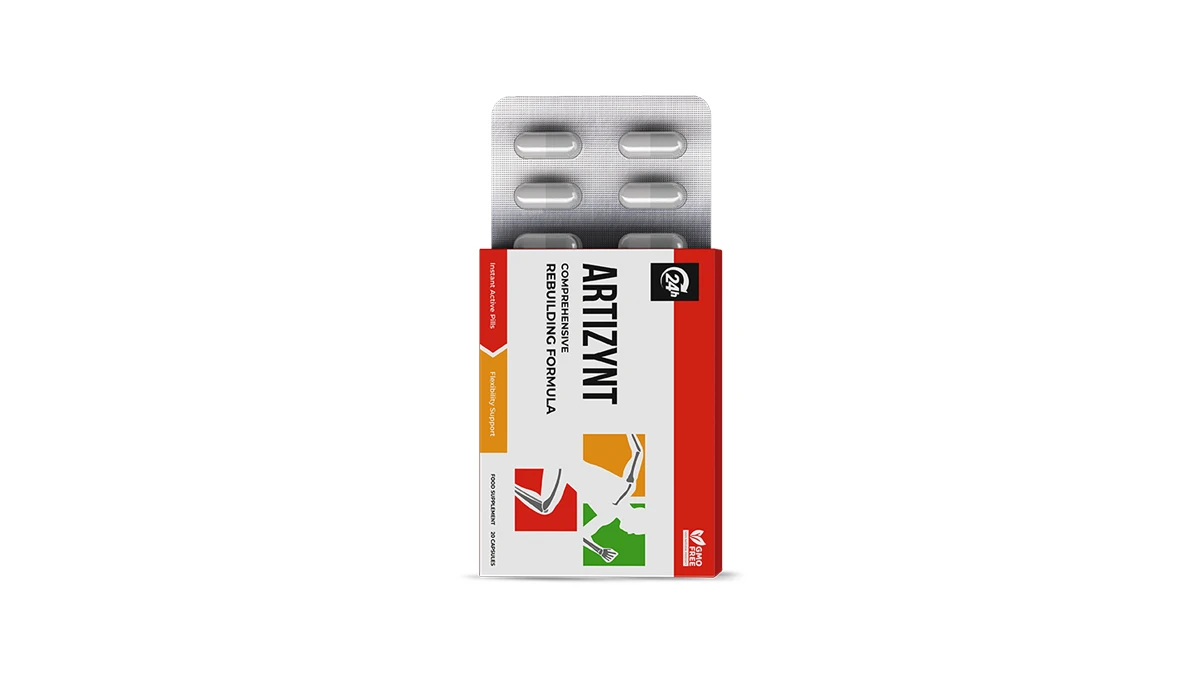
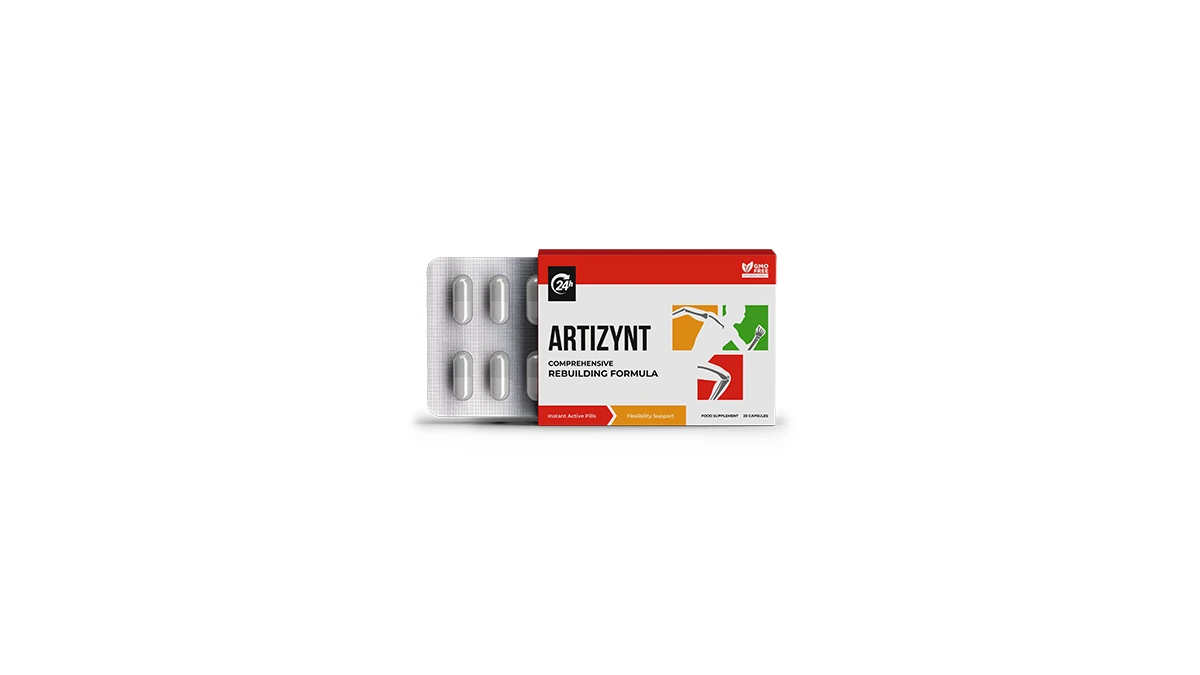
No ingredient is named. No dose is given. No Supplement Facts panel exists anywhere on the page. The page does not even state how many capsules come in a box in its written copy, though the pack image reads 20 capsules.
That combination is the whole story. A product that hides its entire formula cannot be checked against clinical trials, cannot be screened for interactions with your medicines, and cannot be compared with anything else on the shelf. For older adults managing arthritis, that is not a minor gap. It is the reason to pass on this one.
Specifications
| Detail | What we found |
|---|---|
| Product | ArtiZynt capsules, box with blister pack (not a bottle) |
| Pitched for | Joint pain, neck pain, arthritis, osteoarthritis, and general musculoskeletal disease |
| Ingredients named | None. Zero named ingredients, zero doses |
| Supplement Facts label | None shown anywhere on the page |
| Suggested use | 2 capsules per day |
| Capsules per box | 20, according to the pack image only (not stated in the written copy) |
| Price | 39 euros, marked down from an initial price of 78 euros. Single pack only, no multi-pack tiers |
| Payment | Cash on delivery, after a consultant callback. No card payment is collected on the page |
| Subscription | None found |
| Money-back guarantee | None. No refund terms exist anywhere on the page |
| Seller type | Affiliate lead page (the terms admit the site is an advertising source that earns commission) |
| Operator named in terms | LLC TD Globus Contract, Izhevsk, Russia. No email or phone given |
| Where sold | Mainland Portugal only, according to the delivery wording |
What is ArtiZynt?
ArtiZynt is sold as a capsule for joint pain, neck pain, arthritis, and osteoarthritis. The pack calls itself a Comprehensive Rebuilding Formula and promises Instant Active Relief and Flexibility Support.
The sales copy goes much further than comfort claims. It says the capsules eliminate joint pain and swelling, restore joints and tissues, heal joints and ligaments, and treat various diseases of the musculoskeletal system. It says relief will be practically immediate within a few days on 2 capsules per day.
It also says the formula was developed by European doctors and is the number one comprehensive therapy in sales in Portugal. No doctor is named. No sales ranking source is given. No study is cited anywhere on the page.
One more claim deserves a flag. The page states that about 10 percent of the world population frequently suffers from joint pain, attributing it only to various medical data. No source is named, so readers cannot check that figure. We do not repeat it as fact.
Who sells it: the company check
The page is not a brand website. It is an affiliate promoter page run through a lead generation domain, and its own terms say so plainly: there is a material connection between the affiliate operating the website and the provider, the affiliate may earn monetary or non-monetary commission, and the website is just an advertising source.
The footer carries only two links, Privacy Policy and User Agreement, and both open popup windows rather than real pages. There is no About page, no Contact page, no email address, no phone number, and no contact form anywhere on the page.
The only legal operator named anywhere is LLC TD Globus Contract, listed at the end of the terms popup with an address in Izhevsk, Russia, plus Russian registration numbers. No email or phone number is given for this company on the page or in either popup.
That creates a chain of mismatches a buyer should see clearly:
- The product is presented as European, made in Europe, and sold only to Portuguese customers, yet the only legal entity named is registered in Russia.
- A testimonial claims the buyer purchased on the official site, yet the terms admit this site is only an affiliate advertising source.
- A Guaranteed Safe Checkout badge displays card brand logos under an order form that collects no card details at all, because the sale is cash on delivery.
- The terms state the products are not intended to diagnose, cure, or prevent any disease, while the sales copy promises to heal joints and treat diseases.
None of this proves what is inside the capsules. It proves the seller has made it very hard to hold anyone accountable if something goes wrong.
What the ads claim, and what the evidence says
The page is an affiliate page, so every claim below is attributed to that page, not to a brand or a manufacturer. Here is how each major claim stands up.
| Claim on the affiliate page | What the evidence actually shows | Grade |
|---|---|---|
| Proven capsules for arthritis and osteoarthritis | No study, trial, citation, author, or endpoint appears anywhere on the page. Nothing is proven here. | Unsupported |
| Eliminates joint pain and swelling, restores joints and tissues | No ingredient is named, so no trial of any ingredient can be matched to this product. Joint supplements in general have mixed and weak evidence (see Ingredients). | Uncheckable |
| Heals joints and ligaments, treats musculoskeletal diseases | Disease treatment claims for a supplement with no disclosed formula. The page's own terms say the products are not intended to diagnose, cure, or prevent disease. | Contradicted by its own terms |
| 100 percent natural components | No component is named, so natural or not cannot be verified. Natural also does not mean safe or effective. | Unverifiable |
| Developed by European doctors, number one therapy in sales in Portugal | No doctor named, no credential given, no sales ranking source cited. | Unverifiable |
| Relief practically immediate in a few days | No trial of this product exists. Joint supplement trials that show anything run for weeks, not days. | Unsupported |
| 4,283 customer reviews, rated 4.8 out of 5 | No review source, no dates, no methodology, and no link to any review. The three shown testimonials carry first names and initials only. | Unverifiable |
Ingredients
There are none to list. That sentence is the most important one in this review.
The page names no glucosamine, no chondroitin, no collagen, no turmeric, no boswellia, no MSM, no vitamin, and no mineral. It gives no dose for anything. The only ingredient-like wording on the entire page is two generic phrases: 100 percent natural components, and natural sources of glycosaminoglycans.
Glycosaminoglycans are a real chemical family. Glucosamine and chondroitin belong to it, and they are the most studied joint supplement ingredients. But naming a chemical family is not naming an ingredient, and it says nothing about which compound, which form, or how much is inside.
So what does the evidence say about the usual joint ingredients, for context?
- Glucosamine and chondroitin. The National Center for Complementary and Integrative Health (NCCIH) summarizes the evidence as uncertain and conflicting. A major NIH-sponsored study found little or no pain relief, and the American College of Rheumatology 2019 guideline strongly recommends against glucosamine with or without chondroitin for knee osteoarthritis. Even the best-studied ingredients in this category are a weak bet, and ArtiZynt does not even confirm it contains them.
- Turmeric and boswellia. NCCIH states there is insufficient evidence to support turmeric supplementation for inflammatory disorders, and not enough high-quality evidence to determine whether boswellia is useful for any health condition. A systematic review of curcumin and boswellia for knee osteoarthritis concluded the evidence is not adequate in size or quality for clinical practice recommendations.
- MSM. A 2011 meta-analysis of 7 high-quality studies with 326 patients did not show significant pain reduction. One trial comparing 5 grams of MSM plus boswellic acids against 1,500 mg of glucosamine sulfate was preliminary data in 120 patients, not a basis for a product claim.
The point is not that joint supplements never help anyone. The point is that every ingredient with any evidence behind it was tested at a specific dose, in a specific form, in diagnosed patients. ArtiZynt discloses none of those three things, so none of that evidence can be borrowed for it.
Supplement label breakdown
There is no label to break down. No Supplement Facts panel, no serving size in milligrams, no capsule count in the written copy, no allergen statement, no warnings, and no contraindications appear anywhere on the page.
United States labeling rules require supplement labels to list the names and amounts per serving of dietary ingredients, according to the Food and Drug Administration (FDA). This page is aimed at Portugal, not the United States, but the gap matters the same way for any buyer: without a label, you cannot tell your doctor or pharmacist what you took.
The only count available comes from the pack image, which reads 20 capsules. At the stated dose of 2 capsules per day, one box would last 10 days. At 39 euros per box, that works out to 3.90 euros per day, and a month of use would need three boxes.
Note the testimonial pattern too. One testimonial says the joint was already recovered by the third box. Three boxes at 39 euros is 117 euros, for a product whose contents are entirely undisclosed. That is the real cost of the story the page tells.

Real reviews and complaints
We checked every platform in our standard order: the Better Business Bureau, Trustpilot, Reddit, Amazon, Facebook, Instagram, and X. We found zero genuine independent buyer reviews of ArtiZynt on any of them.
That absence is the finding. A product advertised with 4,283 customer reviews and a 4.8 rating has no verifiable review footprint on any independent platform we checked.
What does exist is a set of affiliate-style review pages that praise the product with near-perfect scores. Those pages are marketing, not buyer experience, and we do not quote them as reviews. Two details about them matter for buyers:
- They describe ArtiZynt as a topical gel rubbed on the skin, with menthol, camphor, and arnica, applied 2 to 3 times daily. The page we reviewed sells capsules. Same name, different form, different claimed ingredients (see Two products, one name).
- One of them quotes named reviewers attributed to Reddit, Trustpilot, and Quora. We searched those platforms directly and found no such reviews, so those attributions cannot be trusted.
The page's own testimonials are no better as evidence. Three short stories carry first names and initials only, with no surnames, ages, locations, or dates. One claims surgery was avoided and the joint recovered by the third box. One claims a progression from barely able to walk to running and preparing for a city marathon in 21 days. One claims a neurologist suggested the capsules as a last resort.
These are dramatic medical outcomes with no way to verify them. The terms popup admits photos are licensed illustrations and models are not endorsed. Treat the testimonials as advertising copy, not as reports from real patients.
Expert views: has the product been independently tested?
No. No independent laboratory test of ArtiZynt has been published, and no independent review of this product exists. No lab, seal, certificate of analysis, or testing body is named anywhere on the page.
That matters more than usual here, because joint and pain products are a category where hidden ingredients keep turning up. In October 2026, the FDA advised consumers not to purchase or use Ultra Bon, an arthritis and pain product sold online, after FDA laboratory analysis found it contained diclofenac, a prescription-strength anti-inflammatory drug, that was not on the label. That notice is about Ultra Bon, not ArtiZynt, and we do not suggest ArtiZynt contains diclofenac. It shows why an undisclosed formula in this category deserves extra caution.
Category testing also shows how often labels cannot be trusted. A 2018 JAMA Network Open analysis of the FDA tainted products database found 776 adulterated supplements from 2007 to 2016, and 97.6 percent of them had ingredients not declared on the label. A 2024 JAMA study of galantamine products found 9 out of 10 outside 10 percent of the labeled amount, and 3 out of 10 with bacterial contamination. Neither study tested ArtiZynt. Both show that a label, when one exists at all, is only the start of verification, and ArtiZynt does not even offer that start.
The FDA also states plainly that it does not approve dietary supplements before they are sold to the public. Any page implying approval, or using proven language without a trial, is selling a story the regulator has never checked.
For joint pain specifically, the expert consensus is consistent: NCCIH calls the glucosamine and chondroitin evidence uncertain and conflicting, and the American College of Rheumatology recommends against glucosamine for knee osteoarthritis. The strongest supported steps for osteoarthritis remain exercise, strength training, weight management where relevant, and clinician-guided care, not an undisclosed capsule.
Price, packages, and the guarantee
There is one price and one package. The page shows an initial price of 78 euros and an offer price of 39 euros, repeated three times. There are no 1, 3, or 6 pack tiers, no bonuses, no free bottle, and no subscription.
There is also no separate checkout page. Every Order Now button on the page is a link that scrolls down to an order form on the same page. That form asks only for a name and a mobile phone number, then promises a consultant will call with free assistance. No address, email, quantity selector, or payment field appears.
Payment is cash on delivery. You pay the courier when the package arrives. Delivery is promised in 48 hours as an aim, and generally 2 to 5 days, within mainland Portugal only. Free shipping is claimed in one order button.
Now the guarantee. There is none. The section headed For Your Guarantee contains only the delivery promise. No money-back period, no return conditions, no return-shipping terms, no restocking fee, and no returns page exist anywhere on the page.
That is a serious gap. If the capsules do nothing, or if you react badly, the page gives you no stated path to a refund and no contact channel to ask for one. The only contact the model offers is a callback from a consultant whose job is to sell you the product.
For comparison, most supplement funnels we review at least state a guarantee length, even when the fine print undermines it. ArtiZynt does not even clear that low bar.
Potential side effects
Side effects cannot be assessed for this product, because no ingredient is disclosed. That is not a dodge. It is the honest answer, and it is itself a safety finding.
For the ingredients most commonly sold for joints, the known cautions show why disclosure matters. Mayo Clinic notes glucosamine sulfate can cause nausea, heartburn, diarrhea, and constipation, may worsen asthma, may raise eye pressure in people with glaucoma, and can increase the bleeding risk of warfarin. None of that can be applied to ArtiZynt, because ArtiZynt does not say whether it contains glucosamine at all.
The same logic applies to allergies, diabetes, and other medicines. Without an ingredient list, your doctor and pharmacist cannot screen this product against anything you take. If you have a shellfish allergy, take a blood thinner, or manage a chronic condition, that unknown is a reason to stay away, not a detail to overlook.
One general warning does apply. The FDA advises consumers to be skeptical of products promising quick action, using words like guaranteed or scientific breakthrough, or marketed with dramatic testimonials. ArtiZynt checks all three boxes. If you experience a reaction to any supplement, stop using it and talk to your doctor promptly, and serious reactions can be reported to the FDA.

Who should avoid it
- Anyone who needs proven arthritis care. This product has no trial, no named ingredient, and no dose behind its disease claims. Delaying proven care for an unproven capsule can cost mobility.
- Anyone taking blood thinners, diabetes medicine, or other daily prescriptions. Interactions cannot be screened without an ingredient list. Talk to your doctor or pharmacist before considering any joint supplement.
- Anyone who wants a refund path. There is no guarantee, no returns page, and no contact email or phone on the page.
- Anyone uncomfortable sharing a mobile number with an unknown operator. The order model harvests your name and phone number for a sales callback, and the only company named is registered abroad with no contact details.
- Anyone outside mainland Portugal. Delivery is limited to mainland Portugal, so buyers elsewhere would be dealing with a different seller entirely.
Two products, one name: gel versus capsules
Here is a conflict buyers need to know about. The affiliate review pages that praise ArtiZynt describe it as a topical gel: menthol and camphor rubbed on the skin, arnica and MSM in the formula, applied 2 to 3 times daily for joint comfort.
The page we reviewed sells capsules taken by mouth, with no ingredients named at all. Those are not the same product in any meaningful sense. A gel and a capsule differ in ingredients, dose, risks, and how they could interact with your medicines.
Yet both are sold under the name ArtiZynt, and the review pages point buyers toward an official website without saying which form they reviewed. If you search the name and land on a different variant than the one reviewed, you may buy something with a different formula entirely. That is a finding about how this product is sold, not a footnote.
Before buying any product with this name, a buyer would need to confirm the form, the full ingredient list, and the seller. On the page we reviewed, none of that is available.
The callback sales model
The sales model deserves its own explanation, because it shapes every risk in this review. There is no store, no cart, and no checkout. You type your name and mobile number into a form, and a consultant calls you.
That call is the real sales pitch. The page gives no script, no terms, and no written offer for the call. Whatever is promised on the phone is not written down anywhere you can check later.
Cash on delivery completes the model. You hand money to a courier for a box whose contents were never disclosed, from a seller with no contact details, under a guarantee that does not exist. If the box disappoints you, the seller already has your money and your phone number, and you have no returns page to turn to.
For older adults, this model carries a specific risk. A friendly sales call can be persuasive in ways a written page is not, and it leaves no paper trail. A legitimate seller does not need to hide its formula, its contact details, and its refund terms behind a phone call.
Conclusion
ArtiZynt asks buyers to trust everything and verify nothing. The page claims proven relief for arthritis and osteoarthritis, yet names no ingredient, states no dose, shows no label, cites no study, names no doctor, and offers no refund.
The seller is an affiliate lead page, not a brand. The only company named is registered abroad with no contact details. The order model collects your phone number for a sales call and takes cash on delivery. And the same product name is used for a gel with different claimed ingredients elsewhere, so buyers cannot even be sure which product they are getting.
Joint pain deserves real care: a clinician who knows your history, proven treatments, exercise and weight management where relevant, and supplements, if any, with a full label your pharmacist can check. ArtiZynt offers none of that. Our verdict is simple: do not buy a capsule that will not tell you what is inside it.
If joint pain is limiting your daily life, talk to your doctor about options with real evidence behind them. Our joint pain management guide and our guide to choosing arthritis supplements explain what to look for on a label and which questions to ask. If you take blood thinners or other daily medicines, read our supplement interactions guide and our supplement dosage guide before adding anything new. For one commonly sold joint ingredient, see our turmeric ingredient page.
Sources
- National Center for Complementary and Integrative Health, Glucosamine and Chondroitin for Osteoarthritis
- National Center for Complementary and Integrative Health, Osteoarthritis: In Depth
- National Center for Complementary and Integrative Health, Complementary Health Approaches for Chronic Pain: What the Science Says
- National Center for Complementary and Integrative Health, Boswellia: Usefulness and Safety
- National Center for Complementary and Integrative Health, Nutritional Approaches for Musculoskeletal Pain and Inflammation
- Mayo Clinic, Glucosamine: safety and side effects
- Efficacy of curcumin and Boswellia for knee osteoarthritis: systematic review and meta-analysis (PubMed)
- Methylsulfonylmethane and boswellic acids versus glucosamine sulfate in the treatment of knee arthritis: randomized trial (PubMed)
- US Food and Drug Administration, How to Report a Problem with Dietary Supplements
- US Food and Drug Administration, Ultra Bon may be harmful due to hidden ingredient (October 23, 2026)
- US Food and Drug Administration, Small Entity Compliance Guide: supplement labeling (names and amounts per serving required)
- Tucker et al., Unapproved Pharmaceutical Ingredients Included in Dietary Supplements Associated With US Food and Drug Administration Warnings, JAMA Network Open, 2018
- Cohen et al., JAMA, 2024, galantamine product label accuracy study
Review note: This review is of the ArtiZynt supplement itself. Product details, prices, and terms were taken from the seller's sales page and order form as observed on October 25, 2026. Prices and offers can change, and other pages under the same product name describe a different form (a topical gel), which is reported as a finding in the article body.
Fact-checked by the SupplementDecoded Research Editorial Team