
Table of ContentsShow ChaptersHide Chapters
Medical Disclaimer
This article is for informational purposes only and does not constitute medical advice. Always consult with a qualified healthcare professional before starting any new supplement regimen.
Read our Medical / Expert Review Policy and Medical Disclaimer for details.
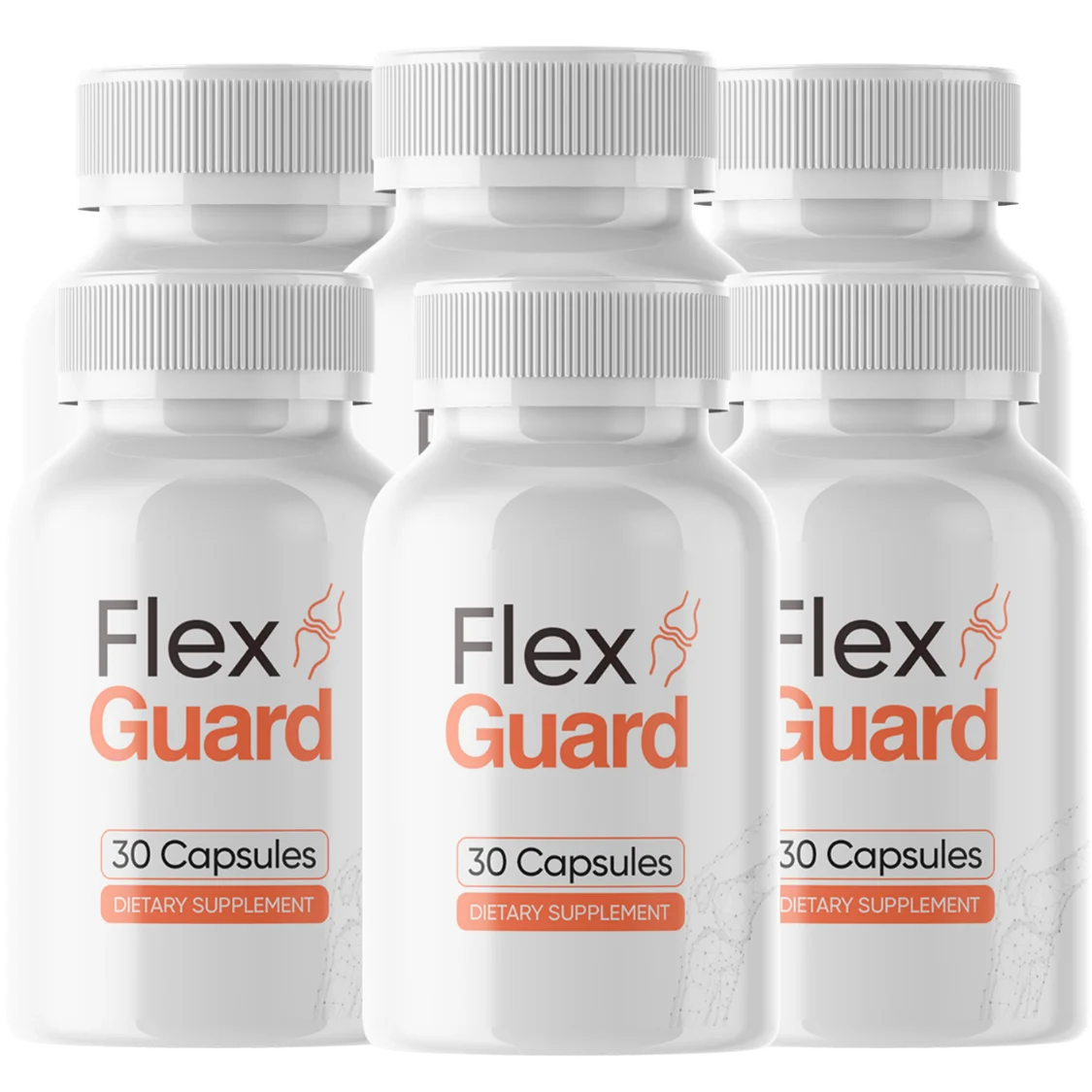
Key takeaways: FlexGuard lists all 8 ingredients with their doses, which is better than most affiliate joint products. But 6 of the 8 sit far below the amounts used in human trials. MSM is the starkest gap: 8 mg in the capsule versus 6,000 mg a day in the trial. The label carries a shellfish (crayfish) allergen warning, so skip it if you are allergic to shellfish. Price runs $1.63 to $2.80 per day, with none of the usual affiliate traps.
Contents
- The verdict
- What FlexGuard is (and what the page claims)
- The full label, ingredient by ingredient
- Claim vs. evidence: the dose gap
- The pricing math
- What the page gets right
- Company transparency: thin
- Safety notes for older adults
- Regulatory check
- The bottom line
- Sources
The verdict
FlexGuard is not the worst affiliate joint product we have reviewed. The label is fully transparent, the claims are modest, and the page skips most of the usual traps. But the formula is the problem.
Six of the eight ingredients are present at doses far below what researchers actually tested. You would be paying $1.63 to $2.80 a day mostly for 500 mg of glucosamine, which is one third of the studied dose, plus trace amounts of seven other ingredients.
If joint comfort is your goal, talk with your doctor about options with real evidence behind them. Our joint pain management guide walks through what the research actually supports.
What FlexGuard is (and what the page claims)
FlexGuard is a capsule supplement sold for joint support. Each bottle holds 30 capsules, and the suggested use is one capsule a day. The distributor named on the label is North Scale of Ogden, Utah.
The sales page is unusually quiet for an affiliate product. The claims we found are brief: the product is "designed to support joint comfort" and made with "high-quality, science-backed ingredients." There are no disease claims, no mention of arthritis or cartilage regrowth, no "clinically proven" or "doctor recommended" language, and no before-and-after promises.
The page also carries the standard FDA disclaimer that the statements have not been evaluated by the FDA, and the label tells users to consult a physician, especially when taking medication or managing a medical condition. That is the responsible baseline every supplement page should meet.
The full label, ingredient by ingredient
Credit where it is due: the label discloses every ingredient and dose, with no proprietary blends hiding the amounts. Here is what one daily capsule contains:
| Ingredient | Amount per capsule |
|---|---|
| Glucosamine sulfate | 500 mg |
| Indian frankincense (Boswellia serrata, herb) | 67 mg |
| Chondroitin sulfate | 50 mg |
| Turmeric (Curcuma longa, root) | 50 mg |
| Quercetin (Sophora japonica, bud) | 8 mg |
| Methionine | 8 mg |
| MSM (methylsulfonylmethane) | 8 mg |
| Bromelain (Ananas comosus, stem) | 8 mg |
Other ingredients are hypromellose (the capsule) and rice flour. The label states "CONTAINS: Shellfish (Crayfish)." It also warns the product is not for use under age 18 or by pregnant or nursing mothers.
Claim vs. evidence: the dose gap
The page calls these "science-backed ingredients." That phrase is doing a lot of work. Most of these ingredients have indeed been studied, but at doses that look nothing like what is in the capsule.

| Ingredient | FlexGuard dose | Dose used in human trials | Gap |
|---|---|---|---|
| Glucosamine sulfate | 500 mg | 1,500 mg/day in the GAIT trial | One third of the studied dose |
| Chondroitin sulfate | 50 mg | 1,200 mg/day in the GAIT trial | About one twenty-fourth |
| MSM | 8 mg | 6,000 mg/day (3 g twice daily) in the pilot trial | About one seven-hundred-fiftieth |
| Turmeric root powder | 50 mg | 500 to 1,500 mg/day of concentrated curcumin extracts | Wrong form and far too little |
| Boswellia serrata herb | 67 mg | 100 mg/day of standardized extract | Herb powder, not the studied extract |
| Bromelain | 8 mg | 540 to 1,890 mg/day in knee osteoarthritis trials | About one sixty-seventh to one two-hundred-thirty-sixth |
| Quercetin | 8 mg | 500 to 1,000 mg/day in human trials | About one sixty-second to one one-hundred-twenty-fifth |
| Methionine | 8 mg | No human joint trials found | Negligible amino acid amount |
MSM is the starkest gap. The pilot trial that researchers cite for MSM and knee pain used 3 grams twice a day, or 6,000 mg daily. FlexGuard contains 8 mg. That is roughly one seven-hundred-fiftieth of the studied amount, a difference so large the ingredient is effectively decorative.
Turmeric has a form problem, not just a dose problem. The trials behind turmeric for knee pain used concentrated curcumin extracts, typically 500 to 1,500 mg a day. FlexGuard contains 50 mg of plain turmeric root powder. Curcumin makes up only a few percent of the root, so the actual curcumin content is a couple of milligrams at most. Read our turmeric evidence review for what the research does and does not show.
Boswellia was studied as a standardized extract, not raw herb. The positive knee trial used 100 mg a day of a proprietary standardized Boswellia extract. FlexGuard lists 67 mg of the plain herb. Standardized extracts concentrate the active boswellic acids, so 67 mg of herb powder is not comparable to 100 mg of extract.
Glucosamine and chondroitin have the best evidence of the bunch, and it is still mixed. The large NIH-funded GAIT trial gave 1,500 mg of glucosamine and 1,200 mg of chondroitin daily. Overall, the supplements were not significantly better than placebo. Only the subgroup with moderate-to-severe knee pain saw a significant benefit from the combination. FlexGuard provides one third of the glucosamine dose and about one twenty-fourth of the chondroitin dose used in that trial.
Bromelain lacks convincing joint evidence at any dose. The National Center for Complementary and Integrative Health states there is insufficient evidence that bromelain helps inflammatory conditions other than acute sinus inflammation. The knee trials that exist used hundreds of milligrams, not 8 mg.
Methionine is label dressing. It is a common amino acid found in protein foods. We found no published human trials testing methionine for joint pain, and 8 mg is nutritionally negligible.
The pricing math
FlexGuard is sold as a one-time purchase. We found no subscription or auto-ship program, no free trial, and no struck-through "regular" prices. Every tier includes the same 180-day money-back guarantee.
| Package | Price per bottle | Total | Cost per day |
|---|---|---|---|
| 2 bottles (60 days) | $79 | $158 plus $9.99 shipping | About $2.80 |
| 3 bottles (90 days) | $69 | $207, free shipping | About $2.30 |
| 6 bottles (180 days) | $49 | $294, free shipping | About $1.63 |
At the cheapest tier, you pay about $1.63 a day. Most of that buys 500 mg of glucosamine, one third of the studied dose, alongside seven ingredients present in trace amounts. That is a steep price for a formula the research doses do not resemble.
What the page gets right
Fairness matters in a teardown, so here is what FlexGuard does better than many affiliate joint products:
- No proprietary blends. Every ingredient and dose is on the label.
- No disease claims. The page never mentions arthritis, cartilage regrowth, or curing anything.
- No fake urgency. We saw no countdown timers, stock counters, or pop-up discounts.
- No testimonials, real or fake. Nothing to debunk.
- No subscription trap. It is a one-time purchase with no auto-ship language anywhere.
- The FDA non-evaluation disclaimer is present, and the label advises consulting a physician.
Company transparency: thin
A PO box is the only address. The label names the distributor as North Scale, PO Box 12730, Ogden, Utah. There is no street address, no named company officers, and no About page on the site.
No phone number anywhere. The contact page is email only, and the support email in the legal dialogs ([email protected]) does not match the email printed on the label ([email protected]). One of them is outdated, and a buyer should not have to guess which.
"FDA registered facility" is not FDA approval. The page displays a "GMP Certified" badge and an "FDA Registered Facility" badge without naming any certifier. Facility registration is a paperwork requirement, not an endorsement of the product, and the page's own disclaimer says the statements have not been evaluated by the FDA.
For a product asking up to $294 per order, this level of corporate opacity is a legitimate concern. If you ever need a refund or have an adverse reaction, you want a company you can actually reach.
Safety notes for older adults
Shellfish allergy: take the label warning seriously. The label states the product contains shellfish (crayfish). Glucosamine is commonly derived from shellfish. If you have a shellfish allergy, skip this product and discuss alternatives with your doctor.
Blood thinner users should be cautious. Turmeric can add to bleeding risk when combined with anticoagulants such as warfarin, and bromelain may affect platelet function. Read our turmeric and warfarin safety article before combining any turmeric product with blood thinners.
Boswellia is generally well tolerated but can cause stomach upset. The trials reported mostly mild digestive complaints. That is worth knowing if you already manage reflux or take stomach-sensitive medications.
Talk with your doctor first. Joint pain in older adults deserves a proper diagnosis. Our guide to choosing arthritis supplements explains how to evaluate joint products against the evidence before spending money.
Regulatory check
We searched FDA warning letters and FTC enforcement actions for FlexGuard and found no actions naming the product or its distributor as of October 13, 2026. The absence of enforcement is not proof that a product works. It only means regulators have not taken public action against it.
The bottom line
FlexGuard is not a scam in the classic sense. It makes modest claims, discloses its label, and avoids the fake countdowns, fake testimonials, and subscription traps that define the worst affiliate products.

But a transparent label only helps if the doses make sense, and these do not. Six of eight ingredients sit at a small fraction of studied amounts, with MSM off by a factor of roughly 750. At $1.63 to $2.80 a day, you are paying a premium for a formula the clinical research would not recognize.
Talk with your doctor about your joint pain before buying any supplement. If you want glucosamine, the evidence points to studied doses, not fairy dust.
Sources
- National Center for Complementary and Integrative Health, "What You Need To Know About Nutritional Approaches for Musculoskeletal Inflammation": https://www.nccih.nih.gov/health/tips/tips-what-you-need-to-know-about-nutritional-approaches-for-musculoskeletal-inflammation
- National Center for Complementary and Integrative Health, "Nutritional Approaches for Musculoskeletal Pain and Inflammation" (provider digest): https://www.nccih.nih.gov/health/providers/digest/nutritional-approaches-for-musculoskeletal-pain-and-inflammation
- Clegg DO et al., Glucosamine/chondroitin Arthritis Intervention Trial (GAIT), New England Journal of Medicine, 2006; 1,500 mg glucosamine and 1,200 mg chondroitin daily, not significantly better than placebo overall (abstract via ResearchGate): https://www.researchgate.net/publication/23288047_The_effect_of_glucosamine_andor_chondroitin_sulfate_on_the_progression_of_knee_osteoarthritis_A_report_from_the_glucosaminechondroitin_arthritis_intervention_trial
- Kim LS et al., "Efficacy of methylsulfonylmethane (MSM) in osteoarthritis pain of the knee: a pilot clinical trial," Osteoarthritis and Cartilage, 2006; 3 g twice daily (PubMed): https://pubmed.ncbi.nlm.nih.gov/16309928/
- Standardized Boswellia serrata extract (SN13108F/Aflapin) randomized placebo-controlled trial, 100 mg/day for 180 days (PubMed): https://pubmed.ncbi.nlm.nih.gov/39700461/
- "Role of Turmeric and Curcumin in Prevention and Treatment of Chronic Diseases: Lessons Learned from Clinical Trials" (PMC review; trial doses of curcumin extracts): https://pmc.ncbi.nlm.nih.gov/articles/PMC10111629/
- Heinz SA et al., quercetin supplementation trial using 500 and 1,000 mg/day for 12 weeks (PubMed): https://pubmed.ncbi.nlm.nih.gov/20478383/
Product claims, prices, and label details in this article were read directly from the FlexGuard sales page and its product label on October 13, 2026. The seller's page is not linked here; it was used as research material only.
Fact-checked by the SupplementDecoded Research Editorial Team