
Table of ContentsShow ChaptersHide Chapters
Medical Disclaimer
This article is for informational purposes only and does not constitute medical advice. Always consult with a qualified healthcare professional before starting any new supplement regimen.
Read our Medical / Expert Review Policy and Medical Disclaimer for details.
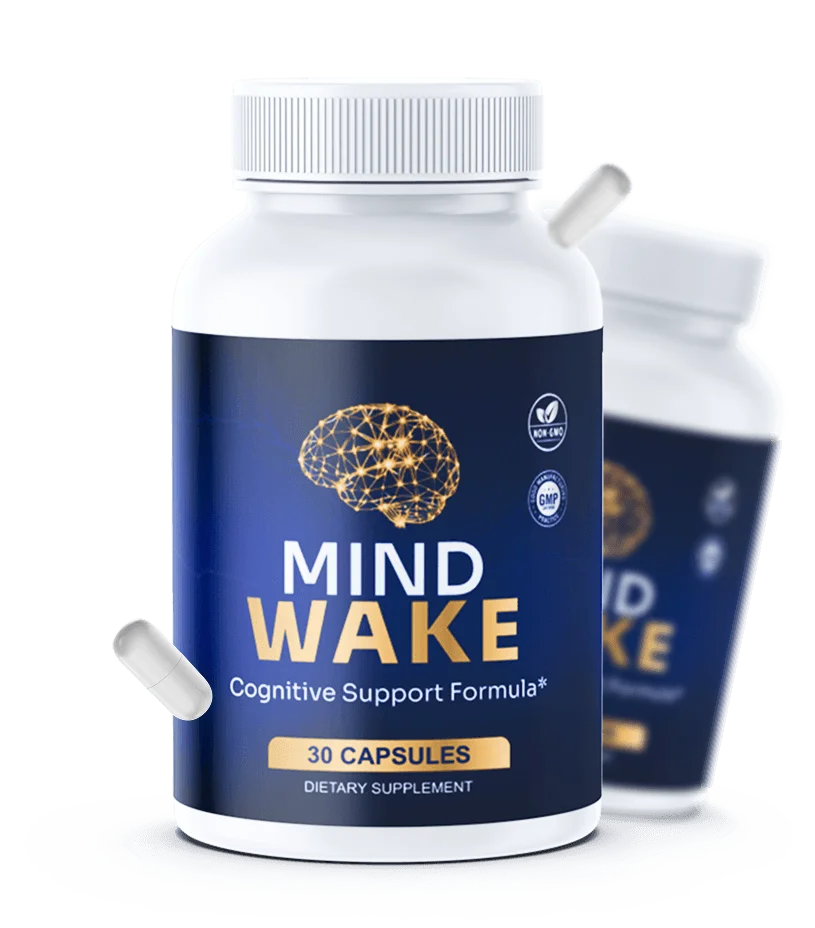
Key takeaways: Mind Wake is sold for memory, focus, and mental clarity with six named brain ingredients. The page lists zero doses, shows no Supplement Facts panel, and names no blend total, so its "clinically studied ingredients" claim cannot be checked against the trial doses. The arithmetic alone is damning: trial doses of just three of the six ingredients already exceed what one daily capsule can hold. The contact page lists two different support emails and two different phone numbers, names no company and no address, and we found no Terms, Privacy, or refund policy pages. No FDA or FTC action exists against this product as of 2026-10-20. The Supplement Decoded Team does not recommend Mind Wake.
Contents
- The verdict
- What the page promises
- The label problem: six names, zero doses
- Claim vs evidence, ingredient by ingredient
- The capsule math
- Price and value
- Who is behind Mind Wake
- Senior safety notes
- Regulatory history
- The bottom line
- Sources
The Verdict
Mind Wake promises sharper memory, better focus, and long-term brain health from six "clinically studied" ingredients. The page never says how much of anything is in the capsule.
That single omission undermines the entire pitch. Every honest comparison between a supplement and the research starts with dose: what the trials used versus what the bottle contains. With no doses, no Supplement Facts panel, and no blend total anywhere on the page, that comparison is impossible by design.
The page is also thin on accountability. The contact page contradicts itself on the support email and the phone number, names no company and no street address, and we could find no Terms of Service, Privacy Policy, or refund policy pages. The 60-day guarantee is measured from the purchase date, not the delivery date, and the fine print behind it is not published.
Bottom line: six ingredient names and zero doses is not a formula, it is a story. The Supplement Decoded Team does not recommend Mind Wake for memory, focus, or cognitive health.
What the Page Promises
The headline reads: "Wake up your mind, sharpen your focus, and support cognitive clarity, naturally." Below it, the page says the product was "developed for adults who want to protect their cognitive health, improve daily focus, and stay mentally sharp as life gets busier."
The central evidence claim is carefully worded: the formula uses "clinically studied ingredients known for their role in mental clarity, memory retention, and focus." Note what that sentence does not say. It does not say the product was clinically studied. It does not name a single study. It says the ingredients have been studied somewhere, at some dose, in some population. That is a much weaker statement than it sounds.
The benefits section promises "improved mental clarity and focus," "better day-to-day memory support," "support for long-term brain health," and "enhanced cognitive performance" with consistent use. A 4.9 out of 5 customer rating appears near the top of the page, with no review count, no review source, and no actual customer reviews shown anywhere.
Two marketing statistics appear without any sourcing: "97% Of Customers Order 6 Bottles (Our Recommended Option)" and the implication that the 6-bottle pack is the smart buy. There is no way for a reader to verify either number.
The FAQ adds several bold reassurances: the product "can be taken alongside other supplements without any issue," its ingredients are "generally recognized as safe," and "[t]here have been no reported adverse effects." We examine each of those below.
The Label Problem: Six Names, Zero Doses
The ingredients section names six ingredients with a one-line benefit blurb each:
- Ginkgo Biloba (Leaf Extract): "Supports healthy blood flow to the brain and cognitive performance."
- Phosphatidylserine: "A naturally occurring phospholipid that supports memory, learning, and mental processing speed."
- N-Acetyl L-Carnitine HCI: "Plays a role in brain energy metabolism and supports focus and mental clarity."
- Bacopa Monnieri (Leaf Extract): "Traditionally used to support memory retention and cognitive function."
- L-Glutamine: "An amino acid involved in neurotransmitter function and brain communication."
- Alpha GPC (Alpha-Glycerylphosphorylcholine): "Supports acetylcholine levels, important for memory and learning."
That is the entire label disclosure. No milligrams per serving for any ingredient. No proprietary blend total. No Supplement Facts panel image. No photo of the actual product label. The FAQ says to take one capsule daily, with 30 capsules per bottle.
This matters because "clinically studied" is meaningless without a dose. A study that gave volunteers 300 mg of an ingredient for 12 weeks says nothing about a capsule that might contain 5 mg of it, or 500 mg. Without the numbers, the page's core claim cannot be verified, and neither can you.
Claim vs Evidence, Ingredient by Ingredient
The fair test is simple: for each ingredient, what did human trials actually test, in whom, at what dose, with what result? Here is what the trusted sources say.
| Ingredient | What the page implies | What the research actually shows | Evidence grade |
|---|---|---|---|
| Ginkgo biloba | Better blood flow to the brain, better cognitive performance | The 3,069-person GEM trial found 240 mg/day did not prevent dementia or slow cognitive decline in older adults. NCCIH: no conclusive evidence it helps any health condition. Mayo Clinic: most studies show no memory, attention, or brain-function benefit in healthy adults. Modest benefit only in people who already have dementia. | Weak for healthy adults |
| Bacopa monnieri | Memory retention and cognitive function | The best-evidenced ingredient here. A 2012 review of 6 RCTs found improved memory free recall at 300-450 mg/day of standardized extract over 12 weeks. A 2014 meta-analysis of 9 RCTs confirmed modest gains in attention and processing speed. Trials were small and effects were modest, with some stomach upset reported. | Moderate, modest effect |
| Phosphatidylserine | Memory, learning, processing speed | A 1991 trial in 149 people with age-related memory impairment found 300 mg/day for 12 weeks beat placebo on daily-life memory tasks, mostly in the most impaired subgroup. But the trials are old and small, and most used bovine-cortex-derived PS, which is no longer sold. Modern soy-derived PS has thinner evidence. | Weak to modest, dated |
| N-Acetyl L-Carnitine | Brain energy, focus, mental clarity | A Cochrane review found no evidence of benefit for dementia: early small studies looked promising, later larger studies did not. Dementia trials used 1.5 to 3 grams per day, an amount that cannot fit in a single daily capsule alongside five other ingredients. | No convincing benefit |
| Alpha-GPC | Supports acetylcholine, memory, learning | A 2023 meta-analysis found cognitive benefit in patients with adult-onset dementia, mostly alongside prescription dementia drugs, not in healthy older adults wanting sharper focus. Trial doses ran into the hundreds of milligrams per day. | Weak for healthy adults |
| L-Glutamine | Neurotransmitter function, brain communication | No human trials show memory or cognition benefit in healthy older adults. Human research has focused on exercise recovery and deficiency states. One randomized trial of 2 grams found no effect on learning. "Involved in neurotransmitter function" is biochemistry trivia, not evidence of benefit. | No evidence |
- On ginkgo and bleeding risk: NCCIH cautions that ginkgo may increase bleeding risk and can interact with anticoagulant drugs. This directly contradicts the FAQ's blanket statement that the product "can be taken alongside other supplements without any issue." We keep a dedicated guide on ginkgo and blood thinners because this interaction matters so much for older adults.
- On "generally recognized as safe": GRAS is a designation for food ingredients, not a safety verdict on a supplement blend. And "no reported adverse effects" is an unverifiable claim: with no company name, no address, and no adverse-event reporting channel published, there is no way to check it, and no reason to trust it.
- On the missing DSHEA disclaimer: we could find no "These statements have not been evaluated by the FDA" disclaimer anywhere on the page. That disclaimer is required on supplement labels and in labeling that makes structure/function claims.
The Capsule Math
Here is why the missing doses are not a minor gap. Take just the three ingredients with the clearest trial doses: ginkgo at 240 mg per day (the GEM trial dose), bacopa at 300 mg per day (the low end of the effective range), and phosphatidylserine at 300 mg per day (the Crook trial dose). That is 840 mg before a single milligram of anything else.
A standard supplement capsule holds roughly 500 to 750 mg of total contents. The dose is one capsule per day. So trial-level dosing of even half the formula does not physically fit in the daily serving, and that is before adding acetyl-L-carnitine (trial doses measured in grams), alpha-GPC (hundreds of milligrams in trials), and glutamine.
There are only two possibilities: the capsule contains small fractions of the studied doses, or it contains something else entirely. Since the page discloses no amounts, a buyer cannot tell which. A "clinically studied ingredients" claim on an undisclosed-dose formula asks you to borrow the credibility of research the product itself may not resemble.
Price and Value
A correction is in order first. Our text-based review initially reported that no prices appeared on the landing page. A live-browser check of the full page showed a pricing section, displayed twice, with three tiers. We are updating this section with what we actually observed, because claiming prices are hidden when they were on the page is exactly the kind of error we try not to make.
| Tier | Supply | Per bottle | Total | Anchored "regular" total |
|---|---|---|---|---|
| Basic (2 bottles) | 60 days | $79 | $158 | $358 |
| Bundle (3 bottles) | 90 days | $69 | $207 | $537 |
| Most Popular (6 bottles) | 180 days | $49 | $294 | $1,074 |
Per-day math, using the stated supply length: the 6-bottle tier works out to $1.63 a day, the 3-bottle tier to $2.30 a day, and the 2-bottle tier to $2.63 a day. The 6-bottle tier advertises "SAVE $780 TODAY," the 3-bottle tier "SAVE $330 TODAY." The 6-bottle tier includes 2 free bonuses and free shipping; the 3-bottle tier includes free shipping; the 2-bottle tier includes neither.
- The guarantee window problem. Every order carries a "100% Satisfaction 60-Day Promise" measured from the original purchase date. The 6-bottle "recommended option" is a 180-day supply. The full course cannot even be finished before the refund window closes, and the page states delivery takes 3 to 10 business days, so the real trial window is shorter still.
- The 97% statistic is unverifiable. "97% Of Customers Order 6 Bottles (Our Recommended Option)" is a marketing statistic with no source, no date, and no methodology. There is no way for a buyer to check it.
- Anchored prices are theater. The struck-through totals ($1,074 for six bottles) are never shown as prices anyone actually pays; they exist to make the sale price look like a rescue.
- No countdown timers. We found no countdown timer, fake-scarcity language, or expiry messaging anywhere on the page.
The footer names BuyGoods as the retailer processing the checkout. The FAQ says Mind Wake is a one-time purchase "unless you choose an optional subscription plan at checkout" and that the company "never auto-charge[s] without your explicit authorization." We could not verify the checkout flow itself in this review, so treat that as the company's claim, not a confirmed fact. We also could not confirm whether opened bottles can be returned, who pays return shipping, or whether any fees apply.
Who Is Behind Mind Wake
The contact page is where this review found its clearest red flags, and they are factual, not interpretive:
- The page lists the support email as [email protected] at the top, then instructs customers to email [email protected], calling it "our official support channel." Two different email domains on the same page.
- The contact page gives an SMS number of +1 833-722-3083. The homepage FAQ gives +1 833 762 6319. Two different phone numbers.
- No legal company name appears anywhere. No street address, no city, no named officers. The page is signed only "MindWake Support Team."
We also found no Terms of Service, Privacy Policy, refund and returns policy, or medical disclaimer page linked anywhere on the site. For a company asking for your payment details and home address, that is a thin accountability footprint.
The FAQ says Mind Wake is a one-time purchase "unless you choose an optional subscription plan at checkout" and that the company "never auto-charge[s] without your explicit authorization." We could not verify the checkout flow in this review, so treat that as the company's claim, not a confirmed fact.

Senior Safety Notes
The audience for memory supplements skews older, and older adults are the most likely to take prescription drugs that interact with supplement ingredients. Two points matter here.
First, ginkgo plus blood thinners. Millions of older Americans take warfarin, apixaban, rivaroxaban, clopidogrel, or daily aspirin. NCCIH flags ginkgo as a bleeding-risk concern with anticoagulants. A product containing an undisclosed amount of ginkgo, sold with a blanket "can be taken alongside other supplements without any issue," is exactly the kind of reassurance that can get someone hurt. We cover this interaction in detail in our ginkgo and blood thinners guide and our turmeric and warfarin guide.
Second, the "talk to your doctor" test. A trustworthy supplement page tells you to check with your clinician or pharmacist before starting, especially with medical conditions or prescription drugs. This page's FAQ does include a brief consult-your-healthcare-professional line for pregnancy, nursing, medical conditions, and prescription medications, which is good. But it sits one screen away from "without any issue" and "no reported adverse effects," which pull in the opposite direction.
If you take any blood thinner, blood pressure drug, or diabetes medication, bring the full ingredient list (not just the product name) to your pharmacist before trying any memory supplement. If the seller will not disclose the doses, as here, that alone is reason to walk away.
Regulatory History
We searched FDA warning letters, FTC enforcement actions, and the FDA's public databases for "Mind Wake" as of 2026-10-20. We found no FDA or FTC enforcement action against this product or brand.
That is worth stating plainly, and it is not an endorsement. Most small supplement brands have no enforcement history simply because regulators pursue a tiny fraction of the market. The absence of a warning letter does not validate the claims, the doses, or the company behind them.
The Bottom Line
Mind Wake's page is a case study in how far ingredient names alone can carry a pitch. Six recognizable brain-health ingredients, a "clinically studied" halo, a 4.9-star badge with no visible reviews, and a 60-day promise, all wrapped around a formula whose contents are never disclosed.
When we checked each ingredient against the research, the pattern was consistent: the strongest evidence (bacopa) comes from small trials at 300-plus milligrams a day; the most famous ingredient (ginkgo) failed the largest prevention trial ever run in healthy older adults; one ingredient (acetyl-L-carnitine) has a Cochrane review finding no benefit for dementia; and one (L-glutamine) has no human memory evidence at all. None of it can be mapped to this product, because the product discloses no doses.
Add the accountability gaps (two emails, two phone numbers, no company name, no address, no legal pages) and the senior-specific risk (undisclosed ginkgo sold with "without any issue" reassurance to an audience full of blood-thinner users), and the verdict is clear.
The Supplement Decoded Team does not recommend Mind Wake. If memory concerns are on your mind, start with your doctor, not a checkout page. For comparison, see our teardowns of two other memory-pitch products, MemoVance and Cognizil, which show how the same playbook repeats across this market.
Sources
- National Center for Complementary and Integrative Health: The Ginkgo Evaluation of Memory (GEM) Study. 240 mg/day of ginkgo biloba was ineffective in reducing dementia and Alzheimer's in older people; the largest trial ever conducted on ginkgo and dementia.
- National Center for Complementary and Integrative Health: Alzheimer's Disease at a Glance. No strong evidence that any complementary health approach can prevent cognitive impairment; summarizes the GEM findings.
- Mayo Clinic: Ginkgo. Most studies show ginkgo doesn't improve memory, attention, or brain function in healthy adults; research doesn't support using it to prevent or slow dementia or cognitive decline.
- DeKosky ST et al. Ginkgo biloba for prevention of dementia: a randomized controlled trial. JAMA. 2008;300(19):2253-62. PMID 19017911. 3,069 adults 75+, 120 mg twice daily, median 6.1 years: no reduction in all-cause dementia vs placebo.
- Pase MP et al. The cognitive-enhancing effects of Bacopa monnieri: a systematic review of randomized, controlled human clinical trials. J Altern Complement Med. 2012;18(7):647-52. PMID 22747190. 6 RCTs at 300-450 mg/day over 12 weeks: improved memory free recall; trials small, effects modest.
- Kongkeaw C et al. Meta-analysis of randomized controlled trials on cognitive effects of Bacopa monnieri extract. J Ethnopharmacol. 2014;151(1):528-35. PMID 24252493. 9 RCTs, 518 participants: bacopa improved attention and speed of processing.
- Crook TH et al. Effects of phosphatidylserine in age-associated memory impairment. Neurology. 1991;41(5):644-9. PMID 2027477. 149 patients, 300 mg/day bovine-cortex PS for 12 weeks: improved vs placebo on daily-life memory tasks, mainly in the most impaired subgroup.
- Hudson S, Tabet N. Acetyl-L-carnitine for dementia. Cochrane Database Syst Rev. 2003;(2):CD003158. PMID 12804452. Early small studies suggested benefit; later larger studies did not support it; no evidence of benefit for dementia.
- Sagaro GG et al. Activity of choline alphoscerate on adult-onset cognitive dysfunctions: a systematic review and meta-analysis. J Alzheimers Dis. 2023. PMCID PMC10041421. Alpha-GPC improved cognition in adult-onset dementia patients (often with donepezil), not in healthy adults seeking sharper focus.
- The role of glutamine homeostasis in emotional and cognitive functions. Int J Mol Sci. 2024. PMCID PMC10816396. Human glutamine studies focused on exercise recovery, deficiency states, and hypoxia; no memory-enhancement evidence in healthy older adults.
Review note: This review covers the Mind Wake landing page as it appeared in October 2026, the version showing six named ingredients with no doses, a 4.9/5 rating badge with no visible reviews, a 60-day satisfaction promise measured from the purchase date, and a contact page listing two different support emails and two different phone numbers. Lookalike sites sold under the same product name exist and may show different content, prices, or claims.
Fact-checked by the SupplementDecoded Research Editorial Team